
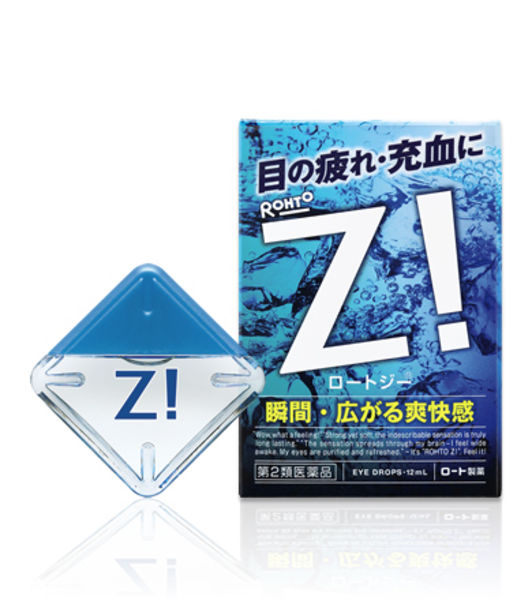

Description
Contains 6 active components:
- Zinc sulfate monohydrate 0.05% - improves blood flow to peripheral blood vessels
- Vitamin B6 (pyridoxine hydrochloride) - 0.1% enhances and improves eye metabolism
- Potassium L-aspartate 1% improves tissue respiration
- Tetrahydrozoline hydrochloride 0.05% – reduces inflammation of the connective membrane of the eye, - conjunctiva
- Chlorpheniramine meleate 0.03% – suppresses the action of histamine and also eliminates eye irritation
- Neostigmine methyl sulfate 0.005% – improves eye focusing
Rohto Z eye drops! with freshness index 8 are a unique solution for long-term work with a computer. Rohto Z! also necessary to eliminate redness and discomfort after various eye strains. Their unique composition, containing vitamin B6 and zinc sulfate, allows them to withstand prolonged eye strain.
Rohto Z! with a freshness index of 8, they will be an ideal assistant for designers, programmers, as well as all workers whose work involves spending a long time at the computer.
Eye drops refresh and moisturize the eyes, remove redness, and serve as a good preventive measure against decreased visual acuity and infectious diseases.
Features:
- long-lasting effect due to the use of “liquid lenses”
- vitamin B6 content
- relieving eye redness or conjunctival hyperemia
- relieving inflammation of the eyelids, helping in the treatment of blepharitis
- Effective moisturizing and eliminating redness
- nutrition of the eye shell with taurine and vitamins
- acceleration of eye tissue metabolism
- feeling of freshness and coolness
- tonic effect
Recommended use:
- for tired eyes
- when working on a computer for a long time
- with conjunctive hyperemia (redness)
- for blepharitis (inflammation of the eyelids)
- for itchy eyes
- with blurred vision under load (long-term work with a computer, long-term driving, office work at a computer in artificial lighting conditions)
Additional substances: boric acid, L-menthol, D-camphor, peppermint oil, Na edetate, polyoxyethylene castor oil, pH agent.
Recommendations for use:
For mild fatigue - one drop in each eye.
For severe fatigue - 2-5 times a day, 1-2 drops.
Bottle capacity: 12 ml.
Contraindications:
- eye treatment with other drugs
- allergic reaction to the components of the drops
- allergic reactions caused by the use of other drugs
- chronic severe eye pain
- with a diagnosis of glaucoma
Symptoms that should cause you to stop taking the drops:
- the appearance of rashes and redness on the skin
- irritation and swelling of the eyes, severe itching
Precautions and storage requirements:
- store in a dark and cool place, out of reach of the sun, with the lid closed
- protect from high temperatures and mechanical deformations
- do not pour into another container
- keep away from children
- do not touch the dropper with eyelashes and fingers to prevent contamination of the composition
- do not use while wearing soft contact lenses
- instill only into the eyes
- do not share with other people
- do not use after expiration date
- over time, white crystals may form in the container; the drops can be continued to be used by straining through cheesecloth
Detailed description of each of the drop elements Rohto Z!
Zinc sulfate monohydrate - a microelement involved in metabolism and stabilization of cell membranes. It is part of the main enzymes and participates in various biochemical reactions. Affects all regeneration processes and transmission of nerve impulses. Strengthens the effect of insulin, promotes the synthesis of cortisol. Accelerates the healing of superficial wounds, inflammatory processes of the skin and mucous membranes.
Vitamin B6 (Pyridoxine) - a substance that regulates protein metabolism. It also participates in the synthesis of hemoglobin and has a positive effect on hair growth, visual acuity, and blood circulation. Vitamin B6 plays an important role in metabolism and is necessary for the normal functioning of the central and peripheral nervous systems, and is involved in the synthesis of neurotransmitters. Improves the use of unsaturated fatty acids, reduces cholesterol and lipids in the blood, improves myocardial contractility, promotes the conversion of folic acid into its active form, and stimulates hematopoiesis. A lack of pyridoxine in the body leads to a decrease in such an indicator of the functioning of the immune system as the number of T-lymphocytes.
Taurine - a compound that enhances metabolism. 2-Aminoethanesulfonic acid is naturally present in small amounts in various human tissues. More recently, scientists have found that in the brain, taurine acts as a neurotransmitter amino acid that inhibits synaptic transmission. Taurine also has anticonvulsant activity and has a cardiotropic effect. Helps improve tissue energy processes, stimulates reparative processes in dystrophic diseases and processes accompanied by significant metabolic disorders of eye tissue. Being a sulfur-containing amino acid, taurine helps to normalize the function of cell membranes and improve metabolic processes.
Potassium L-aspartate is a source of potassium ions, improves tissue respiration, restores water and electrolyte balance. Transports minerals inside cells, improves their metabolism due to potassium saturation. Potassium is the major intracellular cation in most tissues. Potassium ions slow down the conduction of excitation in myofibrils and reduce myocardial excitability.
Aspartate is a carrier of potassium ions through the cell membrane and promotes their penetration into the intracellular space. When ions enter cells, they are involved in metabolic processes. Potassium, in combination with the acid L-aspartate, is involved in various biological processes and plays an important role in the human body. The component is safe and tolerant, it makes up about 5% of the mass of all human minerals, 98% is contained inside the cell. It is an electrolyte, interacts with blood cells and is contained in its plasma.
Tetrahydrozoline hydrochloride - reduces inflammation of the connective membrane of the eye - the conjunctiva. It is important not to confuse it with Tetrizoline hydrochloride (Tizin).
Tetrahydrozoline hydrochloride is a sympathomimetic drug that stimulates L-adrenergic receptors of the sympathetic nervous system, but does not have or has a weak effect on L-adrenergic receptors. As a sympathomimetic, tetrohydrozoline hydrochloride has a vasoconstrictor effect and reduces tissue swelling. There is no information about the possibility of pupil dilation and reactive hyperemia when using the drug. Also present in Russian eye preparation Neosin.
Aminocaproic acid (Epsilon) - a substance that reduces inflammation and plasminogen production. It also has a hemostatic effect, promoting coagulation processes during bleeding associated with fibrinolysis (with an increase in the fibrinolytic activity of the blood). The specific hemostatic effect of aminocaproic acid is to relieve plasminogen activators and block the action of plasmin. Aminocaproic acid is also used to stop bleeding during surgical interventions and various pathological conditions accompanied by an increase in fibrinolytic activity of blood and tissues (liver diseases, acute pancreatitis, etc.), with hypofibrinogenemia; for burn disease and shock, for bleeding associated with leukemia and hypoplastic anemia, for hemophilia. Aminocaproic acid is excreted from the body by the kidneys quite quickly.
Chlorpheniramine maleate an element that suppresses the action of histamine and reduces eye irritation. Chlorpheniramine maleate is a histamine H1 receptor blocker with anticholinergic effects. The substance penetrates well into body tissues. Binding to blood plasma proteins is 70%. Chlorpheniramine maleate is one of the oldest and safest antihistamines. Present in many allergy medications.
Neostigmine methyl sulfate (Prozerin) - an element that improves the focusing functions of the eye.
Prozerin is an antagonist of anti-depolarizing curare-like drugs. As an antidote to muscle relaxants, prozerin is used for muscle weakness and respiratory depression after the end of anesthesia using antidepolarizing agents. In ophthalmological practice, proserin is sometimes prescribed to constrict the pupil and lower intraocular pressure in open-angle glaucoma.