
Tsujimoto Market: Our Guarantees
Description
Green Tea with Matcha, 20 Bags — Including the Cold-Brew Method Nobody Told You About
Overview
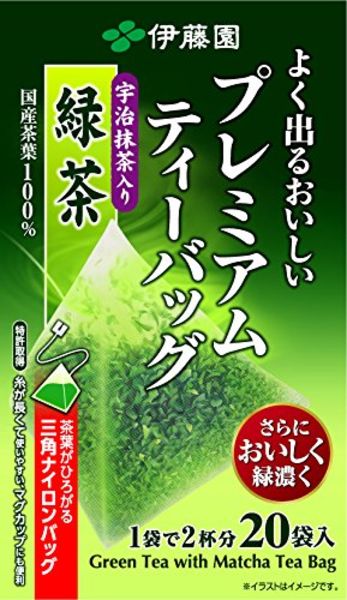
Japanese green tea in bags, with matcha powder blended into the leaf. The matcha is what gives it the body and the slight sweetness — a plain sencha bag tends to be thin and a little sharp, and the added powder fills that out and deepens the colour. It is an unfussy everyday tea, and each bag is sized to make two cups rather than one.
The old version of this page was five sentences long and told you almost nothing. Here is what it left out, in order of how much difference it makes to your cup.
First, the water temperature. Japanese green tea is not built for boiling water, and pouring it straight from the kettle is the single reason most people abroad conclude they do not like sencha. Water off the boil, around 70–80 °C. Boiling water is the usual reason a good Japanese green tea tastes harsh: it pulls the bitterness forward and flattens the sweetness. If you have no thermometer, boil, then leave the kettle five minutes, or pour into a second cup and back.
Second, and this is the one worth knowing: cold brew. Drop a bag into a 500 ml bottle of cold water, put it in the fridge overnight, and take it out in the morning. It is called 水出し in Japan and it is what half the country drinks all summer. Cold water pulls out the sweetness and the umami but leaves most of the bitterness and a good deal of the caffeine behind in the leaf, so a cold-brewed cup is rounder, sweeter and gentler than the same bag brewed hot. No skill required and nothing can go wrong.
Caffeine. A cup of Japanese green tea from a bag lands somewhere around 20-30 mg, against roughly 80-100 mg for a filter coffee — a quarter of the dose, in other words, which is why green tea is the all-afternoon drink and coffee is not. Where a tea carries added matcha, as this one does, the figure sits a little higher than plain sencha, because matcha is powdered leaf swallowed whole rather than an infusion. The manufacturer does not publish a per-serving figure and we are not going to invent one, but the practical point holds: two or three cups in an afternoon is unremarkable, and if you are counting for pregnancy or for a sleep problem, count it as tea rather than as nothing.
See the rest of our Japanese tea and matcha and our other Japanese health products.
Key Benefits
- ✓ Matcha blended into the leaf — this is why it has body and a sweeter edge than a plain sencha bag
- ✓ One bag makes two cups, so 20 bags is closer to 40 servings
- ✓ Works cold-brewed overnight in a water bottle, which is sweeter and lower in caffeine than the hot method
- ✓ Stands a second steep, shorter and with slightly hotter water
- ✓ No sugar, no flavouring, no colour — tea and matcha
- ✓ Naturally free of gluten and dairy, and suitable for a vegan diet
- ✓ About a quarter of the caffeine of a filter coffee, which is why it works all afternoon
- ✓ Genuine Japanese domestic stock, shipped from Kobe with tracking
Product Details
| Brand | ITO EN |
|---|---|
| Country of origin | Japan |
| Product type | Green tea with added matcha, tea bags |
| Count | 20 sachets |
| Servings | Approximately 40 — each bag is sized for two cups |
| Net weight | Not published on the pack listing we hold — ask us and we will read it off the box |
| Ingredients | Green tea, matcha |
| Caffeine | Approximately 20–30 mg per cup brewed hot; less cold-brewed |
| Brewing temperature | 70–80 °C — not boiling |
| Vendor | Tsujimoto Market, Kobe, Japan |
| Dispatch | 2–6 business days |
Who Is This For?
- Right for you if you want Japanese green tea without buying a teapot, a strainer or a scale. This is the whole point of the format.
- Right for you if you drink a lot of tea in an afternoon and do not want the caffeine of coffee behind it.
- Right for you if you want a cold drink for summer that is not sweet and is not fizzy. Cold-brewed green tea is the best thing in this catalogue for that, and it costs one bag and a night in the fridge.
- Not for you if you want loose leaf and the ritual around it. This is the convenient version and it does not pretend otherwise.
- Not for you if you are avoiding caffeine entirely — it is less than coffee, not none.
- Not for you if you were expecting matcha powder to whisk. The matcha here is blended into a tea bag, not sold loose.
How to Use
- Hot, one cup: one bag, water at 70–80 °C, 60–90 seconds. Take the bag out — leaving it in is what makes green tea bitter.
- Hot, two cups: one bag will carry a small pot. Give it a little longer and pour both cups at once so the second is not over-steeped.
- Second steep: yes, and worth doing. Slightly hotter water, half the time. The third is thin.
- Cold brew: one bag in 500 ml of cold water, in the fridge for 6–8 hours or overnight. No need to remove the bag; it will not go bitter.
- Iced quickly: brew one bag hot in half the water, then pour it over a full glass of ice.
- Do not use boiling water. If you have only just boiled the kettle, wait five minutes.
- Keep the pack sealed and away from strong-smelling food. Tea takes on the smell of whatever is next to it in the cupboard.
- If you are being treated for iron deficiency, drink it between meals rather than with them.
Frequency: Two to four cups a day suits most people. Cold-brewed, it is gentle enough to drink through the evening if hot tea keeps you awake.
Full Ingredients
Ingredients: green tea, matcha. Nothing else — no sugar, no sweetener, no flavouring, no colour.
The pack weight is not published on the listing we inherited, and rather than estimate it from the sachet count we have marked it as unknown in the details table. Ask us before ordering if it matters and we will read the figure off the box.
A note on the matcha in a tea bag. Matcha is powdered leaf, so some of it passes through the mesh into the cup rather than staying behind like the leaf does. That is exactly why this tastes fuller than plain sencha. It also means the caffeine sits a little above a plain green tea bag — still around a quarter of a filter coffee, but not identical to sencha. The vitamin K question that applies to loose matcha powder does not apply here in the same way, because you are drinking mostly an infusion rather than the whole leaf, but if you are on warfarin the general principle still holds: keep your intake steady rather than swinging.
Cautions
- Contains caffeine — roughly 20–30 mg a cup, about a quarter of a filter coffee. Count it in if you are limiting caffeine for pregnancy or sleep.
- In pregnancy and breastfeeding, count it toward the 200 mg a day caffeine limit from all sources. At 20–30 mg a cup there is plenty of room, but it is not zero.
- Tea polyphenols reduce the absorption of non-haem (plant) iron. If you are being treated for iron deficiency, drink it between meals rather than with them, and leave an hour either side of an iron tablet.
- If you take warfarin, keep your green tea intake steady rather than swinging between none and several cups a day. An infusion carries far less vitamin K than matcha powder, but consistency is what keeps an INR stable.
- Do not leave the bag in the cup when brewing hot. Over-steeped green tea is astringent and unpleasant, and it is the most common reason someone decides they dislike it.
- Cold brewing is safe and standard practice in Japan, but use drinking water, a clean bottle, and the fridge — not the counter — and finish it within 24 hours.
- Keep the pack sealed. Tea absorbs odours readily, and a pack stored beside coffee or spices will taste of them.
- Not suitable as a drink for infants. For older children, treat it as a caffeinated drink rather than as water.
- Keep out of reach of children and store away from direct sunlight, heat and damp.
- This is a food, not a supplement and not a medicine. It does not treat, prevent or cure anything, and we have taken the health claims off this page.
Package Contents
One box of 20 tea bags in Japanese retail packaging with Japanese-language labelling. Each bag is sized for two cups, so roughly 40 servings. The net weight is not stated on our listing — ask and we will read it off the box.
Shipping & Store Notes
- Ships directly from Japan
- Processing time: 2–6 business days
- Tracking number provided after dispatch
- Import duties and taxes may apply depending on destination country
- Opened cosmetics cannot be returned for hygiene and safety reasons
Authenticity Guarantee
Every product at Tsujimoto Market is sourced directly from Japan and verified for authenticity. We never sell fakes or grey-market goods. Each order is carefully packed in Kobe, Japan and dispatched with full tracking.
FAQ
How do I cold brew it, and is it really better?
One bag in a 500 ml bottle of cold water, in the fridge, overnight or for six to eight hours. That is the whole method. You do not need to take the bag out and you cannot over-brew it. It is called 水出し in Japan and it is what a great many people there drink all summer, for a reason: cold water extracts the sweet amino acids and the umami efficiently but pulls out much less of the bitter catechins and less of the caffeine, so the result is rounder and sweeter than the same bag brewed hot, and gentler in the evening. If you have only ever had green tea hot and found it sharp, try this before you decide.
What temperature should the water be?
70–80 °C, which means off the boil rather than straight from a boiling kettle. Japanese green tea is picked and processed to be sweet, and boiling water pulls the bitterness forward and flattens that sweetness — it is the single most common mistake made with sencha outside Japan, and it is why people describe it as harsh. If you have no thermometer, boil the kettle and leave it five minutes, or pour the water into a second cup and back again, which drops it roughly twenty degrees.
How much tea do I actually get?
Twenty bags, and each one is sized to make two cups rather than one — so around forty servings, not twenty. That was in the old description as "one packet is enough for 2 servings", which is easy to read past. You can also use one bag for a small pot, or for a 500 ml cold-brew bottle, which is the same two-cup quantity in a different shape.
Can I re-steep the bag?
Once, and it is worth doing. Use slightly hotter water and about half the steeping time, because the leaf has already opened. The second cup is lighter, a little more astringent and noticeably less sweet, but it is a real cup of tea. A third steep is water with an opinion. If you are cold brewing, the bag is spent after one bottle.
Will I pay customs duty or import VAT?
That depends on your country and on the declared value of the parcel, not on us. We ship from Japan with a correct customs declaration and full tracking; any duty or import VAT your country charges is collected by your local carrier or customs office on delivery. Check your national de-minimis threshold before ordering if you want to avoid a surprise.