
Warum Ihre Haare in der Tsuyu-Zeit besondere Pflege brauchen
Jedes Jahr um den 6.–10. Juni beginnt in Japan die 梅雨 — Tsuyu, die Regenzeit. Etwa sechs Wochen lang liegt das gesamte Land unter schweren Wolken, anhaltendem Regen und einer Luftfeuchtigkeit, die die Kleidung durchfeuchtet, bevor man das halbe Straßenkarree überquert hat. Für die Haare ist das eine echte Herausforderung: Frizz, Schwere, eine Kopfhaut, die sich dauerhaft feucht anfühlt — und die besondere Frustration, eine aufwendige Frisur zu gestalten, die nach zwanzig Minuten im Freien bereits zusammengefallen ist.
Japanische Konsumentinnen und Konsumenten lösen dieses Problem seit Jahrzehnten. Seit ich 2003 nach Kobe gezogen bin, habe ich einen Großteil des Marktangebots getestet — und die besten japanischen Haaröle für feuchtes Wetter bilden eine eigene Kategorie, formuliert genau für das Klima, das sie hervorgebracht hat. Hier sind die fünf, die in der Regenzeit am besten funktionieren.
Worauf Sie bei einem Tsuyu-Haaröl achten sollten
Nicht jedes Haaröl ist für hohe Luftfeuchtigkeit konzipiert. Schwere Silikonöle schaffen zwar eine Frizz-Barriere, fühlen sich aber in einem Klima, in dem die Kopfhaut ohnehin übermäßig Sebum produziert, schwer und fettig an. Leichte Seren verdampfen zu schnell, um bei 90 % relativer Luftfeuchtigkeit noch zu helfen. Gesucht ist ein Öl, das gleichzeitig drei Dinge tut: die Schuppenschicht gegen eindringende Feuchtigkeit versiegelt, Gleitfähigkeit hinzufügt, um Reibungs-Frizz zu reduzieren — und dabei leicht genug bleibt, um bei Hitze angenehm zu sein, nicht erdrückend.
Japanische Haaröl-Formulierung beherrscht genau diese Balance, weil die Kosmetikindustrie des Landes seit Generationen für genau dieses Klima optimiert.
Die 5 besten japanischen Haaröle für Tsuyu 2026
1. Shiseido Tsubaki Oil Perfection 7-in-1 — Der Tsuyu-Klassiker
Das Shiseido Tsubaki Oil Perfection basiert auf Kamelienöl (椿油, Tsubaki-Öl) — dem traditionellen japanischen Haaröl, das seit Jahrhunderten verwendet wird. Shiseidos Formulierung nutzt eine verfeinerte, für den Alltagsgebrauch leichte Version, ergänzt durch sechs weitere Behandlungen in einer Flasche: Hitzeschutz, UV-Schutz, Frizz-Kontrolle, Glanz, Glättung, Nährung und Reparatur.
Der Kern seiner Tsuyu-Performance: Das Fettsäureprofil von Tsubaki-Öl ähnelt ungewöhnlich stark dem Sebum, was es erlaubt, sich mit den natürlichen Ölen des Haares zu verbinden und eine flexible, kohärente Barriere zu bilden. Eingeschlossene Schuppenschichten lassen Feuchtigkeit kaum eintreten — das Öl kämpft nicht gegen Wasser, sondern macht Wasser weniger störend.
Geeignet für: Tägliche Anwendung, alle Haartypen, besonders feines bis mittleres Haar. Vor dem Föhnen auf feuchtes Haar oder als Finishing-Öl auf trockenes Haar.
→ Shiseido Tsubaki Oil Perfection bei Tsujimoto Market
2. Milbon Elujuda Emulsion+ — Der Salon-Favorit für normales bis dickes Haar
Das Milbon Elujuda Emulsion+ ist ein professionelles Pflegeprodukt, das in der japanischen Beauty-Community während der Tsuyu-Zeit zum meistgefragten Haaröl wurde — weil Milbons Ingenieure das Problem strukturell angingen.
Der Schlüsselwirkstoff CPP (Casein-Phosphopeptid) dringt zusammen mit hydrolysiertem Kollagen in den Cortex des Haarschafts ein, anstatt nur die Oberfläche zu umhüllen. CMC-Technologie (Cell Membrane Complex) ermöglicht es den Wirkstoffen, die inneren Kanäle des Haares zu durchlaufen und die strukturellen Proteinbindungen zu stärken, die Luftfeuchtigkeit beeinträchtigt. Das Ergebnis ist ein Haarschaft, der sich bei Feuchtigkeitsaufnahme weniger aufquillt.
Geeignet für: Normales bis dickes Haar, gefärbtes Haar, Haar, das in hoher Luftfeuchtigkeit zum Frizzen neigt.
→ Milbon Elujuda Emulsion+ bei Tsujimoto Market
3. TOKIO IE Outkarami Platinum Oil — Spezialist für geschädigtes Haar
Das TOKIO IE Outkarami Platinum Oil nutzt die proprietäre INKARAMI-Keratin-Quervernetzungstechnologie — dasselbe System, das in TOKIOs professionellen Salon-Behandlungen eingesetzt wird — in einer Heimanwendungs-Ölformel.
INKARAMI bildet neue Quervernetzungen zwischen geschädigten Keratinketten im Haarschaft. Bei chemischer Behandlung (Blondieren, Färben, Dauerwelle) werden viele ursprüngliche Proteinbindungen aufgebrochen. In feuchten Umgebungen lässt diese strukturelle Schwächung den Haarschaft ungleichmäßig aufquellen — die Ursache von Frizz bei geschädigtem Haar. TOKIOs Technologie stärkt diese Bindungen und macht den Haarschaft dimensionsstabiler.
Geeignet für: Gebleichtes, gefärbtes oder chemisch behandeltes Haar mit sichtbaren Schäden. 2–3× wöchentlich auf Längen und Spitzen anwenden.
→ TOKIO IE Outkarami Platinum Oil bei Tsujimoto Market
4. Lebel IAU Sleek — Für schwer zu bändigendes Haar
Das Lebel IAU Sleek kombiniert den SMS-Komplex (Scalp Microbiome Seal) mit Jojobaöl, Avocadoöl und Sheabutter für tiefe Glätte.
Während Tsubaki-Öl und Elujuda hauptsächlich an der Schuppenschicht wirken, ist die IAU-Sleek-Formel auf sichtbare Glättung und Handhabbarkeit ausgelegt — eine Frizz-Resistenz, die beim Auftragen sofort spürbar ist. Jojobaöl bildet eine leichte, Sebum-ähnliche Basis; Avocadoöl liefert eindringende Fettsäuren; Sheabutter erzeugt eine versiegelnde Schicht. Das Ergebnis: ein glänzendes, glattes, sichtbar diszipliniertes Finish auch bei hoher Luftfeuchtigkeit.
Geeignet für: Widerspenstiges, welliges bis lockiges Haar, das Definition und Kontrolle bei Feuchtigkeit benötigt.
→ Lebel IAU Sleek bei Tsujimoto Market
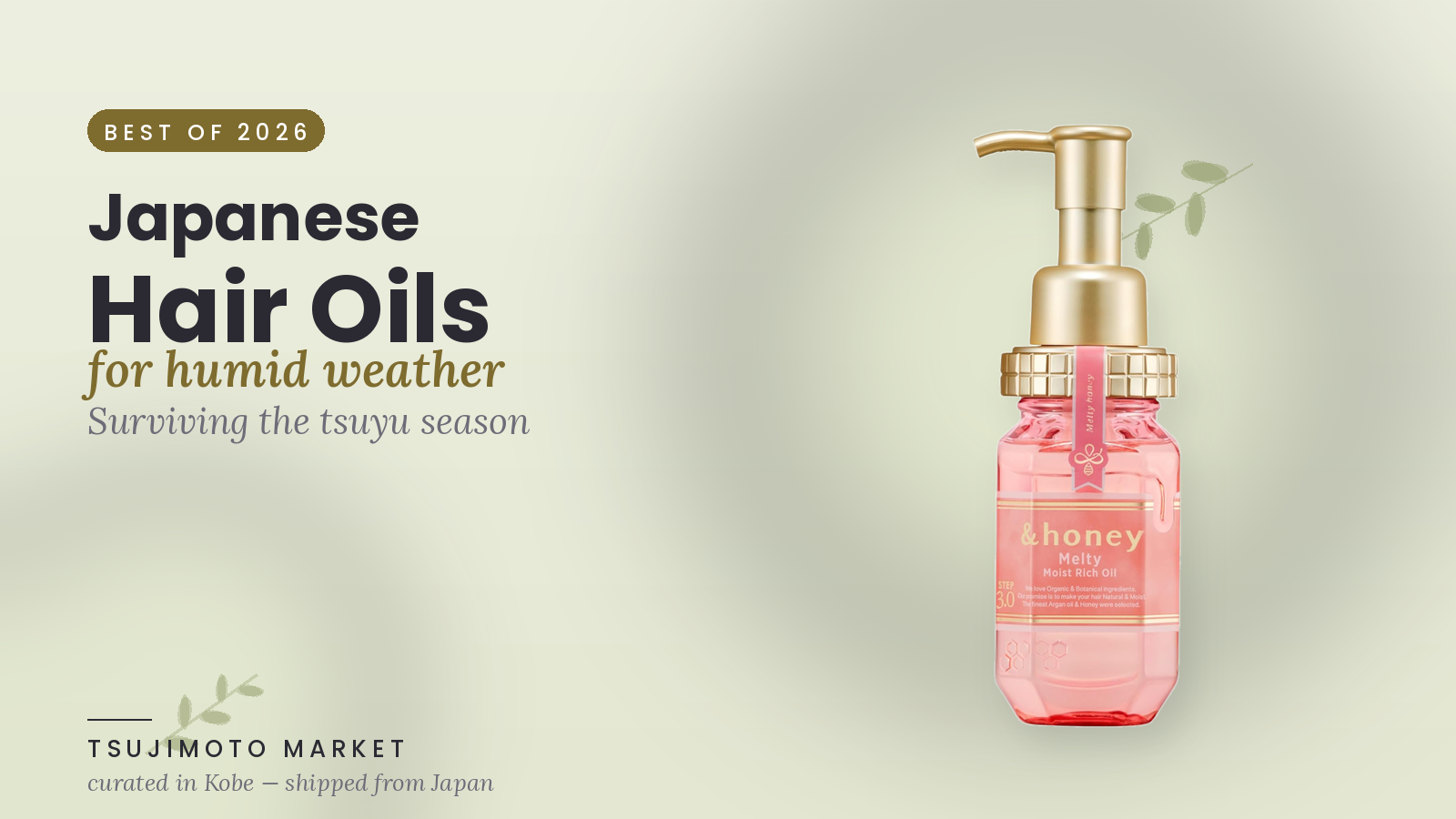
5. &honey Melty Moist Repair Hair Oil 3.0 — Die Honig-Entdeckung der Saison
Das &honey Melty Moist Repair Hair Oil 3.0 ist die Neuheit in unserer Empfehlung und das Produkt, über das in der japanischen Beauty-Community gerade am meisten gesprochen wird. Im Mittelpunkt: ein bemerkenswert zusammengesetzter Honig-Komplex — 60 % Manuka-Honig aus Neuseeland, 20 % bulgarischer Rosenhonig, 20 % japanischer Rohhonig — der gleichzeitig als Feuchthaltemittel und zur Schuppenschicht-Reparatur wirkt.
Ergänzt durch marokkanisches Arganöl, Ceramid NG, hydrolysiertes Keratein aus Wolle, Gelée Royale und Propolis — ein für ein Finishing-Öl ungewöhnlich umfangreiches Wirkstoffspektrum. Die Honig-Humektantien halten den optimalen Feuchtigkeitsgehalt im Haar aufrecht, sodass der Haarschaft nicht austrocknet und Feuchtigkeit aus der Luft zieht (was Quellung und Frizz verursacht).
Geeignet für: Trockenes bis normales Haar, Haar, das intensive Feuchtigkeit und Frizz-Kontrolle gleichzeitig benötigt.
→ &honey Melty Moist Repair Hair Oil 3.0 bei Tsujimoto Market
Anwendungstipps für Tsuyu
- Auf handtuchtrockenem Haar auftragen — nicht auf nasses. Überschüssiges Wasser verdünnt das Öl und verhindert die Haftung an der Schuppenschicht. Haar zu ca. 80 % trocken tupfen.
- Längen und Spitzen behandeln — Ansätze brauchen kein Öl. Bei Tsuyu-Feuchtigkeit produziert die Kopfhaut ohnehin mehr Sebum.
- Abschnittweise arbeiten für gleichmäßige Abdeckung — in Feuchtigkeitsbedingungen ist gründliche Verteilung wichtiger als Schnelligkeit.
- Föhnen mit Vorsatzaufsatz, Luftstrom nach unten gerichtet, um die Schuppenschicht zu glätten.
- Finishing auf trockenem Haar — ein kleiner Tropfen Öl auf vollständig trockenen Haaren versiegelt die Schuppenschicht für den Tag.
Bereit für die Tsuyu-Saison?
Entdecken Sie unser vollständiges Sortiment an japanischer Haarpflege direkt aus Kobe — von Pflegeshampoos bis zu professionellen Masken, die diese Öle optimal ergänzen.
— Natalia Tsujimoto, japanische Schönheitspflege aus Kobe seit 2003