
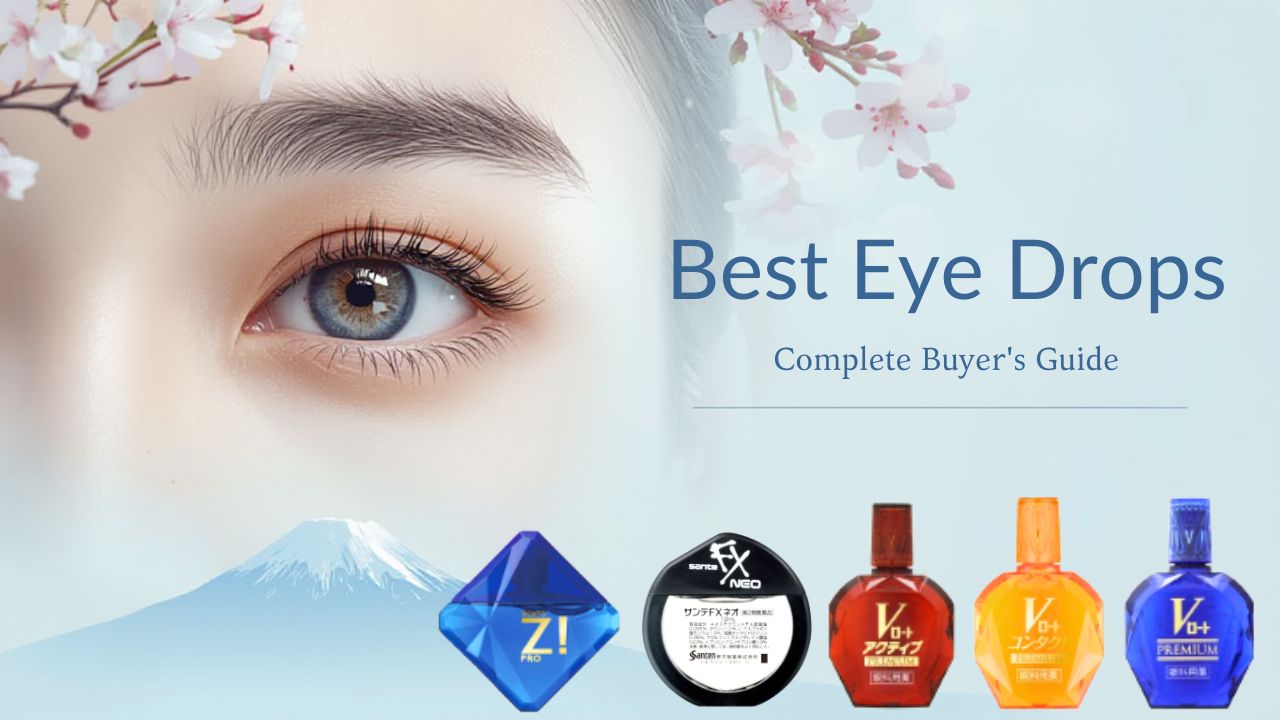
Japanese eye drops are unlike anything you will find at a Western pharmacy. They are more effective, more precisely formulated, and available in a far wider range of specialisations. Whether you suffer from dry eyes, digital eye strain, redness, or wear contact lenses, there is a Japanese eye drop designed specifically for your situation.
My name is Natalia Tsujimoto. I live in Japan and have been sourcing Japanese eye drops for Tsujimoto Market for years. Eye drops are one of our most popular categories — and once customers try Japanese formulas, they never go back.
This guide covers everything you need to know: how Japanese eye drops work, what to look for, and which products are worth buying in 2026.
Why Japanese Eye Drops Are Different
Japan has the most sophisticated eye drop market in the world. Here is why:
Pharmaceutical-grade formulation. In Japan, eye drops are classified and regulated as pharmaceutical products, not cosmetics. This means stricter quality standards, more rigorous testing, and more active ingredients per drop.
Specialised formulas. Rather than one "all-purpose" eye drop, Japanese brands develop separate formulas for dry eyes, fatigue, redness, allergies, and contact lens use. Each formula is optimised for its specific purpose.
Cooling technology. Rohto — Japan's leading eye drop brand — developed a proprietary cooling sensation system using menthol at precise concentrations. Different products use different cooling levels (rated 0 to 6) so you can choose exactly how refreshing you want the experience to be.
Trusted brands. Rohto has been making eye drops in Japan since 1899. Sante is another pharmaceutical brand with decades of clinical research behind its formulas. These are not cosmetic products — they are medicines.
How to Choose the Right Japanese Eye Drops
Before buying, identify your primary concern:
Dry eyes — caused by screen use, air conditioning, contact lenses, or aging. Look for drops with sodium hyaluronate, vitamin B6, or artificial tear formulas.
Eye fatigue — caused by prolonged screen use, reading, or driving. Look for drops containing neostigmine methylsulfate or vitamin B12, which support the eye's focusing muscles.
Redness — caused by irritation, allergies, or lack of sleep. Look for drops with naphazoline hydrochloride (vasoconstrictor) or anti-inflammatory ingredients.
Contact lens use — requires drops specifically formulated to be safe with soft and hard lenses. Not all eye drops are contact-lens compatible. Look for "contact lens" labelling — Rohto Lycee Contact is the gold standard.
Mature eyes (40+) — age-related changes include weakened focusing muscles, reduced tear production, and increased sensitivity. Look for drops with neostigmine methylsulfate for focus support and sodium chondroitin sulfate for moisture — Rohto Premium Kasumi is designed specifically for this.
Allergy relief — caused by pollen, dust, or pet dander. Look for antihistamine drops with diphenhydramine or chlorpheniramine.
Best Japanese Eye Drops 2026: Top Picks
1. Maximum Strength Relief: Rohto Z! Pro

Rohto Z! Pro is the strongest eye drop in Rohto's lineup — a maximum-strength formula designed for serious eye fatigue, redness, and irritation. The cooling level is 6 out of 6, making it one of the most intensely refreshing eye drops available anywhere in the world.
Active ingredients: Neostigmine methylsulfate (fatigue relief), naphazoline hydrochloride (redness), taurine (cell repair), vitamin B6 (corneal support).
Why it stands out: This is the drop Japanese office workers reach for after a long day of screen time. The cooling sensation is powerful — many people describe it as transformative. Eyes feel immediately clearer, brighter, and more focused.
Best for: Heavy screen users, severe eye fatigue, redness relief, those who enjoy a strong cooling sensation.
Not suitable for: Contact lens wearers (remove lenses before use), those sensitive to menthol.
2. Premium All-Round Care: Rohto V Premium

Rohto V Premium is Rohto's flagship premium formula — a comprehensive eye drop that addresses fatigue, dryness, redness, and blurred vision in a single product. It contains 12 active ingredients, making it one of the most complex eye drop formulas on the market.
Active ingredients: Vitamin B6, vitamin B12, neostigmine methylsulfate, sodium chondroitin sulfate, potassium L-aspartate, taurine, and more.
Why it stands out: The combination of vitamin B12 (which gives the drop its characteristic pink colour) and neostigmine methylsulfate provides both immediate fatigue relief and longer-term eye support. This is the drop for people who want maximum care in one bottle.
Best for: All-round eye care, fatigue + dryness + redness combined, those who want one premium product that does everything.
3. Medical-Grade Dry Eye Relief: Sante Medical 12

Sante Medical 12 is a pharmaceutical-grade dry eye treatment from Sante, formulated with 12 active ingredients at maximum concentration. This is not a comfort drop — it is a medical treatment designed for chronic dry eye sufferers.
Active ingredients: Sodium chondroitin sulfate (moisture retention), neostigmine methylsulfate, vitamin B6, potassium L-aspartate, taurine, and more — all at the highest permitted concentrations.
Why it stands out: The sodium chondroitin sulfate in this formula mimics the mucin layer of the natural tear film, providing longer-lasting moisture than standard drops. For people with genuine dry eye syndrome, this formula provides relief that over-the-counter artificial tears cannot match.
Best for: Chronic dry eye sufferers, those in dry or air-conditioned environments, contact lens wearers (check compatibility), people who use screens for more than 6 hours per day.
4. Gentle Dry Eye Care: Rohto Premium Dry Eye

Rohto Premium Dry Eye is a gentler, preservative-conscious formula designed for sensitive eyes and long-term daily use. Where Sante Medical 12 is maximum-strength, Rohto Premium Dry Eye is designed for those who need frequent application throughout the day without irritation.
Why it stands out: Formulated to closely mimic natural tears in both composition and pH. The gentle formula means it can be used as often as needed — important for those who experience dry eye symptoms throughout the day rather than just at the end of it.
Best for: Sensitive eyes, frequent daily use, mild to moderate dry eye, those who find stronger formulas too intense.
5. Best for Contact Lens Wearers: Rohto Lycee Contact

Rohto Lycee Contact is formulated specifically for soft and hard contact lens wearers. Most eye drops require lens removal before use — Lycee Contact can be applied directly while wearing lenses.
Active ingredients: Sodium chondroitin sulfate (moisture), taurine (cell support), vitamin B6 (corneal health), potassium L-aspartate.
Why it stands out: pH-balanced to work safely with contact lens materials. Relieves dryness and discomfort that builds up during long days of lens wear without requiring lens removal.
Best for: Daily and extended contact lens wearers, dryness after hours of lens use, office workers who wear lenses all day.
6. Best for Mature Eyes (40+): 
Rohto Premium Kasumi is designed specifically for age-related eye concerns — blurred vision (kasumi means "haze" in Japanese), reduced focusing ability, and age-related dry eye. A formula for the 40+ demographic.
Active ingredients: Neostigmine methylsulfate (focusing muscle support), sodium chondroitin sulfate (moisture), vitamin B12, taurine, potassium L-aspartate.
Why it stands out: As we age, the eye's focusing muscles weaken and the tear film becomes less stable. Rohto Premium Kasumi addresses both simultaneously — neostigmine for sharper focus, moisture complex for age-related dryness.
Best for: Adults 40+, blurred vision or difficulty focusing, age-related dry eye, eyes that tire more quickly than before.
7. Allergy and Irritation Relief: Rohto Arugado Z

Rohto Arugado Z is formulated specifically for allergy sufferers — targeting the itching, redness, and irritation caused by pollen, dust, and environmental allergens. It is one of the most popular seasonal eye drops in Japan, particularly during Japan's intense spring pollen season.
Active ingredients: Diphenhydramine hydrochloride (antihistamine), naphazoline hydrochloride (redness), zinc sulfate (astringent), taurine.
Why it stands out: The combination of antihistamine and vasoconstrictor provides both itch relief and redness reduction simultaneously. For allergy sufferers, this dual action is significantly more effective than single-ingredient drops.
Best for: Seasonal allergies, pollen sensitivity, itchy or irritated eyes, redness caused by environmental irritants.
How to Use Japanese Eye Drops Correctly
Application technique:
- Wash hands before use
- Tilt your head back slightly
- Pull down the lower eyelid gently
- Apply 1 to 2 drops — more is not better
- Close your eye and press gently on the inner corner for 30 seconds
- Blink slowly a few times
Important rules:
- Never touch the dropper tip to your eye or any surface
- Replace the cap immediately after use
- Do not use drops that have changed colour or become cloudy
- Most Japanese eye drops should be stored below 25°C away from direct sunlight
Contact lens use: Unless the product specifically states it is safe for contact lens use, remove your lenses before applying drops. Wait at least 15 minutes before reinserting lenses.
Frequency: Follow the instructions on each product. Most Japanese eye drops recommend 3 to 6 applications per day maximum. More frequent use of medicated drops can reduce effectiveness over time.
Japanese Eye Drops for Screen Users: What to Know
Digital eye strain is now one of the most common eye complaints worldwide. Symptoms include fatigue, dryness, blurred vision, and headaches — all caused by reduced blinking and prolonged near-focus during screen use.
Japanese eye drops address digital eye strain better than Western products because:
Neostigmine methylsulfate — found in Rohto Z! Pro and Rohto V Premium — directly supports the ciliary muscle, the muscle responsible for focusing the eye. After hours of near-focus, this muscle fatigues. Neostigmine helps it recover.
The 20-20-20 rule plus eye drops: Every 20 minutes, look at something 20 feet away for 20 seconds. Add one application of eye drops. This combination is the most effective way to manage digital eye strain throughout the day.
Frequently Asked Questions
Are Japanese eye drops safe for daily use? Yes, with conditions. Preservative-free formulas and artificial tear formulas are safe for unlimited daily use. Medicated drops with vasoconstrictors (redness relief) should not be used more than recommended — overuse can cause rebound redness.
Can I use Japanese eye drops with contact lenses? Only if the product specifically states it is contact-lens compatible. Rohto Premium Dry Eye is formulated for contact lens use. Rohto Z! Pro and Rohto V Premium require lens removal before application.
How long do Japanese eye drops last once opened? Most Japanese eye drops last 30 days after opening. Check the label — products without preservatives may have shorter shelf life after opening.
Are Japanese eye drops available outside Japan? They are not sold in most Western pharmacies, which is why importing directly from Japan is the only way to access these formulas. At Tsujimoto Market, we ship all products directly from Japan.
What is the difference between Rohto and Sante? Both are Japanese pharmaceutical brands. Rohto is known for its cooling technology and wide product range. Sante tends to focus on maximum-strength medical formulas. Both are excellent — the choice depends on your specific concern.
Shop Japanese Eye Drops at Tsujimoto Market
All eye drops at Tsujimoto Market are sourced directly from Japanese pharmacies and shipped to your door. Authentic Japanese formulas, not export versions.
Browse our full collection of Japanese eye drops and find the right formula for your eyes.
Written by Natalia Tsujimoto — Japan-based beauty and wellness expert, founder of Tsujimoto Market. I have been using Japanese eye drops daily for years and personally select every product in our store.