
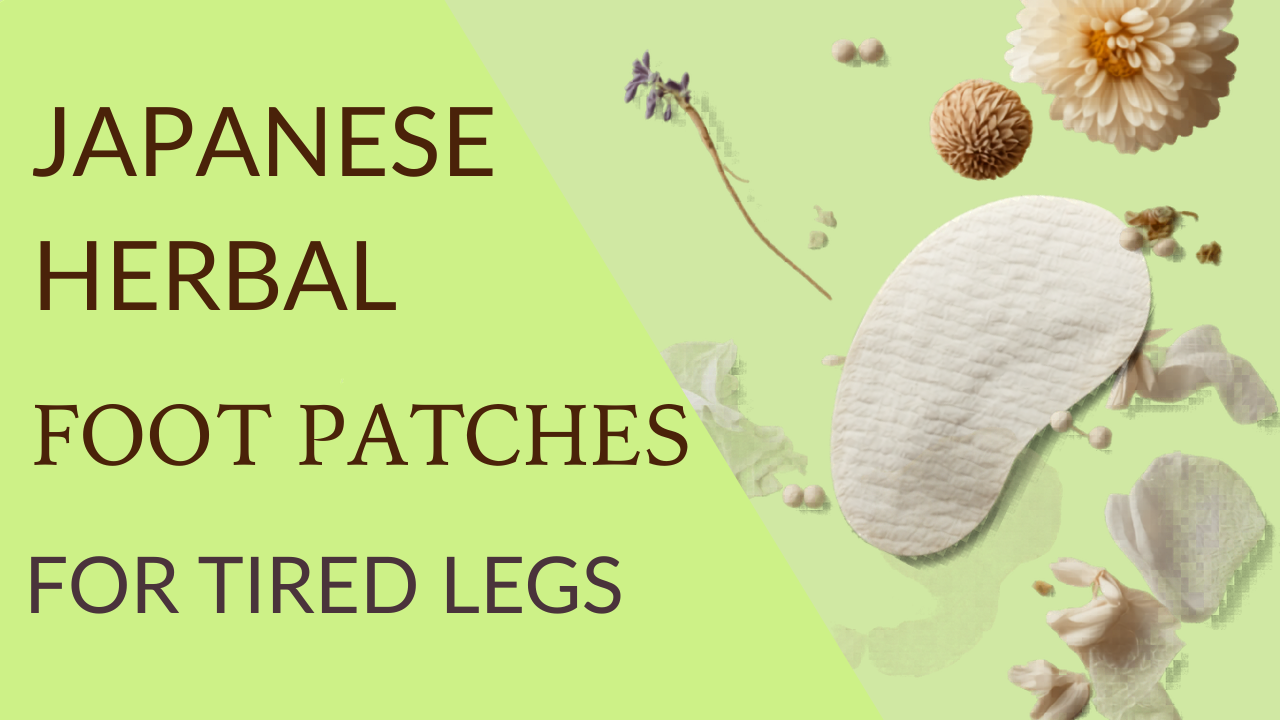
If you've ever stepped off a long-haul flight with legs that felt like concrete, or finished a 14-hour shift on your feet and lay down with that heavy, dragging feeling all the way up to the knees — you've met the problem that an entire category of Japanese drugstore products is built to address. Foot patches. Specifically, the herbal-tradition foot patches that you apply to the soles before bed and remove in the morning, leaving the legs feeling lighter than they did the night before.
This is the most uniquely Japanese category I cover at Tsujimoto Market. There's no real Western equivalent — at least, not at this price and not with this depth of variant choice. I've lived in Kobe for 23 years and built Tsujimoto Market over the last 11 — these patches have been in the catalog from the early days, and they're one of the products customers buy again and again. The leading brand in the category, both in Japanese drugstores and in our store, is Honpo. They make six variants of their Legs Sheet Plasters, each tuned for a different person and use case. This guide will help you choose between them.
What Japanese herbal foot patches actually are
Honpo Legs Sheet Plasters are not pain-relief patches. They don't contain NSAIDs or analgesics. They are a different category entirely: herbal detox plasters, applied to the soles of the feet overnight, that draw on a centuries-old Japanese folk-medicine tradition (with related practice in Chinese and Korean traditional medicine). The premise is that the feet are a primary outlet for waste products and accumulated fluid, and that applying a patch with herbal extracts to the sole supports that natural process while the body rests.
I'll be straightforward about the framing: the patches sit in the category of complementary wellness rather than evidence-based medicine. The "detox" claim in the traditional sense — that the patch literally extracts toxins through the skin and that the dark color of the patch in the morning is "toxins absorbed" — is not supported by Western clinical research. The dark color is the herbal compounds in the patch reacting with sweat from the foot overnight.
What is reasonably well-documented is the experience: many users report a real, immediate sense of legs feeling lighter and less heavy in the morning. This is plausibly explained by a combination of overnight elevation, the gentle warming or cooling effect of the herbal compounds, the calming aromatic scent supporting deeper sleep, and the simple ritual of taking care of one's feet before bed. Whether that's "detox" or "ritual + circulation support + better sleep" — the lighter-legs effect, especially after travel, exercise or long standing, is the real reason this category has been a quiet bestseller in Japan for decades.
What's actually inside a Honpo patch
Each variant builds on the same base, with a different herbal accent. The verified ingredients across the line (taken from the storefront descriptions):
- Bamboo vinegar extract — the traditional Japanese folk-medicine ingredient most associated with the foot-patch category. Faintly smoky in scent, it's the workhorse.
- Wood vinegar — sister ingredient to bamboo vinegar, a long-standing element of Eastern detox traditions.
- Tourmaline — a mineral that emits gentle far-infrared rays. Whether you find the far-infrared claim meaningful is a question of perspective, but Japanese consumers consistently report a warming sensation when tourmaline is present.
- The herbal accent — this is what differentiates each variant: lavender, ginger, grapefruit, mugwort (yomogi), capsaicin (chili), or pure-tourmaline (titanium).
- No synthetic fragrances or harmful chemicals. The scents come from genuine essential oils and herbal extracts.
The six Honpo variants — which one for you
This is the question I get asked most. The good news: at ¥2,800 per box, the price is the same across all six variants, so the decision is purely about which herbal accent fits your situation. Here's how I help customers choose.
1. Honpo Legs Sheet Plasters — Lavender (Standard)
The most-bought variant and the right default if you're new to the category. Lavender essential oil provides a calming, sleep-promoting scent as the patch warms gently against the sole through the night. The most universally pleasant of the six. If you read no further and just want to try the category — this is the one.
Best for: First-time users, light sleepers, anyone for whom "calming" is the priority over "warming" or "stimulating."
2. Honpo Legs Sheet Plasters — Ginger (Warming)
A genuine warming sensation. Ginger essential oil produces a noticeable but not aggressive warmth on the sole. Particularly popular in Japan during the winter months and among people with chronically cold feet — a common complaint in colder climates and in air-conditioned offices.
Best for: Cold feet, winter use, anyone who finds plain lavender too neutral and wants a perceptible warming feeling.
3. Honpo Legs Sheet Plasters — Grapefruit (Refreshing)
The lightest and most uplifting of the six. Grapefruit essential oil produces a fresh, citrusy scent rather than a warming sensation. Popular in summer and in warmer climates, and among people who find lavender too sedating.
Best for: Hot weather, summer travel, anyone who prefers an energizing rather than calming aromatic.
4. Honpo Legs Sheet Plasters — Yomogi / Mugwort (Traditional)
The most traditionally Japanese variant. Yomogi (mugwort) has been used in Japanese herbal medicine for centuries — it's the herb associated with the practice of moxibustion (お灸), which is the traditional warming therapy applied to acupuncture points. The scent is grassy, slightly bitter, distinctly traditional. The variant most often chosen by customers who specifically want an authentic Japanese herbal experience rather than a perfumed one.
Best for: Customers who appreciate Japanese herbal tradition, who like the smell of green tea or traditional Japanese gardens, or who find essential-oil scents overpowering.
5. Honpo Legs Sheet Plasters — Chili Pepper (Intense Warming)
The strongest warming sensation of the line. Capsaicin from chili pepper extract produces noticeable heat on the sole that builds over the first 20-30 minutes after application. Not painful, but definitely perceptible. Not recommended as a first try — start with ginger if you want warmth and graduate to chili if you find ginger too mild.
Best for: Experienced foot-patch users, severe winter cold-feet complaints, people who specifically enjoy intense warming sensations.
Skin caution: If you have sensitive skin or known capsaicin sensitivity (some people experience flushing or itching with capsaicin-containing topicals), patch-test on a small area of the sole for the first night.
6. Honpo Legs Sheet Plasters — Titanium (Far-Infrared)
The minimalist variant. Built around tourmaline far-infrared technology with minimal added scent. The Japanese consumer who chooses this one is typically looking for the warming sensation of tourmaline without the strong herbal aroma — for instance, someone who needs to share a bedroom with a partner sensitive to essential-oil scents, or who simply prefers minimal fragrance.
Best for: Fragrance-sensitive users, shared bedrooms, anyone who wants the tourmaline base without the strong herbal scent of the other variants.
How to actually use them — the protocol
- Clean and dry your feet before bed. Patch adhesion is much better on clean dry skin than on showered-but-not-fully-dry skin.
- Peel the patch from its backing and apply directly to the sole of each foot. The patch should sit roughly under the arch — not on the heel, not on the toes.
- Leave on overnight, 6-8 hours. This is the working window. Less than 6 hours and the effect is partial.
- Remove in the morning and rinse the feet.
- The patch will be darker in the morning than when applied. This is normal. It's the herbal compounds in the patch reacting with overnight foot perspiration — not literally "toxins extracted." Don't be alarmed.
- Apply one patch per foot — don't double up. The dose is engineered for one patch per sole.
- For best practical results, use consistently for 4-7 nights after a long travel day, intense exercise period, or long-shift workweek. Single-night use produces a single-night effect; multi-night cycles compound the leg-lightness experience.
When to use them
- After long-haul flights. The single most common use case at Tsujimoto Market. Customers tell us patches in the suitcase mean landing in Europe or the US and not waking up the next morning with swollen, dragging legs.
- After extended walking or standing. Long sightseeing days, retail or hospitality shifts, weddings, conferences with miles of trade-show floor.
- After long hours sitting. Long-haul train journeys, office days where you barely stood up.
- For the chronically cold-footed. Ginger or chili variant, used regularly in winter.
- As a sleep ritual. The lavender variant in particular works as part of a wind-down routine — the application becomes the cue that the day is done.
Who should not use these patches
- People with open wounds, cuts, blisters or active infections on the soles of the feet.
- Anyone with a known allergy to the essential oil or herbal extract in the variant they choose.
- Diabetic patients with reduced sensation in the feet should consult their doctor before use — sensation-impaired skin requires extra care with any overnight skin contact product.
- Pregnant women: consult an obstetrician before regular use, particularly for the chili and ginger variants.
- Children under 12: not recommended without pediatric guidance.
What these patches do not do (managing expectations honestly)
I want to be clear about what these patches are not, because over-claiming is the fastest way to disappoint a customer:
- They are not pain relievers. They contain no NSAIDs, no analgesics, no anti-inflammatory drugs. If you have acute injury pain, that's a different category of product.
- They do not literally extract toxins through the skin. This claim, frequently made in older marketing for the category, is not supported by clinical evidence. The mechanism is more accurately described as overnight aromatic and warming application that supports rest and circulation perception.
- They are not a treatment for medical leg conditions. Venous insufficiency, deep vein thrombosis, diabetes-related circulation problems, or persistent swelling without a clear cause all require medical evaluation, not a foot patch.
- They are not a weight-loss product, despite some marketplace listings dressing them up as such.
What they reliably do is provide a calming, mildly warming or scenting overnight foot application that many users report makes legs feel lighter in the morning — especially after travel, long days on the feet, or long sitting days. That's a real, valuable, low-risk wellness experience. It just isn't medicine.
How they pair with other Japanese wellness routines
Foot patches sit at the wellness-ritual layer of the Japanese skincare and self-care system. They're complementary, not substitute, to the rest of the daily routine. For a fuller picture of how the Japanese approach to skincare and wellness fits together, see my guide to the Japanese skincare routine.
FAQ
Q: Why is the patch dark in the morning?
A: The bamboo vinegar and wood vinegar in the patch react with normal overnight foot perspiration, which produces the dark color. It is not "toxins extracted from your body." A patch applied to a surface that doesn't perspire (your arm, for example) will not darken in the same way — that's because the reaction needs perspiration, not because your arm has no toxins.
Q: How long does one box last?
A: 30 patches per box. Used as one patch per foot per night, that's 15 nights of use. For occasional travel and exercise-recovery use, one box typically lasts 2-3 months.
Q: Can I use them every night?
A: Yes, the formulation is safe for daily use. Most regular users do 4-7 consecutive nights when they need the effect (e.g., after travel) rather than every night indefinitely. The leg-lightness benefit doesn't compound past about a week of consecutive use.
Q: Will they help with pain in my legs?
A: These are not pain-relief patches. If you have leg pain — particularly persistent pain, pain with swelling, or pain that wakes you up — see a doctor. These patches address the heavy/tired feeling, not pain.
Q: Can I use them after exercise?
A: Yes. After a long run, hike, gym session or sports day, many users find that one or two consecutive nights of patches reduces the "heavy legs" recovery feeling. Apply after a proper warm-down and shower.
Q: Are these halal-friendly?
A: The patches contain herbal and mineral ingredients with no animal-derived components in the formulations we sell. They are not formally halal-certified, but the ingredient profile is plant- and mineral-based.
Q: Are these the authentic Japanese version?
A: Yes. Tsujimoto Market sources Honpo Legs Sheet Plasters directly from Japanese authorized retail and ships from Kobe with tracked airmail in 2-6 business days.
Final thoughts
If you're new to the Japanese foot-patch category and don't know where to start, my standard recommendation is: buy the lavender (standard) box first, use it for a week — particularly the night after a long flight or a heavy day on your feet — and decide from there whether you want to try a warming (ginger, chili) or refreshing (grapefruit) variant. For most people the lavender works fine indefinitely.
If you specifically have cold feet in winter, start with ginger. If you're traveling in summer, try grapefruit. If you appreciate traditional Japanese herbal scents, yomogi will be a revelation. If you need maximum warming, chili is the strongest. If you share a bedroom and someone is sensitive to scent, titanium is your minimal-fragrance option.
The whole line is here: Honpo Legs Sheet Plasters (Lavender / Standard), with the variants linked above. All ¥2,800, all shipped direct from Kobe.
— Natalia Tsujimoto, Kobe