
Why Japanese Vitamin C Serums Are a Different Beast
Vitamin C is one of the most talked-about — and most misunderstood — ingredients in skincare. The side effects people report with vitamin C serums are real, but they're often specific to the type of vitamin C used and how it's formulated. After 23 years of living in Japan and working in Japanese beauty, I've learned that not all vitamin C is equal, and the Japanese approach to formulating it solves many of the problems that Western users frequently encounter.
Let me walk you through what actually happens with vitamin C in skincare, where the side effects come from, and why formulation matters so much — using a specific Japanese example to ground the conversation.
The Fundamental Problem With Classic Vitamin C (L-Ascorbic Acid)
Most Western vitamin C serums use L-ascorbic acid (LAA) — the pure, direct form of vitamin C. It's highly effective when formulated correctly, but it comes with significant challenges:
It's inherently unstable. L-ascorbic acid oxidises rapidly when exposed to air, light, and heat. The tell-tale sign: your serum turning orange or brown. Oxidised LAA doesn't just lose effectiveness — it can actually become a pro-oxidant and cause skin irritation rather than preventing it.
It requires an acidic pH to work. Effective L-ascorbic acid serums typically sit at pH 2.5–3.5 — highly acidic, similar to lemon juice. At this pH, LAA penetrates the skin effectively. But for many people, especially those with sensitive, dry, or reactive skin, this acidity causes stinging, redness, and peeling.
High concentrations can overwhelm the skin. Many popular serums contain 10–20% LAA. At these levels, side effects become more likely, particularly in people new to the ingredient or with disrupted skin barriers.
The Japanese Solution: Stable Vitamin C Derivatives
Japanese cosmetic chemistry took a different path. Rather than fighting the instability of L-ascorbic acid, Japanese formulators developed stabilised vitamin C derivatives — forms that are gentler on the skin, more stable in formula, and engineered for sustained efficacy rather than immediate impact.
One of the most significant of these is Bis-Glyceryl Ascorbate — a lipid-soluble vitamin C derivative. Unlike water-soluble LAA, lipid-soluble derivatives can penetrate the skin membrane more effectively and over a longer period. They also work at a neutral pH, meaning they don't require the high acidity that makes LAA serums stinging for sensitive skin types.
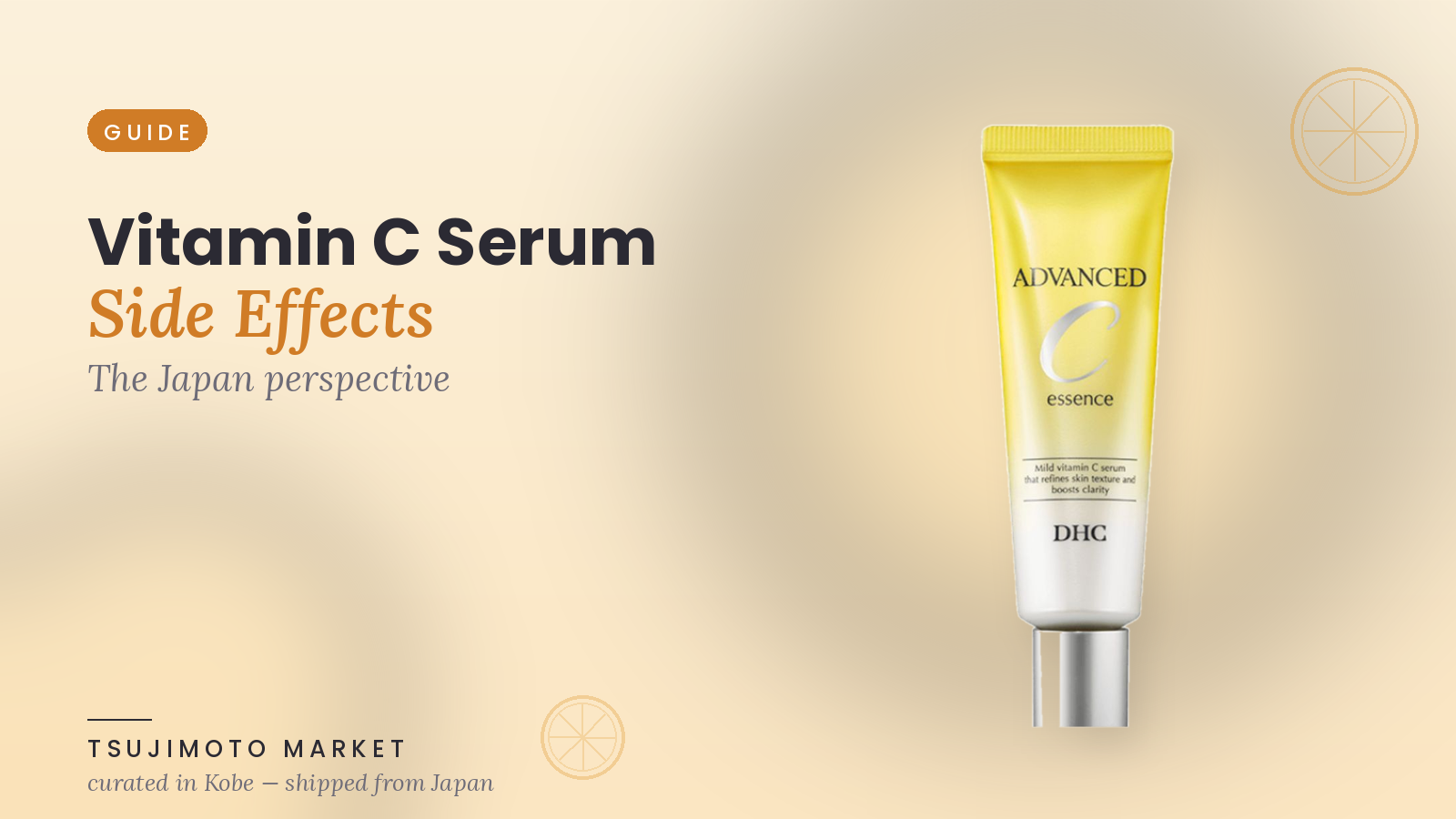
The DHC Advanced C Vitamin C Serum that we carry uses 16% Bis-Glyceryl Ascorbate — a high concentration of this stabilised derivative. Critically, it's formulated without fragrance, without parabens, and without alcohol — three of the most common additional irritants in vitamin C products. The base also includes glutathione and a glutathione booster, which work synergistically with the vitamin C for antioxidant function and brightening, plus five botanical moisturisers: saxifrage extract, rosa multiflora fruit extract, alpinia speciosa leaf extract, tremella mushroom extract, and hydrolysed royal jelly protein.
The Real Side Effects of Vitamin C Serums — And What Causes Them
1. Stinging and Burning
The most common complaint with vitamin C serums — and almost exclusively associated with high-percentage L-ascorbic acid formulas at low pH. The acidic formula triggers pain receptors in the skin, particularly in people with sensitive skin, compromised barriers, or redness-prone conditions like rosacea.
Who it affects most: Sensitive skin, dry skin, skin with a disrupted barrier (over-exfoliated, post-laser, eczema-prone).
With stable derivative formulas like Bis-Glyceryl Ascorbate: Much less common. Neutral-pH, alcohol-free formulas bypass the primary irritation mechanism of LAA. If you've experienced burning with vitamin C in the past, this is frequently the reason to switch formulation types rather than abandoning vitamin C altogether.
2. Peeling and Flaking
Some users experience peeling — particularly in the first two weeks of using a high-percentage LAA serum. This is partly an exfoliating effect from the acidity, partly a reaction to the concentrated active. It can look alarming but is often temporary as the skin adjusts.
With stabilised derivatives at neutral pH, peeling is significantly less common. The skin adapts without the same level of stripping effect.
3. Increased Photosensitivity
Oxidising vitamin C (which is what happens when it's improperly stored or has degraded) can sensitise the skin to UV. Well-formulated, stable vitamin C should do the opposite — it provides antioxidant protection that supports the skin against UV-induced oxidative damage, which is why you'll often find vitamin C recommended in morning routines paired with SPF.
The key is using a stable, unexpired, properly stored product. Signs your vitamin C has oxidised: yellow to orange to brown colour change, off smell. At that point, discard and replace.
4. Breakouts
Some people report initial breakouts when starting vitamin C. As with many other side effect reports, this is most often associated with the formula's carrier ingredients — the emollients, silicones, or thick bases some serums use — rather than the vitamin C itself. Pure vitamin C is not inherently comedogenic.
A lightweight, oil-free formula like the DHC Advanced C Serum minimises this risk. The botanical moisturisers in the formula (saxifrage, tremella, alpinia speciosa) are chosen for their skin-compatible profiles.
5. Oxidation-Related Irritation
Perhaps the most underappreciated side effect: using a vitamin C serum that has already started oxidising. Oxidised vitamin C can cause skin irritation and, counterproductively, contribute to the very oxidative stress it's supposed to prevent. Always check the colour and expiry date. Store vitamin C serums away from light and heat.
Who Benefits Most From Vitamin C Serums
People Concerned About UV-Related Pigmentation
Vitamin C inhibits tyrosinase — a key enzyme in melanin production. Consistent daily use over weeks to months can visibly reduce the appearance of sun spots, post-inflammatory hyperpigmentation, and uneven skin tone. This is one of vitamin C's most evidence-supported applications. The glutathione in the DHC Advanced C formula works synergistically with the vitamin C for this brightening effect.
Anyone Wanting Antioxidant Protection
Vitamin C neutralises free radicals generated by UV exposure and environmental pollution. In Japan — where sun protection culture is exceptionally strong — vitamin C serum in the morning followed by SPF is a common daily stack. It's an inside-out approach to protecting the skin from damage before it occurs.
Mature or Dull Skin
Vitamin C is involved in collagen synthesis and brings luminosity to skin that has become dull from sun damage, pollution, or age. Consistent use tends to give skin a brighter, more even quality that users describe as "lit from within."
Oily and Combination Skin
Lightweight vitamin C serums suit oily skin well — particularly stable derivative formulas that don't require thick, emollient bases to maintain stability. The DHC Advanced C formula is fragrance and alcohol-free, making it compatible with reactive and oily skin types alike.
How to Introduce Vitamin C Serum Without Side Effects
Start every other day, not daily. In the first two weeks, apply the serum every second day to give your skin time to acclimate, particularly if you've had issues with vitamin C in the past.
Apply to clean, dry skin. Apply after cleansing but before heavier moisturisers. For derivative-based formulas at neutral pH, there's no strict requirement to wait for skin to fully dry (unlike high-acidity LAA, where some users find damp skin increases stinging).
Always follow with SPF in the morning. Vitamin C and sunscreen are complementary — the serum's antioxidant activity supports the SPF's UV protection. Without SPF, the benefits of vitamin C are significantly diminished.
Don't layer with other acids at the same time. If you use AHAs, BHAs, or retinol, use those in the evening and vitamin C in the morning. Stacking multiple actives simultaneously increases irritation risk without proportionally increasing benefit.
Store correctly. Keep the bottle away from direct light and heat. Bathroom cabinets above radiators are a common culprit for premature oxidation. A cool, dark drawer works well.
Frequently Asked Questions
Can I use vitamin C serum every day?
Yes, once your skin has acclimated. Daily use in the morning is the standard application for antioxidant protection and brightening. Start every other day for the first two weeks if you're new to the ingredient.
Can vitamin C serum cause skin darkening?
Fresh, well-formulated vitamin C should not cause darkening — in fact it works to prevent and reduce it. Oxidised vitamin C, however, can sometimes cause irritation that leads to post-inflammatory hyperpigmentation in darker skin tones. This is another reason to use a stable, fresh, properly stored formula.
Is vitamin C serum safe for sensitive skin?
The answer depends on the formula. High-percentage L-ascorbic acid at low pH is frequently problematic for sensitive skin. Stable derivatives like Bis-Glyceryl Ascorbate at neutral pH — as in the DHC Advanced C Serum — are much gentler. Many people who've "given up" on vitamin C had simply been using the wrong formulation type.
Can I use vitamin C with niacinamide?
Yes — the old concern that vitamin C and niacinamide cancel each other out has been largely debunked. Both ingredients support brightening and work well together in modern formulations. You can layer them or use them at different steps of your routine.
How long before I see results from vitamin C serum?
Antioxidant protection begins immediately with each application. Visible brightening effects — reduction in dullness, minor pigmentation improvements — typically become noticeable after four to eight weeks of consistent daily use. More significant pigmentation improvements require three to six months.
What's the difference between vitamin C serum and vitamin C supplements?
Different routes, different effects. Topical vitamin C serum delivers the active directly to the skin surface, where it provides antioxidant protection and supports tyrosinase inhibition locally. Oral vitamin C supplements support systemic collagen synthesis and immune function but don't deliver concentrated topical brightening effects to the skin the way a serum does. Most dermatologists recommend both as complementary rather than alternative approaches.
The Bottom Line
Most vitamin C serum side effects are formula-dependent, not ingredient-dependent. The burning, peeling, and oxidation-related irritation that give vitamin C its reputation for being "difficult" are primarily associated with poorly stabilised or high-acidity L-ascorbic acid formulas.
Japanese cosmetic chemistry addressed this by developing stabilised derivatives that work at neutral pH, remain stable longer, and are tolerated by a much wider range of skin types — including sensitive and reactive skin that has struggled with vitamin C before.
The DHC Advanced C Vitamin C Serum — with its 16% Bis-Glyceryl Ascorbate, glutathione complex, and five botanical moisturisers, all in a fragrance-free, paraben-free, alcohol-free base — represents this Japanese approach at its most refined. It's where I'd direct anyone who has had difficulty with vitamin C in the past, or who wants to add the ingredient's antioxidant and brightening benefits without the typical friction.
— Natalia Tsujimoto, 23 years in Kobe, Japan