

Tsujimoto Market: Our Guarantees
Description
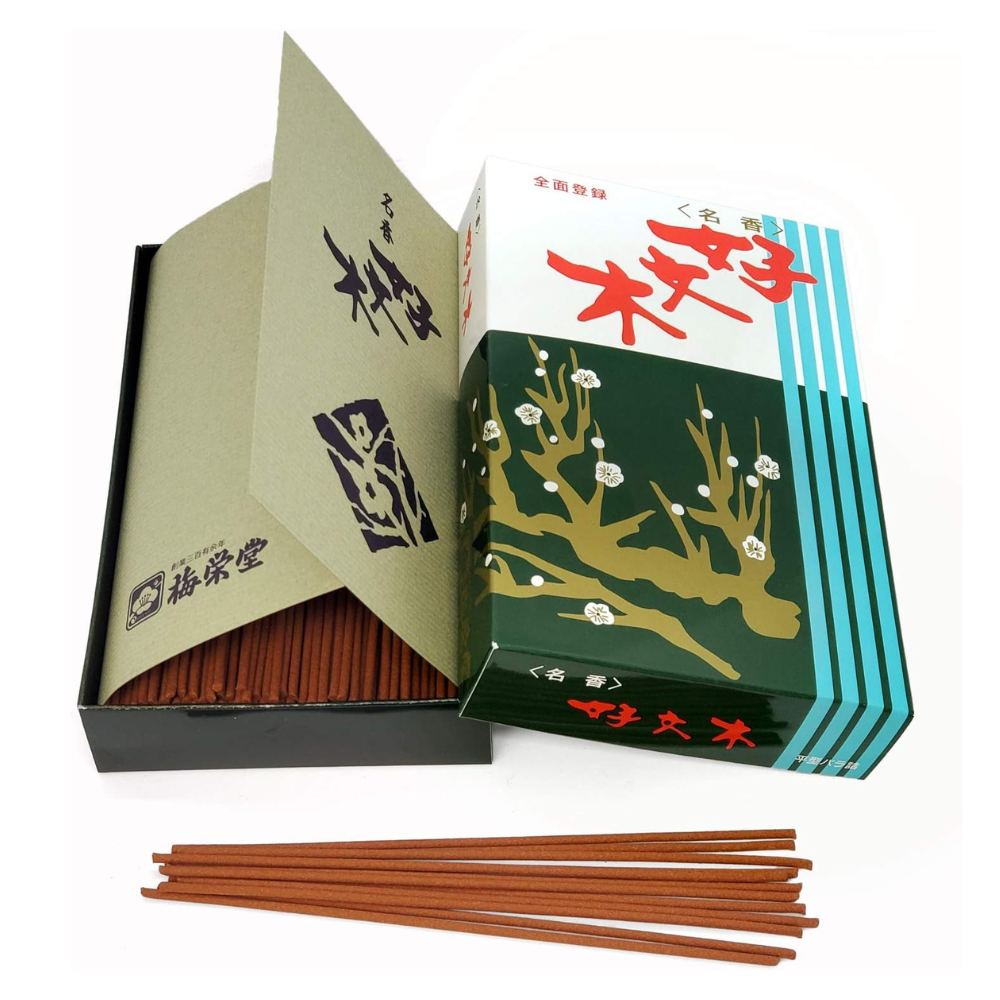
Baieido Kobunboku Incense — 82 g Loose Pack
Overview
Kobunboku is Baieido's house standard — the blend the Sakai maker has built its name on, sold loose by weight rather than counted into a stick number. It is a sandalwood composition: sandalwood, borneol, clove and cinnamon with supporting herbs, dry and quiet and a little medicinal, closer to the smell of a temple hall than to anything designed to be pleasant in the perfume sense. People who come to it from floral incense usually need a stick or two before it lands.
The name is worth explaining, because it is routinely mistranslated. 好文木 kōbunboku is a classical literary epithet for the plum tree — not "ancient wood" — which is why Baieido's house mark is a plum blossom. For a warmer, sweeter room scent instead, see Kayuragi Sandalwood; for the long formal burn, Shoyeido Kyo-jiman.
Key Benefits
- ✓ Baieido's core blend, in production in Sakai, Osaka, where the house was founded in 1657
- ✓ Sandalwood, borneol, clove and cinnamon — a dry, quiet, temple-register scent rather than a sweet one
- ✓ 82 g loose pack: sold by weight, so the price per burn is well below a counted premium box
- ✓ Short-length (tansun) sticks, the format used daily in Japanese homes
- ✓ Baieido publishes its fragrance materials openly, which is not universal in this category
- ✓ Bought in Japan and shipped from Kobe with tracking
Product Details
| Brand | Baieido (梅栄堂), Sakai, Osaka, founded 1657 |
|---|---|
| Japanese product name | 梅栄堂 好文木 短寸バラ詰 |
| Name meaning | Kōbunboku — a classical literary name for the plum tree |
| Product type | Short-length stick incense, loose-packed |
| Fragrance materials | Sandalwood, borneol, clove, cinnamon and supporting herbs |
| Net weight | 82 g |
| Stick count | Not published — this format is sold by weight, not by count |
| Burn time | Not published by Baieido for this format |
| Grade | Standard Kobunboku (not Tokusen, not Jinkoh — see FAQ) |
| Country of origin | Japan |
| Category | Household — air care |
| Regulatory status | General household good. Not a cosmetic, not a quasi-drug (医薬部外品), not a food. |
Who Is This For?
- People who want the temple smell rather than a pleasant room fragrance — they are not the same thing
- Regular burners who go through incense fast and want weight rather than a counted box
- Anyone building a sitting or memorial practice, where Kobunboku is a common household choice in Japan
- Those who already know they like sandalwood dry rather than creamy
- Not a good first box for someone used to floral or sweet incense — start with Kayuragi or Hana-no-Hana
How to Use
- Stand the stick in a non-flammable holder on a stable, heat-resistant surface, with an ash tray or dish underneath to catch the fall.
- Light the tip and let the flame take hold for three to five seconds.
- Blow the flame out. The tip should be left glowing, giving off a thin thread of smoke — a stick that is still flaming has been lit too hard and will burn fast and harshly.
- Leave it to burn down. One stick is enough for an average room; two in the same room reads as too much rather than twice as good.
- Check that the ember is fully out before you leave the room.
Frequency: As desired
Full Ingredients
Baieido states the fragrance materials of Kobunboku as sandalwood, borneol, clove and cinnamon together with supporting medicinal herbs. Japanese incense carries no INCI-style labelling duty, so no exhaustive quantitative declaration is published, and we do not invent one.
What this blend does not contain: aloeswood. Aloeswood and the fifteen-material formula both belong to other products in the same series — Jinkoh Kobunboku (沈香好文木) is the aloeswood version and Tokusen Kobunboku (特撰好文木) is the fifteen-material premium grade. This listing is the standard grade, and it is worth knowing which one you are buying, because they smell quite different.
The stick body is a pressed tabu bark base (Machilus thunbergii), standard for the format.
Cautions
- Never leave burning incense unattended.
- Keep out of reach of children and pets.
- Burn only in a non-flammable, heat-resistant holder placed on a stable surface.
- Keep well away from curtains, paper, bedding and anything else that can catch.
- Ventilate the room. Smoke from any burning material irritates the airways, and people with asthma or another respiratory condition should ventilate generously or choose a low-smoke product.
- Make sure the stick has gone out completely before you leave the room or go to sleep.
- Not for consumption. Store in a cool, dry place away from direct sunlight.
Package Contents
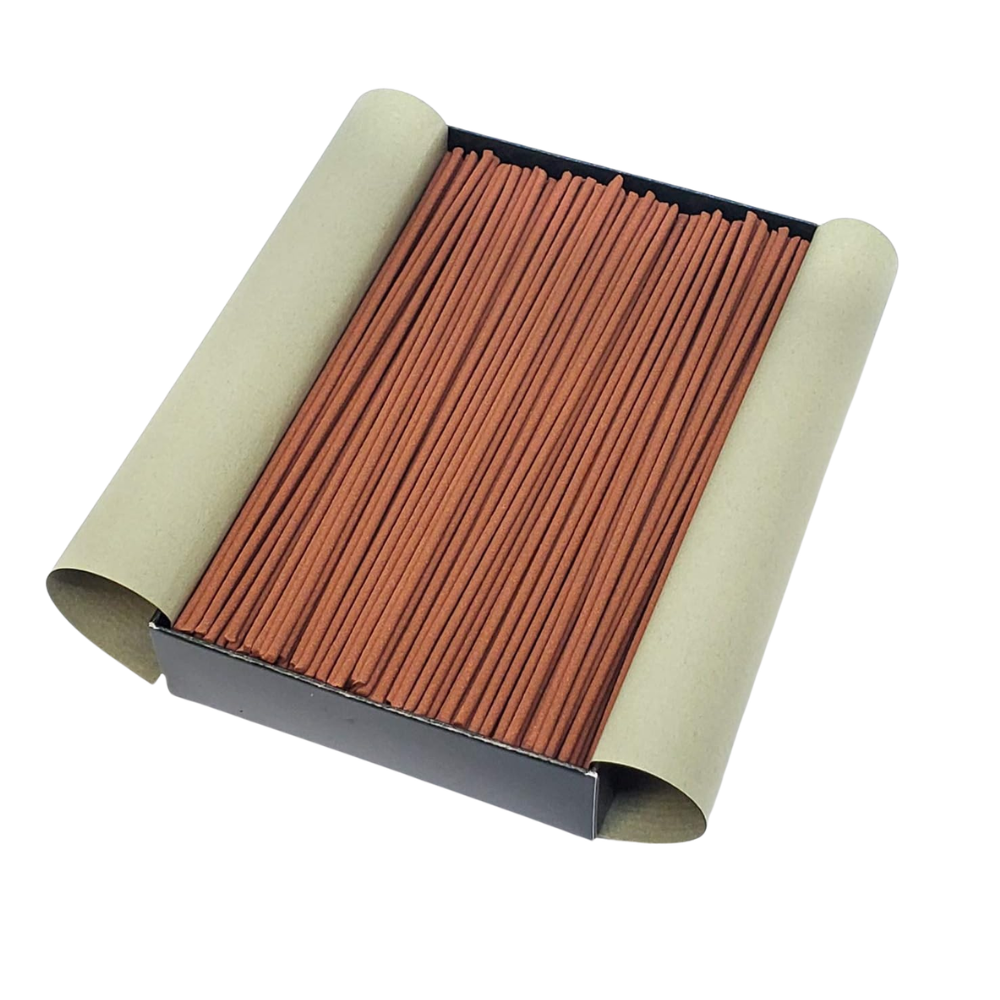
- 1 × Baieido Kobunboku, 82 g of short-length sticks, loose-packed in a printed box
- Japanese usage and safety text on the box
- No holder is included
Shipping & Store Notes
- Ships directly from Japan
- Processing time: 2–6 business days
- Tracking number provided after dispatch
- Import duties and taxes may apply depending on destination country
- Opened incense boxes cannot be returned once the inner wrapping is broken, because the fragrance transfers to the packaging
- Some airlines and postal routes restrict incense as a scented good; we ship by the routes that accept it
Authenticity Guarantee
Every product at Tsujimoto Market is sourced directly from Japan and verified for authenticity. We never sell fakes or grey-market goods. Each order is carefully packed in Kobe, Japan and dispatched with full tracking.
FAQ
Does this contain aloeswood?
No. Standard Kobunboku is sandalwood, borneol, clove and cinnamon with supporting herbs. The aloeswood blend is a separate product, Jinkoh Kobunboku (沈香好文木), and the fifteen-material premium grade is Tokusen Kobunboku (特撰好文木). If you are shopping for the aloeswood blend or for the fifteen-ingredient grade, this is not either of them, and we would rather you knew before ordering.
Does "Kobunboku" mean "ancient wood"?
No — that is a mistranslation this product's English name carries. 好文木 kōbunboku is a classical literary epithet for the plum tree, from an old anecdote in which the plum bloomed while the emperor studied literature. Baieido's house mark is a plum blossom for exactly that reason.
How many sticks are in 82 g?
Baieido does not publish a count for the loose-packed format, and neither will we. It is sold by weight; the number varies slightly box to box because the sticks are packed loose rather than counted. You will see stick counts quoted for this format by third-party sellers; none of them trace back to Baieido, so we do not repeat them.
How long does one stick burn?
Baieido does not publish a burn time for this format. These are short-length (tansun) sticks, noticeably shorter than the 18 cm Kyo-jiman. We would rather say we do not know than guess at a number you would plan around.
Will I like it if I like Kayuragi Sandalwood?
Possibly not straight away. Kayuragi is sandalwood in its creamy register; Kobunboku is sandalwood dry, with clove and cinnamon pulling it towards the medicinal-temple side. Many people end up preferring it, but few prefer it on the first stick. The whole shelf is in Japanese Air Fresheners & Incense.