
Tsujimoto Market: Our Guarantees
Description
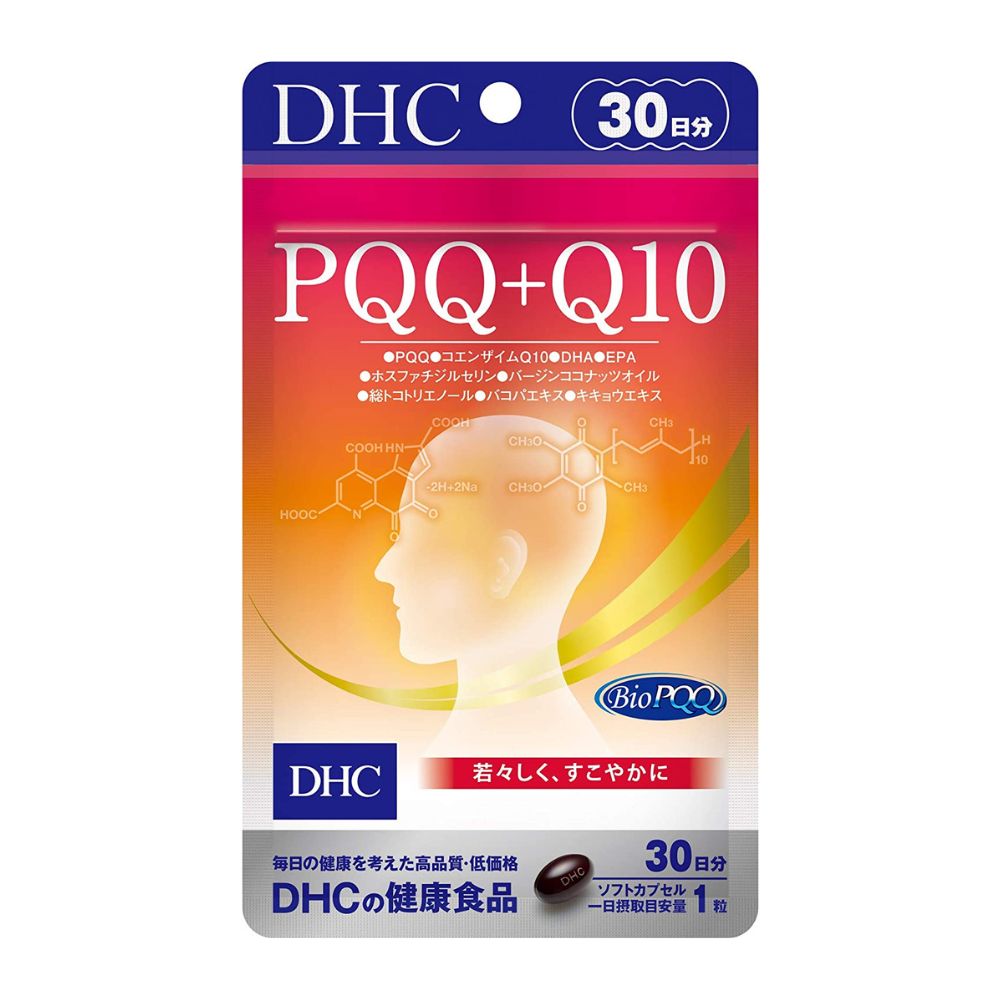
DHC PQQ+Q10, 30 days
Overview
DHC's PQQ+Q10 puts 20 mg of pyrroloquinoline quinone disodium salt and 35 mg of coenzyme Q10 into a single 479 mg capsule, one a day for thirty days, alongside bacopa extract, tocotrienol, DHA, EPA, coconut oil, Chinese bellflower extract and phosphatidylserine.
The previous version of this page said "Recommended daily dose – 1.5 mg. The supplement is available in a 20 mg volume", which does not describe anything. The figures below are DHC's own.
See also: Japanese Supplements.
Key Benefits
- ✓ PQQ disodium salt 20 mg per capsule — the ingredient the product is named for
- ✓ Coenzyme Q10 35 mg in the same capsule
- ✓ Bacopa monnieri extract 10 mg, standardised to 50% bacosides
- ✓ DHA 64 mg and EPA 13 mg from refined fish oil
- ✓ Tocotrienol 9.8 mg, phosphatidylserine 1.5 mg, virgin coconut oil 5 mg, Platycodon extract 5 mg
- ✓ One capsule a day — the simplest possible routine
- ✓ DHC, one of the largest supplement makers in Japan, at a Japanese domestic price
Product Details
| Brand | DHC Corporation |
|---|---|
| Product name | PQQ+Q10, 30 days |
| Product type | Soft capsule supplement, food |
| Capsule weight | 479 mg |
| Serving | 1 capsule a day |
| Quantity | 30 days |
| Country of origin | Japan |
| Allergens | Contains soy and fish (DHA/EPA from fish oil) |
| Capsule shell | Gelatin — animal source not declared |
Who Is This For?
- Adults who already take coenzyme Q10 and want PQQ in the same capsule rather than as a second bottle
- People who prefer a one-capsule-a-day routine to a multi-tablet one
- Anyone who wants to see the declared amounts before buying — they are all in the table below
- Not for vegetarians: the shell is gelatin and the oils include fish oil
- Not for children, not during pregnancy or breastfeeding, and not for anyone with a soy or fish allergy
How to Use
- Take one capsule a day with water.
- DHC does not specify a time or a relationship to meals.
- Swallow whole.
- The pack is thirty days; DHC's own guidance is that a month is a reasonable course.
- Keep it out of direct sunlight and away from heat.
Frequency: One capsule daily for thirty days.
Full Ingredients
Declared amounts per daily serving of one capsule, 479 mg:
| PQQ (pyrroloquinoline quinone disodium salt) | 20 mg |
|---|---|
| Coenzyme Q10 (ubiquinone) | 35 mg |
| DHA | 64 mg |
| EPA | 13 mg |
| Tocotrienol (total) | 9.8 mg |
| Bacopa monnieri extract (50% bacosides) | 10 mg |
| Virgin coconut oil | 5 mg |
| Chinese bellflower (Platycodon) extract | 5 mg |
| Phosphatidylserine | 1.5 mg |
Also present: DHA- and EPA-bearing refined fish oil as the carrier, soy lecithin extract, gelatin, glycerin, beeswax.
Composition and specification as declared by DHC Corporation on the Japanese-market pack and the manufacturer's official product page.
Cautions
- This is a food, not a medicine. It is not intended to diagnose, treat, cure or prevent any disease, and it does not replace a varied diet or advice from your doctor.
- Check the declaration below against your own allergies before you order, not after.
- Contains soy and fish. The DHA and EPA come from refined fish oil and the lecithin is soy-derived.
- The capsule shell is gelatin and the manufacturer does not declare its animal source, so we cannot confirm halal status either way.
- Contains beeswax, so it is not suitable for a vegan diet either.
- If you take anticoagulants, statins, or blood pressure medication, mention coenzyme Q10 and fish oil to your doctor — both are commonly discussed in that context.
- If you are pregnant, breastfeeding, under medical care or taking prescribed medication, speak to your doctor before use.
- Do not exceed the stated daily amount. More is not better here.
- Stop taking it and consult a doctor if you notice any change that does not suit you.
- Store in a cool, dry place away from direct sunlight, and keep out of reach of children.
Package Contents
One 30-day pack of soft capsules, 479 mg each. Japanese-language packaging.
Shipping & Store Notes
- Ships directly from Japan
- Processing time: 2–6 business days
- Tracking number provided after dispatch
- Import duties and taxes may apply depending on destination country
- Opened food and supplements cannot be returned for hygiene and safety reasons
Authenticity Guarantee
Every product at Tsujimoto Market is sourced directly from Japan and verified for authenticity. We never sell fakes or grey-market goods. Each order is carefully packed in Kobe, Japan and dispatched with full tracking.
FAQ
The old page said the daily dose was 1.5 mg. Which is right?
Neither the 1.5 mg nor the "20 mg volume" described anything real; the two sentences appear to be fragments of the label reassembled wrongly. DHC declares 20 mg of PQQ disodium salt and 35 mg of coenzyme Q10 per capsule, one capsule a day. Phosphatidylserine happens to be 1.5 mg, which is probably where the number came from.
What is PQQ?
Pyrroloquinoline quinone, a small redox-active compound found in trace amounts in foods and studied in connection with mitochondrial function. It is a supplement ingredient with a modest research base, not an established treatment for anything, and this card does not claim otherwise.
Why is coenzyme Q10 in the same capsule?
DHC formulates them together; the two are commonly paired in Japanese supplements aimed at energy metabolism. Whether the pairing does more than either alone is not something the label establishes.
Is it vegetarian or halal?
No to vegetarian: the shell is gelatin, the carrier is fish oil, and there is beeswax. As for halal, DHC does not declare the animal source of the gelatin, so we cannot confirm it either way.
Can I take it with my heart medication?
Ask your doctor first. Coenzyme Q10 and fish oil are both routinely raised in discussions about anticoagulants, statins and blood pressure medicines. That is a conversation with a clinician, not with a product page.