

Tsujimoto Market: Our Guarantees
Description
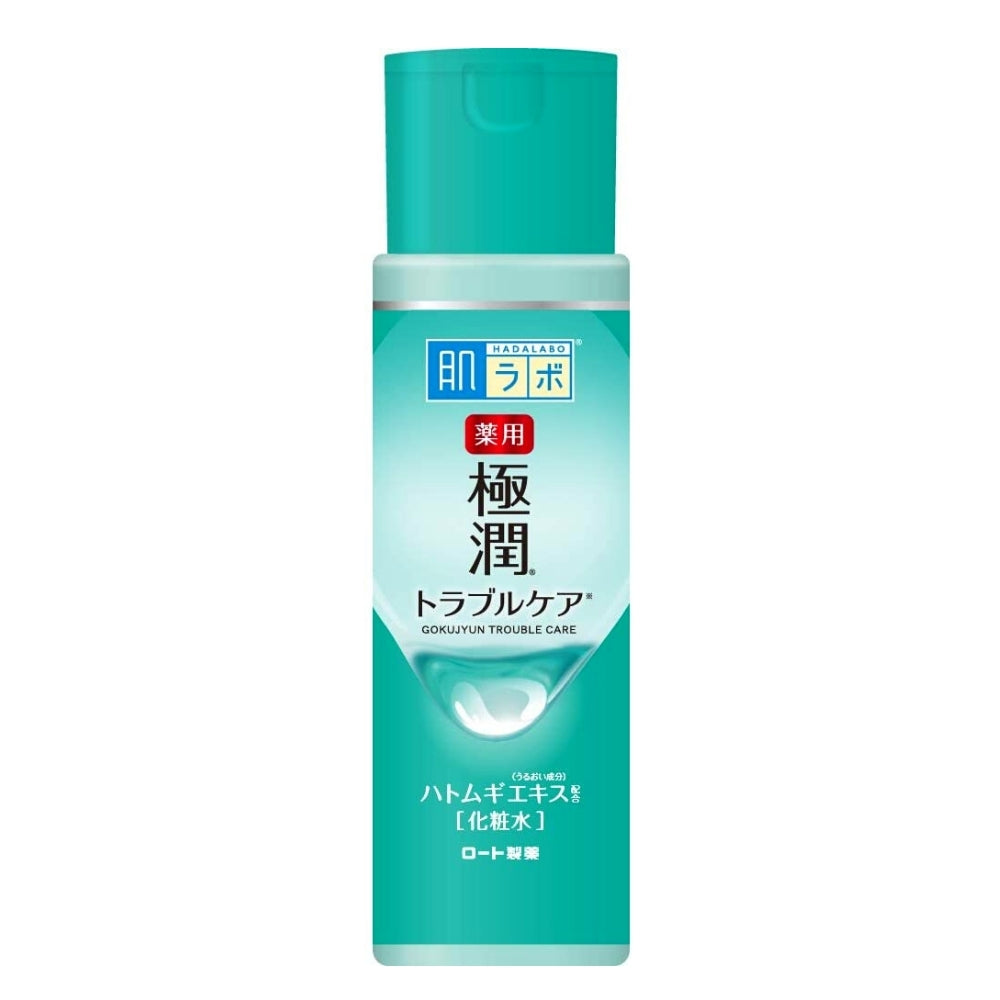
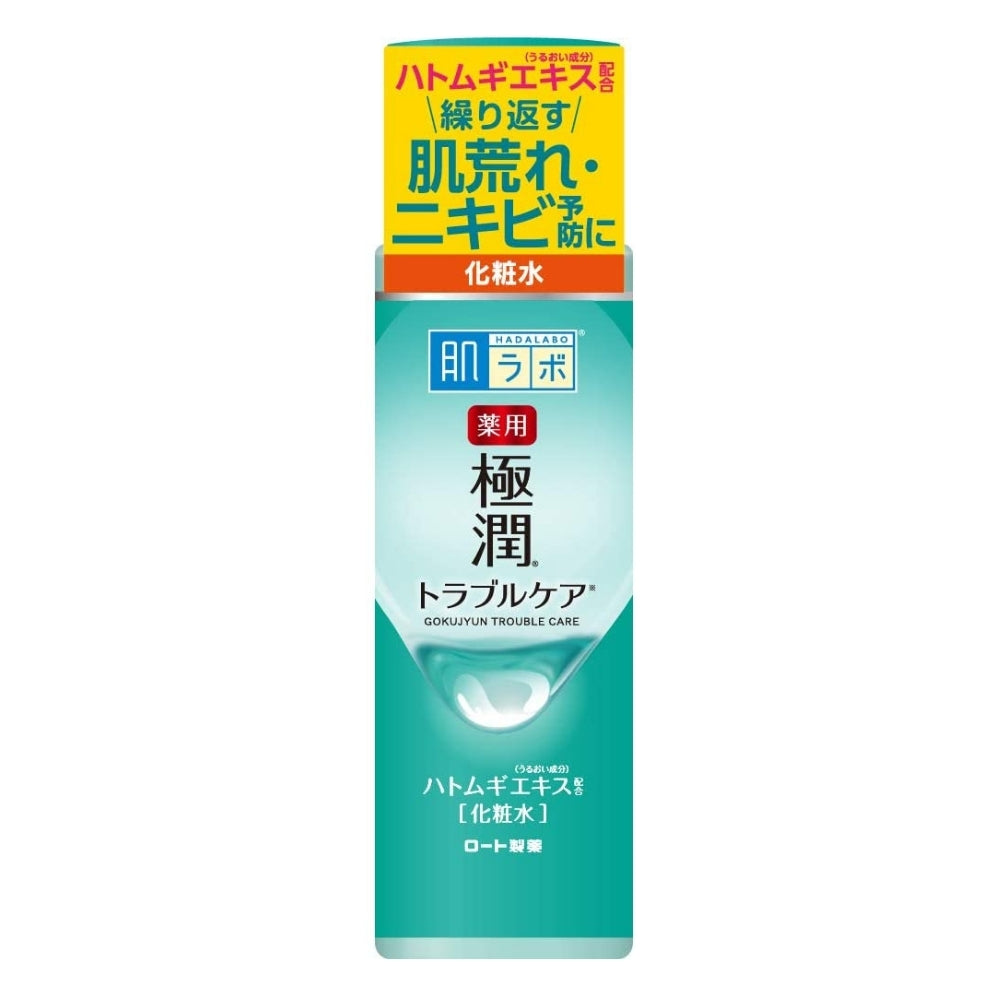
Hada Labo Gokujyun Medicated Skin Conditioner, 170 ml
Overview
This is the breakout-prevention member of the Gokujyun family: a quasi-drug toner carrying two approved anti-inflammatory actives on a hyaluronic acid base, with a small herbal cast of Job's tears, dokudami and chamomile that Japanese formulators have used for rough, congested skin for decades.
One thing to know before you buy, because we got it wrong before: it contains ethanol as well as l-menthol and dl-camphor. That is what produces the cool, brisk feel people like about it — and it is also why it is not the right choice if your barrier is currently in pieces. Compare with the plain Gokujyun toners if you want the calm option.
Key Benefits
- Two approved anti-inflammatory actives, dipotassium glycyrrhizate and epsilon-aminocaproic acid, aimed at preventing breakouts and rough patches
- Hyaluronic acid base, so the calming actives arrive with hydration rather than stripping
- Three traditional Japanese botanicals — Job's tears, dokudami and chamomile — a familiar combination for congested skin
- Light, quick-drying finish that does not add slip before makeup, unlike the classic Gokujyun texture
- Quasi-drug status: the actives and the wording used for them went through health-ministry review
- 170 ml at drugstore pricing, with a refill pouch produced for the same bottle
Product Details
| Brand | Hada Labo (Rohto Pharmaceutical) |
|---|---|
| Country of origin | Japan |
| Product type | Medicated toner for breakout-prone skin |
| Format | Light liquid, squeeze bottle |
| Volume / count | 170 ml |
| Manufacturer | Rohto Pharmaceutical Co., Ltd. |
| JAN code | 4987241138999 |
| Regulatory status | Quasi-drug (iyakubugaihin) in Japan |
| Scent | Fragrance-free (contains menthol and camphor) |
| Sales channel | Japanese drugstore line |
Who Is This For?
- Skin that breaks out along the jaw and chin and gets rough in the same places
- Oily and combination skin that finds the classic Gokujyun texture too heavy
- People who like a cooling toner and are not bothered by menthol
- Not for a badly damaged barrier, active eczema or freshly lasered skin — the ethanol and menthol will sting
- Not for anyone avoiding alcohol in skincare for religious or personal reasons — see the FAQ below
How to Use
- After cleansing, pour a 500-yen-coin amount into your palm.
- Press it over the face; do not rub it across active spots.
- Let it dry down for thirty seconds before the next step.
- Follow with a light, non-comedogenic gel or emulsion — this toner alone will not hold moisture in.
Frequency: Morning and evening. If it stings on more than the first day or two, stop.
Full Ingredients
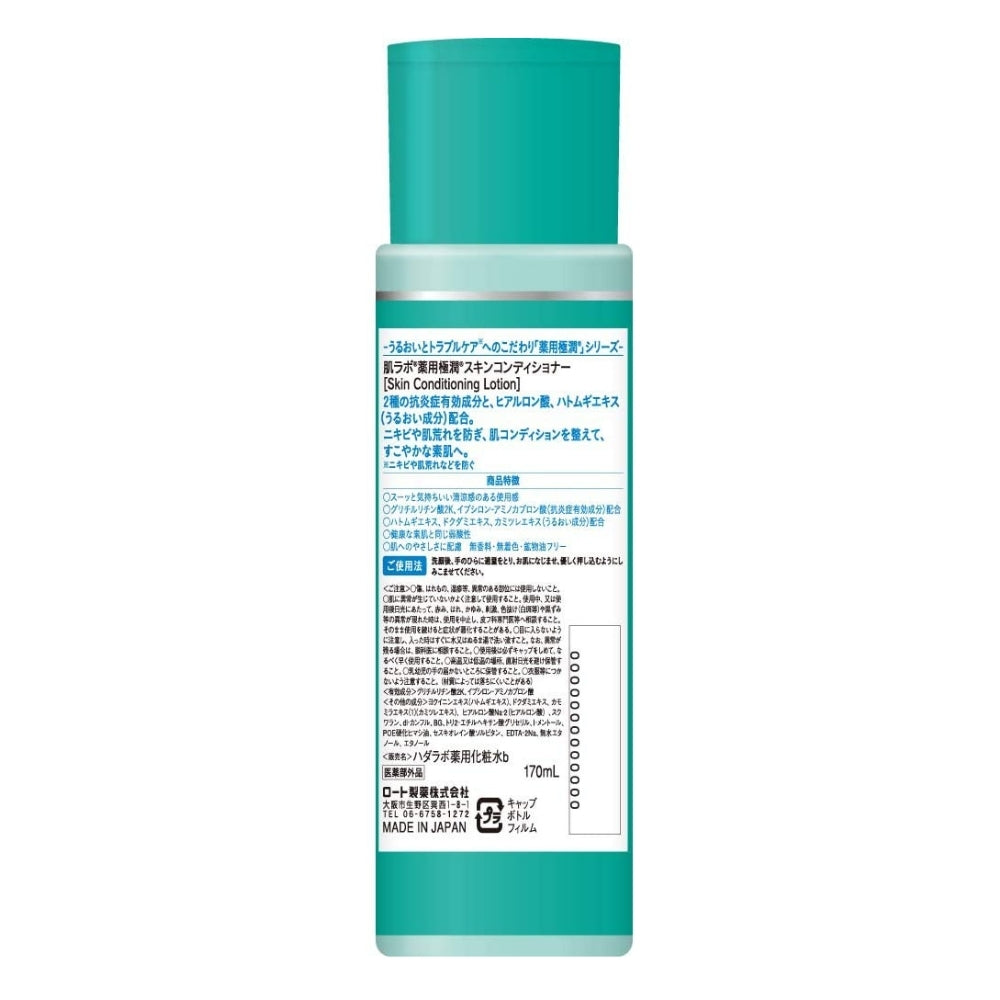
Active ingredients (quasi-drug): dipotassium glycyrrhizate, epsilon-aminocaproic acid. Both are anti-inflammatory; the card previously named only the first.
Other ingredients: Job's tears (hatomugi) extract, Houttuynia cordata (dokudami) extract, chamomile extract, sodium hyaluronate-2, squalane, dl-camphor, BG, triethylhexanoin, PEG hydrogenated castor oil, sorbitan sesquioleate, disodium EDTA, l-menthol, anhydrous ethanol, ethanol.
Please read this part. Ethanol appears twice in that list and l-menthol and dl-camphor are also present. Our previous version of this page described the product as alcohol-free. It is not, and since this toner is aimed at reactive and post-treatment skin, the correction matters more here than it would elsewhere.
Ingredient list as declared by the manufacturer. Formulations are occasionally revised, so always read the list printed on the package you receive.
Cautions
- This is a Japanese quasi-drug (iyakubugaihin): the active ingredients and the effect claimed for them have been reviewed by Japan's Ministry of Health, Labour and Welfare. Outside Japan it is sold as an ordinary cosmetic.
- Contains ethanol (alcohol), which can sting dry or reactive skin — patch test first if your barrier is compromised.
- Contains menthol or mint oil, which can sting reactive skin — patch test first if your skin is easily irritated.
- Not suitable for skin immediately after laser, peels or microneedling, despite what our earlier version of this page suggested.
- The approved claim is prevention of acne and rough skin. It is not a treatment for existing inflammatory acne, which is a medical matter.
- Patch test on the inner forearm before first use, especially if your skin is reactive.
- Discontinue use and consult a doctor if redness, itching, swelling or persistent stinging occurs.
- Avoid contact with the eyes. If the product enters the eyes, rinse immediately with plenty of water.
- Do not apply to broken, sunburned or actively inflamed skin.
- Keep out of reach of children. Store away from direct sunlight and high temperatures.
Package Contents
- 1 x Hada Labo Gokujyun Medicated Skin Conditioner, 170 ml bottle
Shipping & Store Notes
- Ships directly from Japan
- Processing time: 2–6 business days
- Tracking number provided after dispatch
- Import duties and taxes may apply depending on destination country
- Opened cosmetics cannot be returned for hygiene and safety reasons
Authenticity Guarantee
Every product at Tsujimoto Market is sourced directly from Japan and verified for authenticity. We never sell fakes or grey-market goods. Each order is carefully packed in Kobe, Japan and dispatched with full tracking.
FAQ
Your page used to say alcohol-free. Which is right?
The ingredient list is right and the old page was wrong. Rohto's own ingredient statement for JAN 4987241138999 includes both anhydrous ethanol and ethanol, alongside l-menthol and dl-camphor. We have corrected the page rather than quietly deleting the claim, because if you bought this product on the strength of that sentence you deserve to know. If that changes your mind about an unopened order, contact us.
Is it halal? Does the alcohol matter?
There is no halal certification on this product, and it does contain ethanol as a formulation ingredient. Scholarly opinion on cosmetic ethanol differs — many authorities distinguish it from intoxicating drink, others avoid it in topicals altogether — so this is a decision for you and the authority you follow rather than for a shop to make on your behalf. What we can do is state the fact plainly: ethanol is present, listed twice.
What does "quasi-drug" mean on a Japanese label?
Quasi-drug (iyakubugaihin) is a Japanese regulatory category that sits between cosmetics and medicines. A product enters it by naming specific active ingredients at approved concentrations, and it may then state the effect those actives were approved for. It is not a medicine and it is not a promise of a result on your skin. Outside Japan the same product is normally imported and sold as an ordinary cosmetic.
The packaging is in Japanese — how do I know what I am using?
The carton and bottle carry Japanese-language labelling, because this is stock made for the Japanese domestic market. Where an ingredient list appears on this page, it is translated from that labelling or from the manufacturer's own published data; where the manufacturer does not publish one, the ingredients section says so rather than filling the gap. Either way, send us a photo of anything unclear on the box after delivery and we will translate it, and ask us before ordering if you need the full label list first.
Will I pay customs duty or import VAT?
That depends on your country and on the declared value of the parcel, not on us. We ship from Japan with a correct customs declaration and full tracking; any duty or import VAT your country charges is collected by your local carrier or customs office on delivery. Check your national de-minimis threshold before ordering if you want to avoid a surprise.