

Tsujimoto Market: Our Guarantees
Description
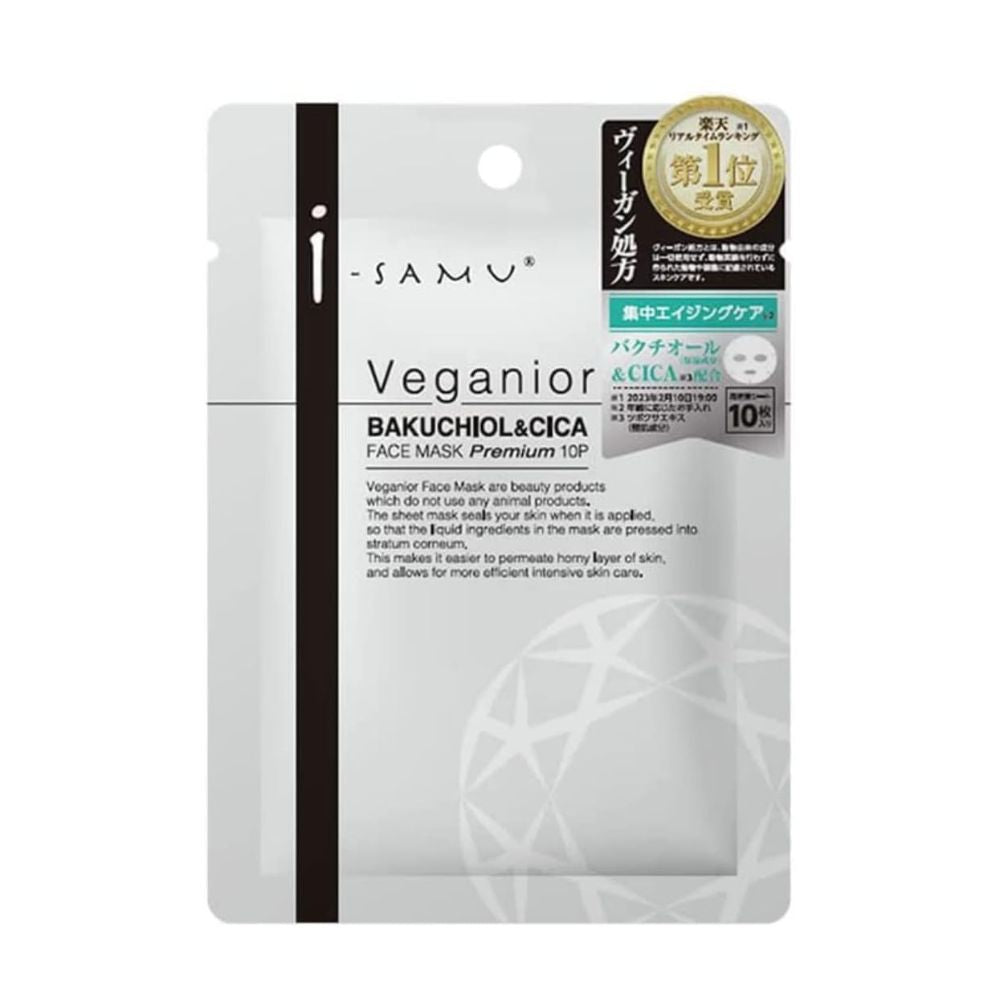
Isamu Bakuchiol and Cica Facial Mask, 10 Sheets
Overview
A plant-based sheet mask built on bakuchiol, centella asiatica and a set of twelve botanical extracts, on a Japanese-made cotton sheet. The declared ingredients are plant-derived, which supports the brand's vegan positioning. It also contains ethanol, which the previous description did not mention and which matters if your skin is reactive. See also our Japanese face masks.
Key Benefits
- ✓ Bakuchiol from Psoralea corylifolia — a plant compound often used where retinol is not tolerated
- ✓ Centella asiatica, the soothing botanical that gives CICA products their name
- ✓ Dokudami (Houttuynia cordata), adlay seed and cherry blossom extracts among twelve botanicals
- ✓ Declared ingredients are plant-derived, with no animal-origin components in the published list
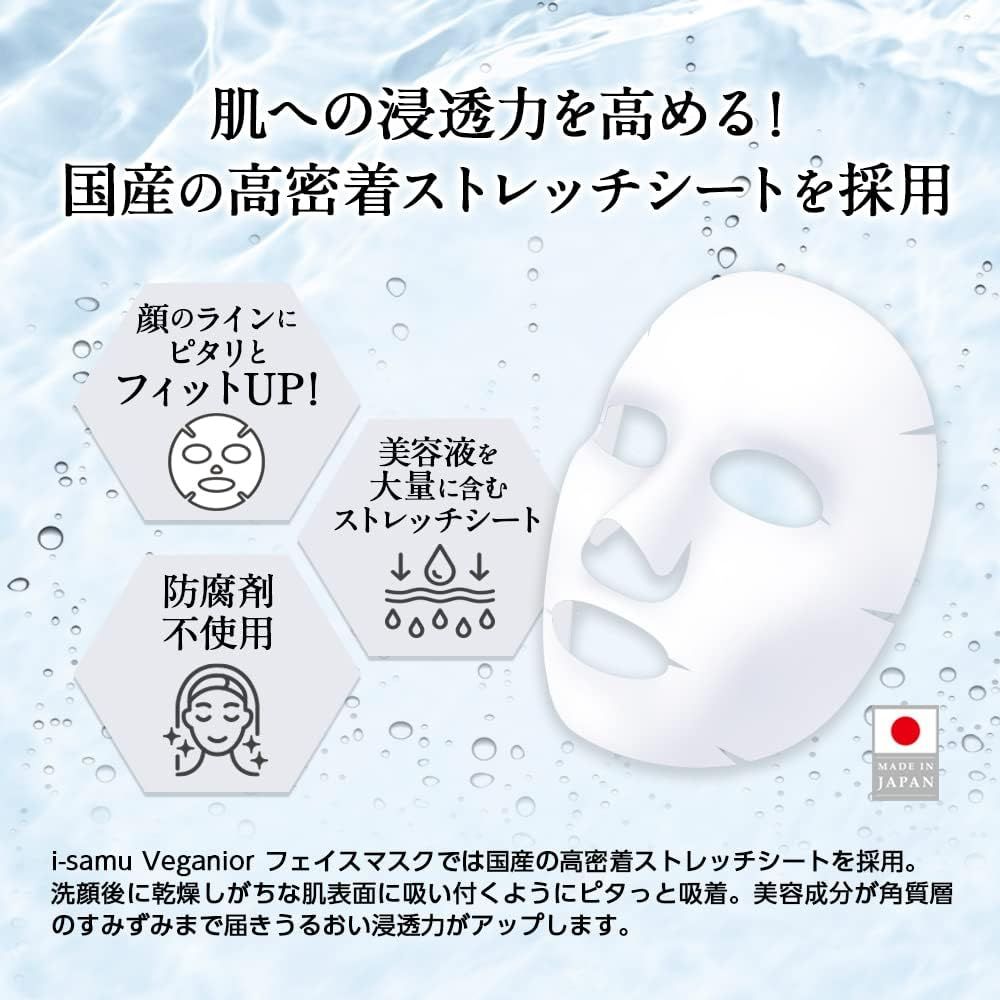
- ✓ Japanese-made cotton sheet, which holds essence better than a thin synthetic web
- ✓ Ten individually sealed sheets
Product Details
| Brand | Isamu |
|---|---|
| Country of origin | Japan |
| Product type | Sheet mask |
| Format | Saturated sheet, individual sachets |
| Volume / count | 10 sheets |
| Material | Japanese-made non-woven sheet |
| Sales channel | Japanese drugstore line |
| Regulatory status | Cosmetic (not a quasi-drug) |
| JAN code | See package label |
Who Is This For?
- Skin that does not tolerate retinol but wants something in that direction
- Anyone building a plant-based routine
- Dullness and uneven-looking texture rather than active irritation
- People who prefer a fast-drying, fresh finish
- Not for you if alcohol in skincare stings — see Cautions
How to Use
- Cleanse and apply your lotion — a mask over bare skin adheres less evenly
- Open the sachet and unfold the sheet carefully
- Align it from the eyes down to the mouth and smooth it across the whole face
- Remove after five to ten minutes and pat the remaining essence in
- Follow with a cream to seal what the mask delivered
Frequency: Two or three times a week
Full Ingredients
Published components: water, glycerin, BG, ethanol, Houttuynia cordata (dokudami) extract, bakuchiol, adlay seed extract, cherry blossom extract. The manufacturer states the formula uses twelve plant-derived ingredients in total.
The list above is what the manufacturer publishes. It is clearly abbreviated — a finished sheet-mask essence needs a preservative system and a thickener, and neither appears here — so treat it as the highlights rather than the full INCI. The complete list is printed on the sachet. Send us a photo after delivery and we will translate it for you.
Ingredient list as declared by the manufacturer. Formulations are occasionally revised, so always read the list printed on the package you receive.
Cautions
- Patch test on the inner forearm before first use, especially if your skin is reactive.
- Discontinue use and consult a doctor if redness, itching, swelling or persistent stinging occurs.
- Avoid contact with the eyes. If the product enters the eyes, rinse immediately with plenty of water.
- Do not apply to broken, sunburned or actively inflamed skin.
- Keep out of reach of children. Store away from direct sunlight and high temperatures.
- Contains ethanol, high enough in the published list to matter. Ethanol gives a fresh, fast-drying finish and helps other ingredients spread, but it can sting reactive or compromised skin. The source advertised this mask as gentle and vegan without mentioning it at all.
- The source's own comparison was fair in shape and overstated in substance: bakuchiol is better tolerated than retinol and slower to show results — both true — but it then credited it with stimulating collagen, elastin and hyaluronic acid, reducing pigmentation and regulating sebum. Those are the claims that outrun the evidence. What can be said is that bakuchiol has a small number of encouraging clinical studies, a good tolerability record, and nothing like retinol's decades of data.
- Do not leave a sheet mask on until it dries out. Once the sheet starts to dry it pulls moisture back out of the skin — the manufacturer's five to ten minutes is a real instruction, not a suggestion.
- A sheet mask is a hydration event, not a treatment course. Ten or fifteen minutes of contact will not deliver the sustained exposure that gives a leave-on retinoid or acid its results, and no sheet mask should be bought expecting them.
- This is a moisturising product with no sun filters — it does not protect skin from UV. Apply sunscreen separately in the morning.
Package Contents
One box of Isamu Bakuchiol and Cica Facial Mask, 10 sheets.
Shipping & Store Notes
- Ships directly from Japan
- Processing time: 2–6 business days
- Tracking number provided after dispatch
- Import duties and taxes may apply depending on destination country
- Opened cosmetics cannot be returned for hygiene and safety reasons
Authenticity Guarantee
Every product at Tsujimoto Market is sourced directly from Japan and verified for authenticity. We never sell fakes or grey-market goods. Each order is carefully packed in Kobe, Japan and dispatched with full tracking.
FAQ
Is bakuchiol really a retinol substitute?
The source's own comparison was fair in shape and overstated in substance: bakuchiol is better tolerated than retinol and slower to show results — both true — but it then credited it with stimulating collagen, elastin and hyaluronic acid, reducing pigmentation and regulating sebum. Those are the claims that outrun the evidence. What can be said is that bakuchiol has a small number of encouraging clinical studies, a good tolerability record, and nothing like retinol's decades of data.
Is the vegan claim reliable?
On the published list, yes — everything named is plant-derived or synthetic, with no animal ingredients. The honest qualification is that the published list is abbreviated, so we are describing what the manufacturer discloses rather than certifying the finished product. There is no third-party vegan certification on this mask, and Japanese domestic cosmetics rarely carry one.
Does the alcohol make it drying?
It can, on skin that is already compromised. Ethanol evaporates quickly and takes some surface moisture with it, which is exactly why it feels refreshing. On normal or oily skin used two or three times a week, that is a texture preference rather than a problem. On dry, reactive or barrier-damaged skin it is a reason to choose a different mask.
Is this product halal or suitable for vegans?
Vegan on the published ingredients — nothing named is animal-derived. On halal, the point to know is that the formula contains ethanol as a cosmetic solvent. Scholarly opinion differs on non-consumed cosmetic alcohol, and this is a question for your own religious authority rather than for a shop; what we can do is make sure you know it is there. The product carries no halal certification — Japanese domestic cosmetics are rarely certified — so if certification itself matters to you, this product does not have it.
The packaging is in Japanese — how do I know what I am using?
The carton and bottle carry Japanese-language labelling, because this is stock made for the Japanese domestic market. The ingredient list and directions on this page are translated from that labelling. If anything on the box is unclear after delivery, send us a photo and we will translate it for you.