

Tsujimoto Market: Our Guarantees
Description
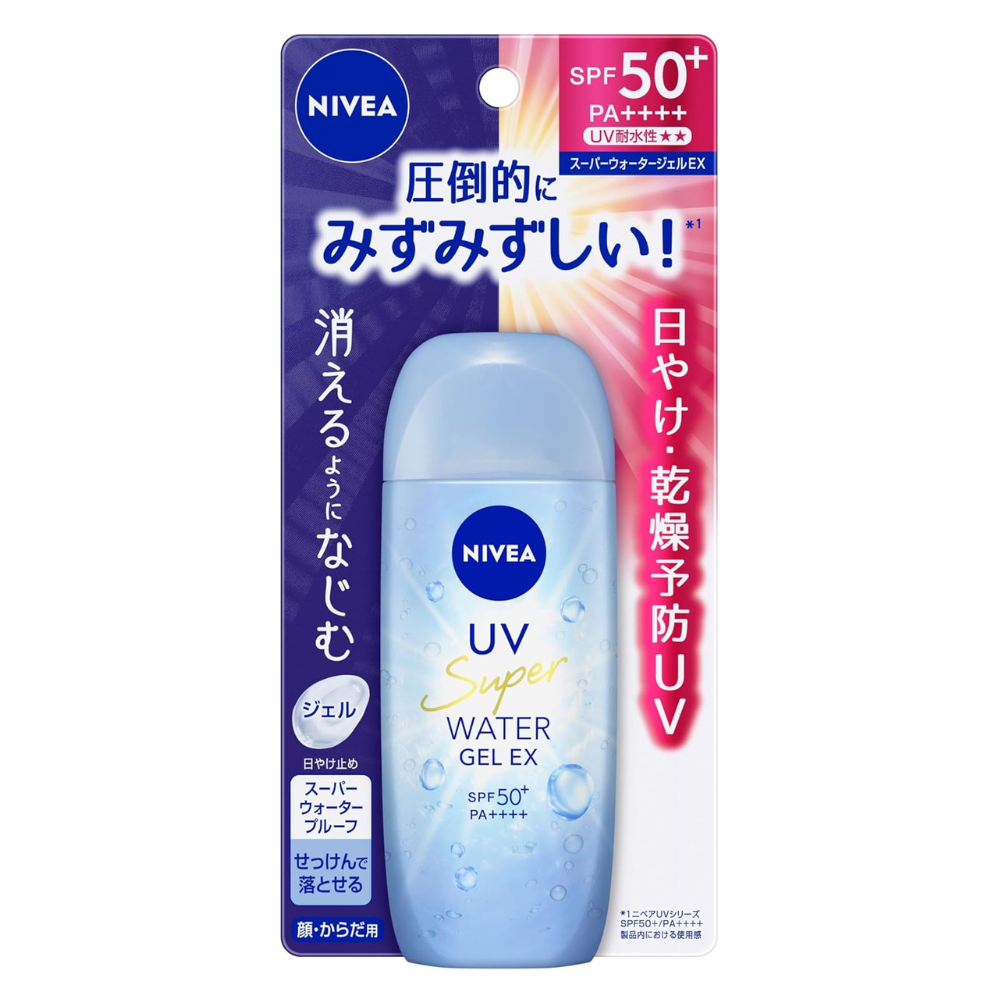
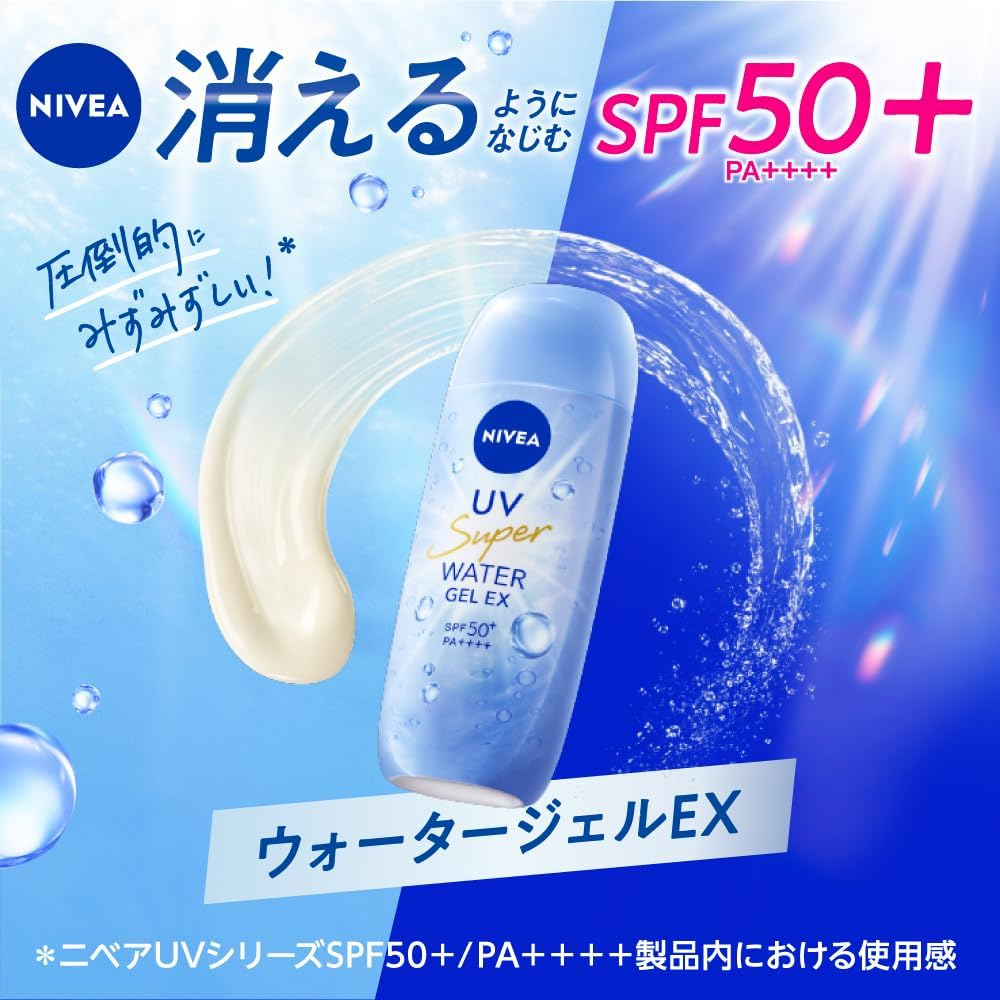
NIVEA Japan UV Water Gel SPF50 / PA+++ , 80 g
Overview
NIVEA Japan UV Water Gel is the cheap, boring, genuinely useful sunscreen a lot of Japanese households keep by the door. SPF50 / PA+++, fragrance-free, colourant-free, and light enough that reapplying it at lunchtime is not a decision you have to talk yourself into.
Two notes on the name. Kao has renamed this product — it was ニベアサン プロテクトウォータージェル and is now ニベアUV ウォータージェル, on the same JAN (4901301276186) and the same formula, so the tube you receive may carry either name depending on stock. And Nivea-Kao is a joint venture between Kao and Beiersdorf: the formula is built for the Japanese market and differs from the European one, but this is not a Beiersdorf-free product, whatever other listings say.
See also: Japanese Sunscreen
Key Benefits
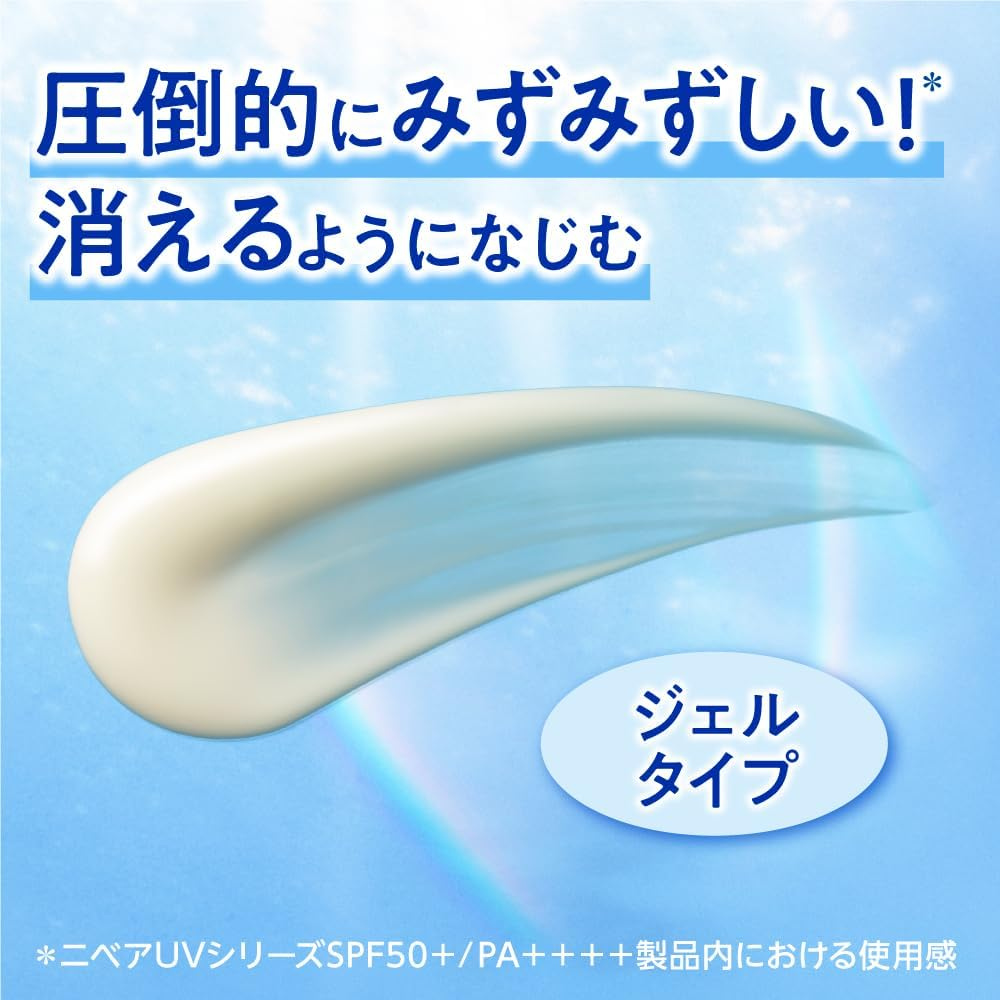
- ✓ SPF50 / PA+++ in a texture that behaves like a lotion, not like a sunscreen. It is the reason people actually reapply it.
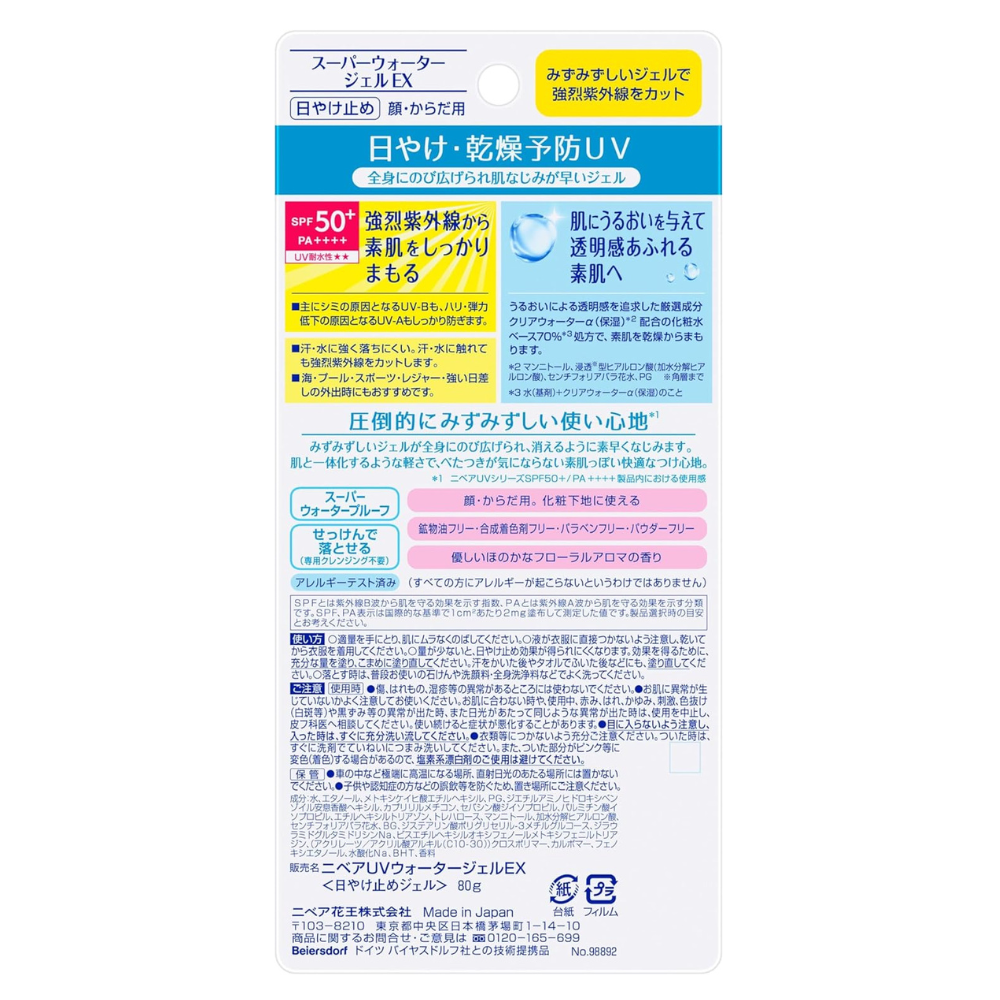
- ✓ Fragrance-free and colourant-free — 無香料・無着色, declared by Kao.
- ✓ Three organic filters, no white cast — ethylhexyl methoxycinnamate, ethylhexyl triazone and DHHB. No titanium dioxide or zinc oxide, so nothing to go grey on deeper skin tones.
- ✓ Hydrolysed hyaluronic acid — the low-molecular-weight form, not plain sodium hyaluronate. Kao's own declaration; earlier versions of this page had the wrong one.
- ✓ Quince seed and Phellodendron amurense bark extracts — the softening and conditioning pair Kao puts in most of this line.
- ✓ 80 g at a price that makes body use realistic — the honest advantage over a 30 g face sunscreen is that you will use enough of it.
- ✓ Japanese domestic stock, JAN 4901301276186, shipped from our Kobe warehouse.
Product Details
| Brand | NIVEA Japan (Nivea-Kao — a Kao × Beiersdorf joint venture) |
|---|---|
| Product name (JP, current) | ニベアUV ウォータージェル |
| Product name (JP, previous) | ニベアサン プロテクトウォータージェル |
| Japanese regulatory category | Cosmetic (化粧品) |
| SPF / PA | SPF50 / PA+++ |
| Net content | 80 g |
| Form | Water gel, bottle |
| UV filters | Organic only — no titanium dioxide, no zinc oxide |
| Fragrance / colourant | 無香料・無着色 — neither |
| JAN code | 4901301276186 |
| For | Face and body |
| Country of origin | Japan |
Who Is This For?
- You need a sunscreen you will reapply. A perfect SPF50 you use once at 8 a.m. protects worse than an ordinary one you top up at noon. This is built to be topped up.
- You are covering arms, legs and back as well as a face. 80 g at this price is what makes that affordable.
- You avoid fragrance. Kao declares this one fragrance-free and colourant-free.
- Your skin tone is deeper and mineral sunscreens go grey on you. There is no titanium dioxide or zinc oxide in here.
- Not for you if alcohol stings. Ethanol sits third on the declaration. On very dry or compromised skin this will feel tight.
- Not for you if you need a preservative-free or paraben-free formula. It contains methylparaben and BHT.
How to Use
- Shake the bottle before use — this is a water gel and it settles.
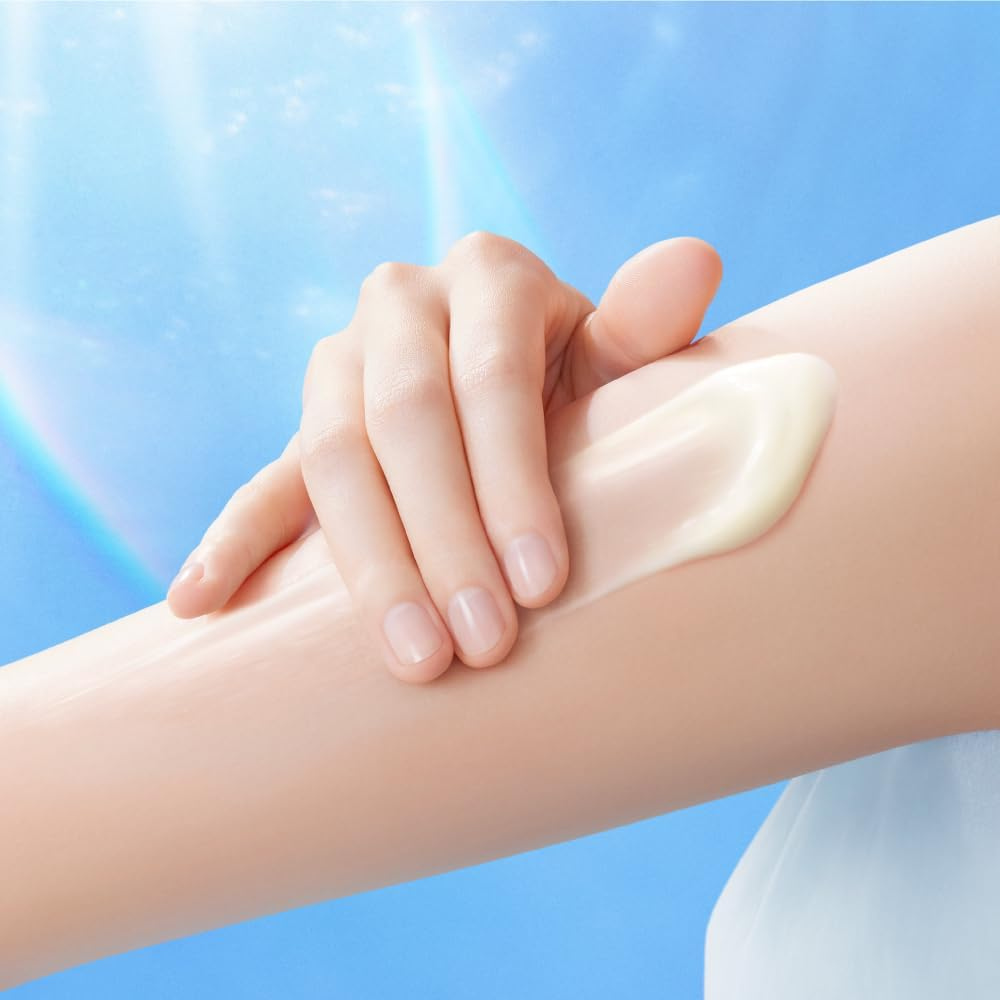
- Apply generously as the last step of your morning routine, and to every part of the body that will see sun.
- Spread evenly rather than thinly; ears, the back of the neck and the tops of the feet are the three places everyone forgets.
- Give it a minute before makeup or clothing.
- Reapply every two to three hours outdoors, and immediately after swimming, sweating or towelling.
- Remove it with your usual cleanser at the end of the day.
Frequency: Every morning, and every two to three hours while you are outside.
Full Ingredients
Full declaration, in Kao's order: Water, Ethylhexyl Methoxycinnamate, Ethanol, PG, Dimethicone, Ethylhexyl Triazone, Diethylamino Hydroxybenzoyl Hexyl Benzoate (DHHB), BG, Dilauroyl Glutamate Lysine Na, Cydonia Oblonga (Quince) Seed Extract, Geranium thunbergii Extract, Phellodendron Amurense Bark Extract, Hydrolyzed Hyaluronic Acid, (Acrylates/C10-30 Alkyl Acrylate) Crosspolymer, Carbomer, Tocopheryl Acetate, Sodium Hydroxide, BHT, Methylparaben.
Three of those were missing from the previous version of this page, and one was wrong. BHT and methylparaben are the preservative system and were not listed at all; Geranium thunbergii extract was not listed; and the hyaluronic acid was given as sodium hyaluronate when Kao declares the hydrolysed form. Small differences, but they are the ones people with reactive skin actually read the list for.
In Japan this product is registered as a cosmetic (化粧品), not as a quasi-drug. That matters for what it may claim: a cosmetic is not permitted to state a recognised active ingredient or an approved medicinal effect, and neither do we.
Cautions
- For external use only. Avoid the eye area; if the product gets into the eyes, rinse at once with water or lukewarm water.
- Do not use on skin with wounds, swelling, eczema, sunburn or any other abnormality.
- Patch test before the first full-face use: apply a little to the inner forearm and leave it 24 hours.
- Stop using it and speak to a dermatologist if redness, swelling, itching, stinging or any other reaction appears during use or afterwards. Continuing can make it worse.
- Keep out of reach of children.
- Close the pack after use and store away from direct sunlight, heat and damp.
- SPF and PA are measured at 2 mg per square centimetre. Most people apply a third of that, which is why a labelled SPF50 behaves like a much lower number in daily use. Use a full amount and reapply — that matters more than the number on the tube.
- Contains ethanol as the third ingredient — it may feel drying or sting on very dry, sunburnt or compromised skin.
- Contains ethylhexyl methoxycinnamate. Some marine-protected areas restrict this filter; check local rules if you are swimming somewhere that does.
- Not water-resistance rated on the Japanese pack. Treat swimming and heavy sweating as reasons to reapply immediately, not as something the film will survive.
Package Contents
- 1 × NIVEA Japan UV Water Gel SPF50 / PA+++, 80 g bottle
- Japanese-language packaging and instructions
- The tube may carry either the current ニベアUV ウォータージェル name or the previous ニベアサン name, depending on stock. Same JAN, same formula.
Shipping & Store Notes
- Ships directly from Japan
- Processing time: 2–6 business days
- Tracking number provided after dispatch
- Import duties and taxes may apply depending on destination country
- Opened cosmetics cannot be returned for hygiene and safety reasons
Authenticity Guarantee
Every product at Tsujimoto Market is sourced directly from Japan and verified for authenticity. We never sell fakes or grey-market goods. Each order is carefully packed in Kobe, Japan and dispatched with full tracking.
FAQ
Is this the same as European Nivea sunscreen?
No, but not for the reason usually given. The formula is made for the Japanese market and differs from the European one — different filter set, different texture, and the PA rating Europe does not use. What is not true is that this has nothing to do with Beiersdorf: Nivea-Kao is a joint venture between Kao and Beiersdorf. An earlier version of this page implied otherwise and we have corrected it.
Why does my tube have a different name on it?
Kao renamed the product. ニベアサン プロテクトウォータージェル became ニベアUV ウォータージェル on the same JAN (4901301276186) with the same formula. Depending on what came off the shelf, you may receive either. Nothing inside has changed.
Does it leave a white cast?
It should not. There is no titanium dioxide or zinc oxide in the formula — all three UV filters are organic, so there is no mineral powder to sit on the surface and go pale. This is one of the better options if mineral sunscreens go grey on your skin tone.
Is it water-resistant?
The Japanese pack does not carry a water-resistance rating, so we are not going to imply one. Reapply straight after swimming, heavy sweating or towelling rather than trusting the film to survive.
Can I use it on my children?
There is no minimum age on the Japanese label and the formula is fragrance-free and colourant-free, which helps. It does contain ethanol as the third ingredient, though, and on very young or very dry skin that can sting. Patch test first, and for babies under six months please ask a paediatrician rather than any sunscreen page.