

Tsujimoto Market: Our Guarantees
Description
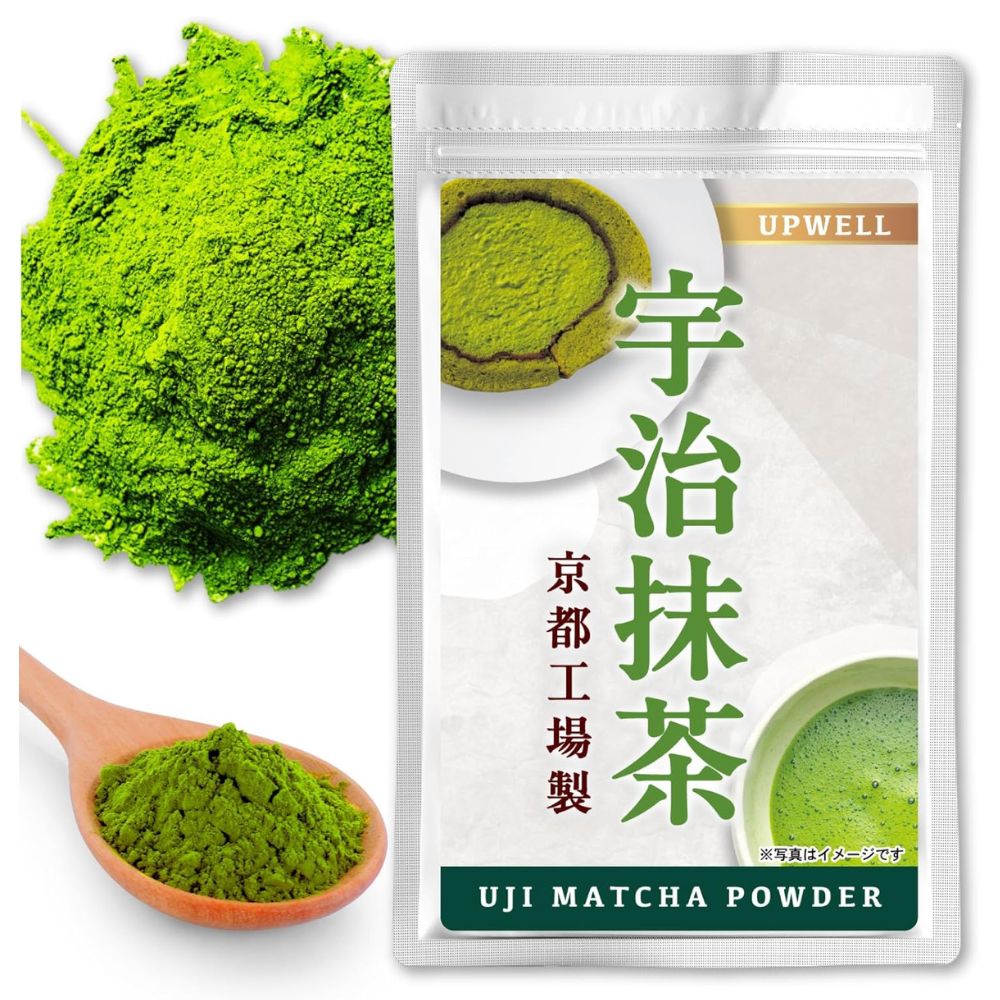
UPWELL Uji Matcha, 50 g — Where Uji Actually Is, and What Is in the Cup
Overview
Uji (宇治) is a small city on the southern edge of Kyoto, and it is the address that matters most in Japanese tea. Tea has been grown there since the thirteenth century and shaded-leaf cultivation was refined there; when a Japanese person says a matcha is "Uji", they are saying something about a place with the same specificity as Champagne or Rioja. This is UPWELL's Uji matcha in a 50 g pack — the larger size, and the better buy if matcha is a habit rather than an experiment.
Natalia's note: this is one of the best matcha powders I have had in Japan. It is round and rich, the bitterness sits where it should rather than in front of everything else, there is a creamy quality to the finish, and the colour is properly vivid. If the ITO EN pack is the matcha you learn on, this is the one you graduate to.
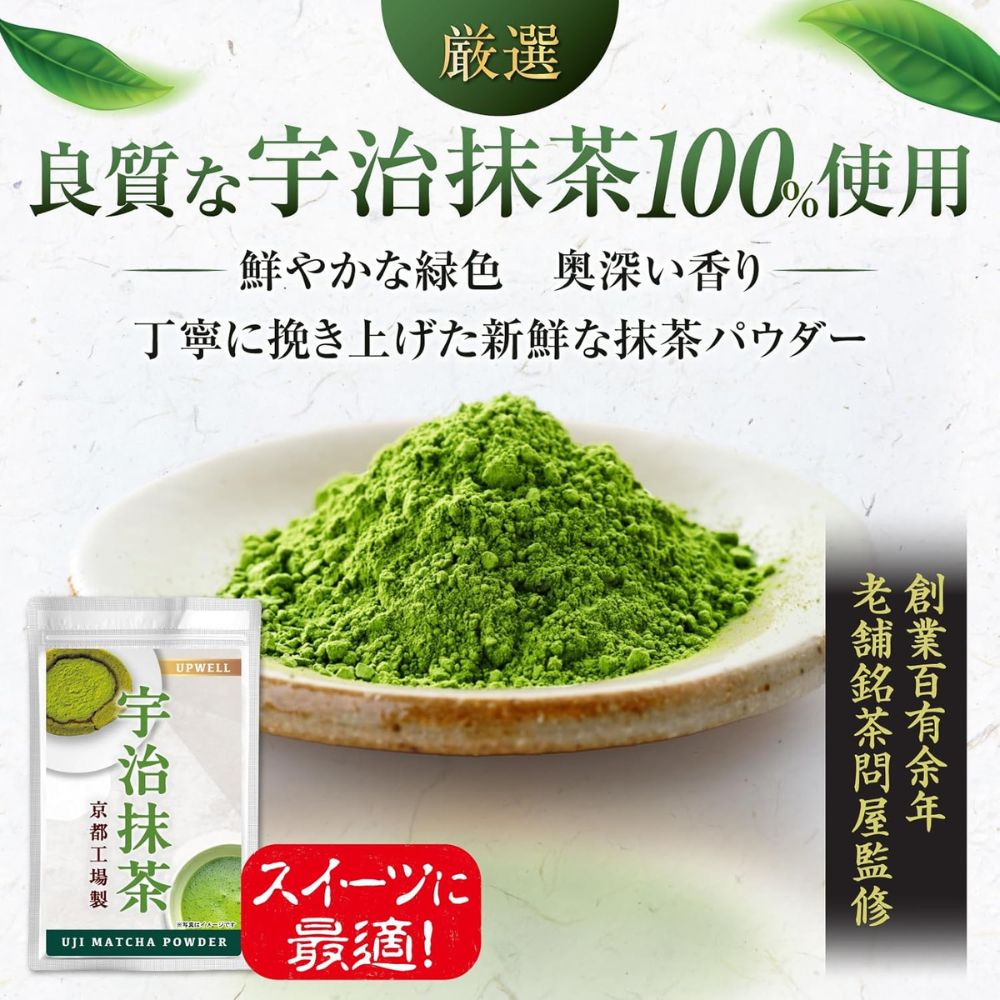
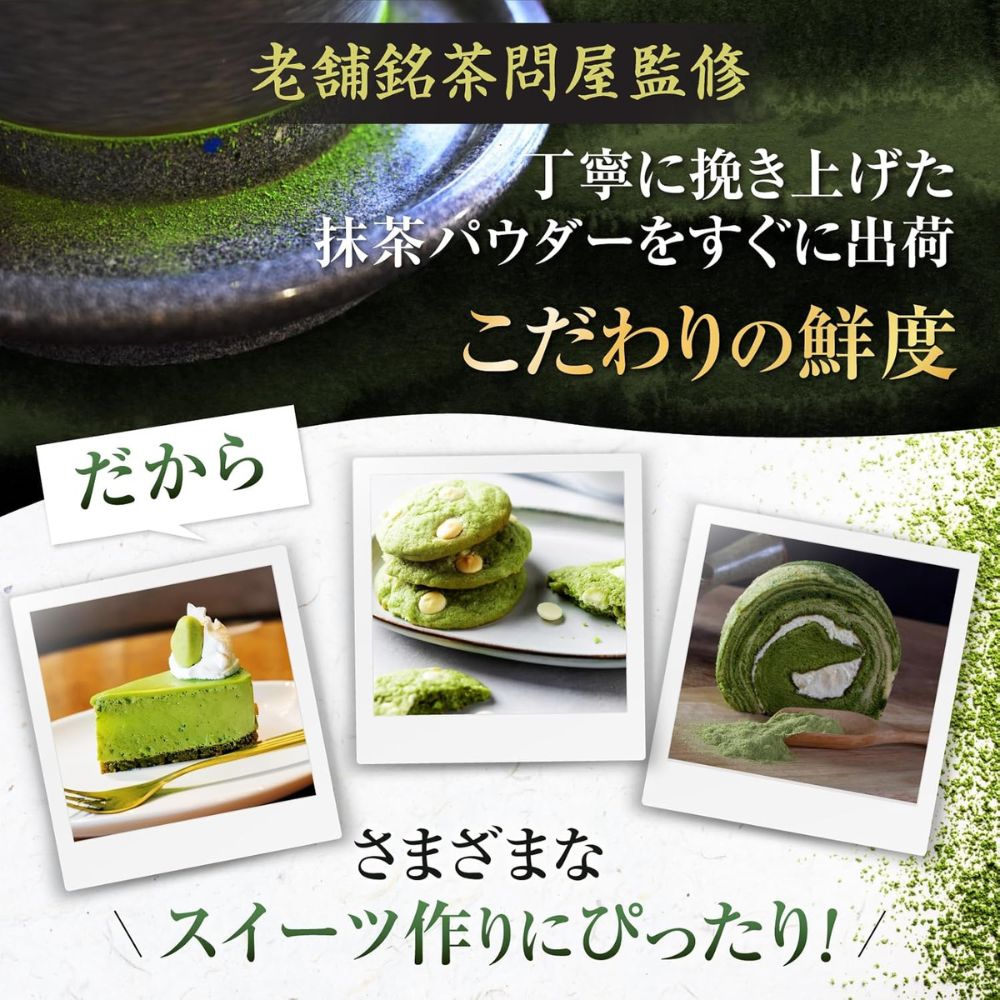
What this page does not claim. You will see Japanese matcha sold on a supervising tea house with a century of history, and on being ground fresh before shipping. We make neither claim: the first we cannot verify, and Kyoto’s genuinely old tea houses are measured in centuries rather than in one; the second is a statement about our own warehouse that would not be true. Uji, single-ingredient and 50 g are true, and they are enough.
Caffeine, which no version of this page has ever mentioned. Matcha is powdered leaf that you drink whole rather than a leaf you steep and discard, so all of the caffeine in the leaf ends up in the cup. Green tea leaf runs at roughly 3-4% caffeine by dry weight, which puts a level teaspoon of about 2 g somewhere near 60-80 mg — the same order as a small coffee, not the same order as a tea bag. Two teaspoons is a large coffee. EFSA regards single doses up to 200 mg and 400 mg a day as not a safety concern for healthy adults, and advises no more than 200 mg a day from all sources during pregnancy. Work out your own day before you assume matcha is the gentle option; it is a pleasant, steady kind of caffeine, but it is caffeine.
Storage, and why the tin you opened in March tastes like hay in June. Matcha oxidises quickly once air reaches it. The bright green fades toward khaki, the sweetness goes, and what is left is the bitterness with none of the body behind it. Keep the pack sealed, in the fridge, away from light, and let it come to room temperature before you open it so condensation does not get in. Once opened, aim to finish it inside four to eight weeks rather than a year. This is the single biggest reason people conclude they do not like matcha.
See the rest of our Japanese tea and matcha and our other Japanese health products.
Key Benefits
- ✓ Stone-milled Japanese matcha — powdered leaf, so you drink the leaf rather than an infusion of it
- ✓ Dissolves into a smooth, bright green cup with a whisk or a milk frother
- ✓ Uji matcha — the Kyoto district that has been the reference point for Japanese green tea since the fifteenth century
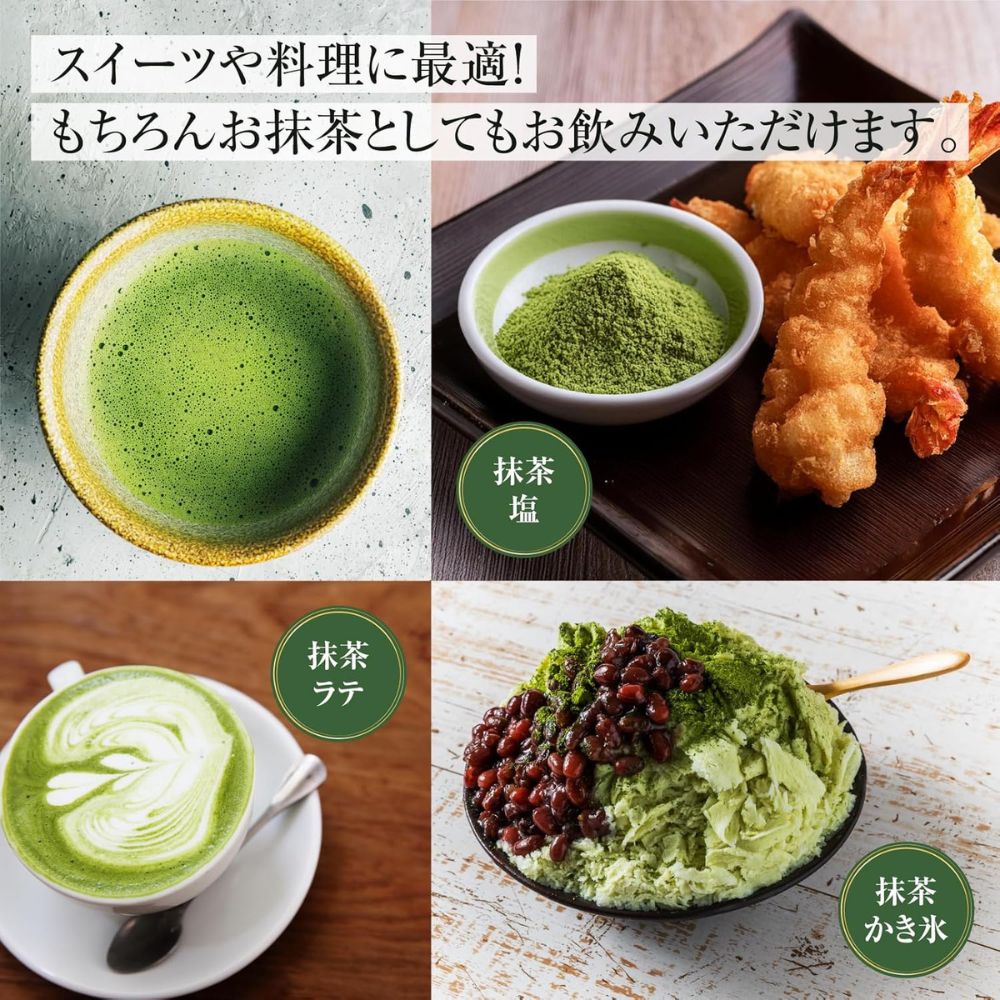
- ✓ Works as a drink, as a latte base, and as an ingredient in baking, ice cream, creams and sauces
- ✓ Single-ingredient: tea and nothing else — no sugar, no sweetener, no flavouring, no colour
- ✓ Naturally free of gluten and dairy, and suitable for a vegan diet
- ✓ Resealable pack, which matters more with matcha than with almost any other tea
- ✓ The caffeine profile people like it for: slower to arrive and steadier than coffee, without the drop
- ✓ Genuine Japanese domestic stock, shipped from Kobe with tracking
Product Details
| Brand | UPWELL |
|---|---|
| Country of origin | Japan |
| Product type | Green tea (matcha), powdered |
| Format | Fine powder |
| Net weight | 50 g |
| Ingredients | Green tea leaf (matcha) — single ingredient |
| Caffeine | Approx. 60–80 mg per level 2 g teaspoon |
| Packaging | Resealable pack |
| Storage after opening | Sealed, refrigerated, used within 4–8 weeks |
| Vendor | Tsujimoto Market, Kobe, Japan |
| Dispatch | 2–6 business days |
Who Is This For?
- Right for you if you want the drink rather than a supplement, and you would rather have one very good cup a day than a scoop of something in a smoothie.
- Right for you if you cook or bake with matcha. Powder is the only form that works in a batter, a cream or an ice cream base.
- Right for you if coffee is too abrupt for you. Matcha delivers a comparable amount of caffeine on a slower curve, which is the whole appeal.
- Not for you if you are avoiding caffeine. This is not a gentle amount — a level teaspoon is in the region of a small coffee, and two is a large one.
- Not for you if you take warfarin and would rather not have the vitamin K conversation with your clinic. Read that section before you order.
- Not for you if you want a tea you can leave in the cupboard for a year. Matcha oxidises; opened, it has weeks rather than seasons.
How to Use
- Sift 1 level teaspoon (about 2 g) into a bowl or a wide cup. Sifting is not fussiness — unsifted matcha clumps and the clumps never come out.
- Add a little water off the boil, around 70–80 °C, and whisk to a paste first. Boiling water makes it harsh; this is the single most common mistake.
- Top up to about 70 ml for a thin, drinkable bowl, and whisk in a brisk W motion until a fine foam sits on top.
- For a latte: make the paste as above, then top with 150–200 ml of hot or cold milk, dairy or plant. Oat milk froths best and does not fight the flavour.
- For iced matcha: whisk the paste with a little cold water, then pour over ice and top with cold milk or water.
- For baking and cooking: sift into the dry ingredients rather than the wet, or make a paste with a spoonful of the liquid first.
- Reseal the pack straight away and put it back in the fridge. Air is what turns it khaki.
- Drink it between meals rather than with them if you are treating iron deficiency, and leave an hour either side of an iron tablet.
Frequency: One to two servings a day suits most people. Keep an eye on the total caffeine rather than the number of cups, and treat two heaped teaspoons as a large coffee rather than as a cup of tea.
Full Ingredients
Ingredients: green tea (matcha), Japanese origin. That is the entire list. No sugar, no sweetener, no flavouring, no colour, no anti-caking agent, no filler.
UPWELL declares the ingredient as green tea of Japanese origin and publishes no per-serving nutrition panel, so the caffeine figure in the details table is derived from the standard 3–4% caffeine content of dry green tea leaf rather than quoted from the brand. At 50 g this pack is about 25 servings at a level teaspoon.
Why "you drink the leaf" is the only fact on this page that matters. With a tea bag you pour water through leaf, take what dissolves, and throw the rest away. With matcha there is no rest — the leaf is the drink. Everything the plant put into that leaf reaches you, and that single structural difference explains most of what follows: the caffeine is nearer a coffee than a tea, the vitamin K is present in a way it is not in an infusion, and the colour and flavour degrade in weeks rather than years because there is nothing protecting the powder from air.
Vitamin K and blood thinners. Green leaf is a vitamin K food, and matcha is the whole leaf rather than an infusion, so the vitamin K comes with it — a steeped bag transfers very little because vitamin K is fat-soluble and stays in the leaf you throw away. If you take warfarin or another vitamin K antagonist, this is worth a word with the clinic that manages your INR. The point is not that matcha is forbidden; it is that your dose is titrated against a steady vitamin K intake, and the thing that upsets an INR is a change — starting a daily matcha, or stopping one, or having three cups on Sunday and none all week. Direct oral anticoagulants such as apixaban and rivaroxaban do not work through vitamin K and are not affected in the same way.
What we took off this page. The old "Active components" list presented catechins as "powerful antioxidants", theanine as something that "promotes relaxation and concentration", and dietary fibre as "metabolism support", and the feature list called the powder "sugar-free, calorie-free". Those compounds are genuinely in the leaf; what is not established is that drinking a cup of tea does the things that list implied, and "calorie-free" is simply wrong for a whole-leaf powder you swallow — it is a trivial number, about 6 kcal a serving, but it is not zero. The honest version is that matcha is a very good drink with a caffeine profile people prefer to coffee's, and that is enough of a reason to buy it.
Cautions
- Contains caffeine — roughly 60–80 mg per level 2 g teaspoon, comparable to a small coffee. Not suitable for young children. Limit to 200 mg a day from all sources in pregnancy.
- UPWELL publishes no per-serving nutrition or caffeine panel. The figures on this page are derived from the composition of green tea leaf, not quoted from the manufacturer.
- If you take warfarin or another vitamin K antagonist, tell the clinic that manages your INR before you start or stop a daily matcha. Consistency matters more than quantity.
- Tea polyphenols reduce the absorption of non-haem (plant) iron. If you are being treated for iron deficiency, drink it between meals rather than with them, and leave an hour either side of an iron tablet.
- Not suitable for young children, and not a drink to give a child because it is "tea". A 2 g serving carries more caffeine than a can of cola.
- In pregnancy and breastfeeding, count it toward the 200 mg a day caffeine limit from all sources.
- If caffeine gives you palpitations, reflux or broken sleep, matcha will do the same. It arrives more slowly, which is not the same as arriving less.
- Concentrated green tea extracts in capsule form have been linked to liver injury at high doses; drinking matcha as a beverage is not the same exposure, but do not stack a daily matcha with a green tea extract supplement.
- Store sealed and refrigerated away from light, and use within 4–8 weeks of opening. Matcha that has gone khaki is stale, not faulty, and it will taste of it.
- Keep out of reach of children. Do not use as a substitute for fruit and vegetables.
- This is a food, not a supplement and not a medicine. It does not treat, prevent or cure anything, and we have taken the health claims off this page.
Package Contents
One 50 g pack of UPWELL Uji matcha powder in Japanese retail packaging with Japanese-language labelling. Roughly 25 servings at a level teaspoon. Send us a photo of anything on the pack you would like translated after delivery.
Shipping & Store Notes
- Ships directly from Japan
- Processing time: 2–6 business days
- Tracking number provided after dispatch
- Import duties and taxes may apply depending on destination country
- Opened cosmetics cannot be returned for hygiene and safety reasons
Authenticity Guarantee
Every product at Tsujimoto Market is sourced directly from Japan and verified for authenticity. We never sell fakes or grey-market goods. Each order is carefully packed in Kobe, Japan and dispatched with full tracking.
FAQ
What does "Uji" actually mean on a matcha pack?
Uji is a place — a city just south of Kyoto, on the Uji river — and it is where shaded-leaf tea cultivation was developed and refined from the thirteenth century onward. Saying a matcha is Uji is a geographic statement, roughly the way Champagne is, and in Japan it carries real weight: Uji is the reference point everything else is compared against. It is not a grade and not a certification, so it tells you about origin and house style rather than about a measured quality level. What you notice in the cup is a rounder body and a sweeter finish than a workaday matcha, with the bitterness sitting behind the flavour instead of in front of it.
How much caffeine is in a cup?
Around 60–80 mg for a level 2 g teaspoon, and roughly double that if you use two. For comparison, a filter coffee is about 80–100 mg and a tea bag about 20–30 mg — so matcha sits with the coffee, not with the tea. The reason is structural: matcha is powdered leaf that you swallow, so you get all of the leaf’s caffeine rather than the part that dissolves out of a bag. People often describe the effect as gentler than coffee, and it does arrive more slowly, but the dose is comparable. If you are pregnant, EFSA’s advice is no more than 200 mg a day from all sources.
I take warfarin. Can I drink matcha?
Ask the clinic that manages your INR — and ask before you start, not after your next reading moves. Green leaf carries vitamin K, and because matcha is whole leaf rather than an infusion, that vitamin K reaches you in a way it does not from a steeped bag. Warfarin dosing is set against a steady vitamin K intake, so the thing that destabilises an INR is a change in habit: starting a daily matcha, stopping one, or drinking three cups on a Sunday and none the rest of the week. It is a conversation, not a prohibition. Direct oral anticoagulants such as apixaban and rivaroxaban do not act through vitamin K and are not affected in the same way.
My matcha tastes bitter. What am I doing wrong?
Almost always one of three things. Water too hot: use it at 70–80 °C, not straight off the boil, because boiling water pulls the bitterness forward and flattens the sweetness. Not sifted: unsifted powder clumps, and a clump is a mouthful of undiluted matcha. Or the tin has been open too long — matcha oxidises within weeks of first opening, the colour drifts toward khaki and the sweetness is the first thing to go. Keep it sealed in the fridge and finish it inside four to eight weeks.
Will I pay customs duty or import VAT?
That depends on your country and on the declared value of the parcel, not on us. We ship from Japan with a correct customs declaration and full tracking; any duty or import VAT your country charges is collected by your local carrier or customs office on delivery. Check your national de-minimis threshold before ordering if you want to avoid a surprise.