

Tsujimoto Market: Our Guarantees
Description
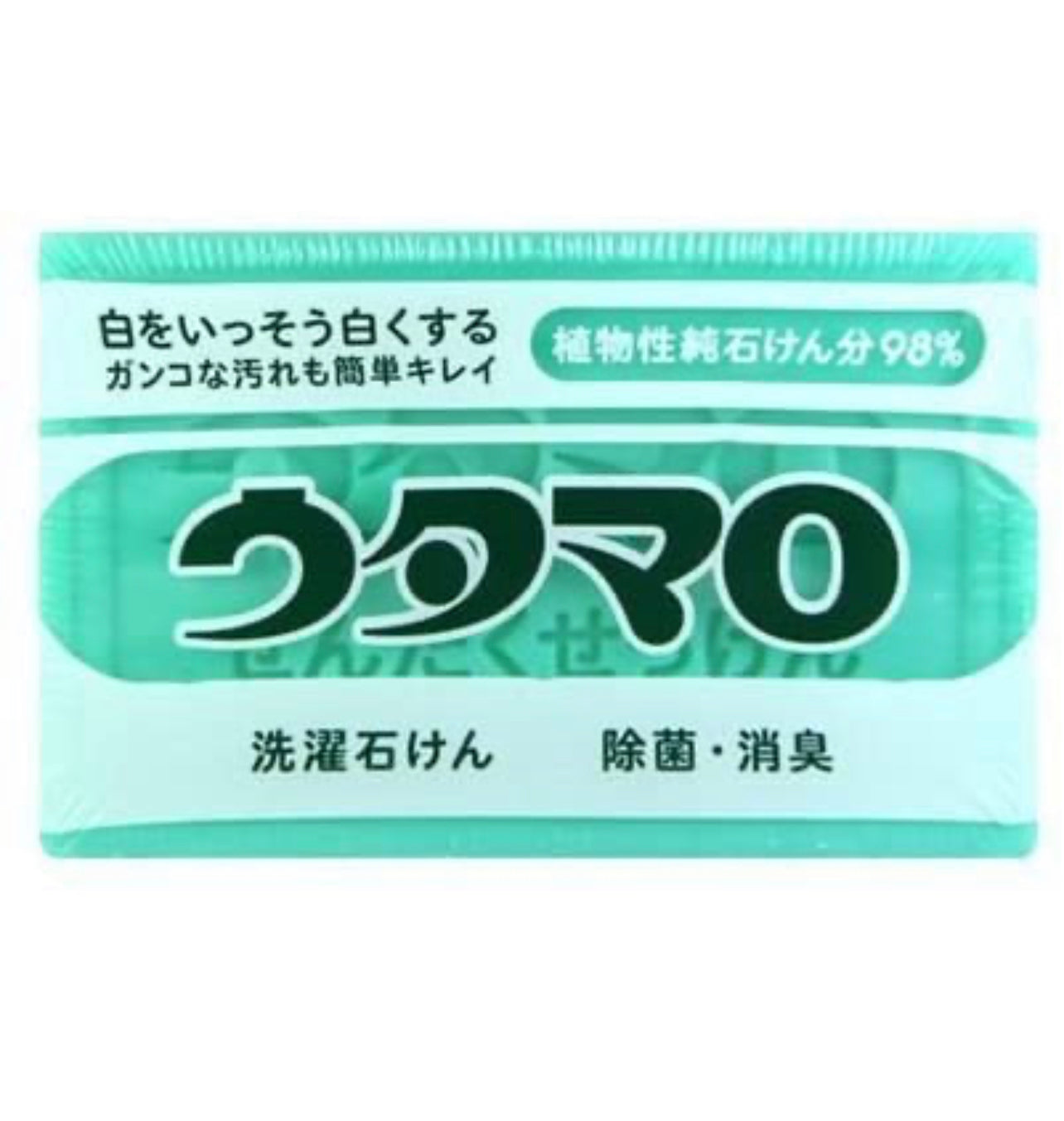
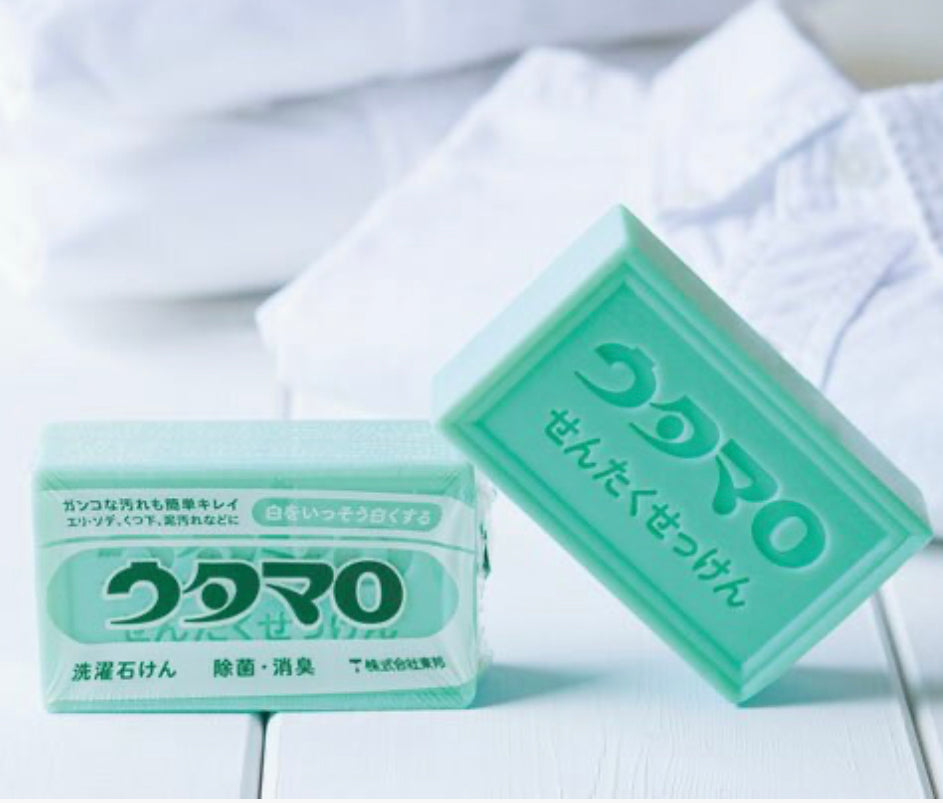
Utamaro laundry soap, 133 g
Overview
The green bar that sits by the sink in a large number of Japanese households. Utamaro, made by Toho, is a pre-treatment soap: you wet the dirty patch, rub the bar on it, work it in by hand, and then put the garment in the machine as usual. Collars, cuffs, school socks, mud, food spills, make-up.
It is 98% pure soap by declaration, with an optical brightening agent — and that second ingredient is the reason the maker says to use it on white and light fabrics, not on everything.
See also: Japanese Laundry Products.
Key Benefits
- ✓ 98% pure soap (sodium fatty acid) — the declared composition, not a marketing figure
- ✓ Made for pre-treating a spot, not for washing a whole load
- ✓ Handles the classic Japanese household list: collars, cuffs, white socks, mud, sauce, make-up
- ✓ Dissolves easily and spreads onto fabric without heavy scrubbing
- ✓ Toho states the bar contains no surfactants other than the plant-based soap, and no phosphates
- ✓ 133 g bar — small, cheap, and lasts a long time because you use it on patches
- ✓ JAN 4904766110309, check digit verified
Product Details
| Brand | Utamaro |
|---|---|
| Manufacturer | Toho Co., Ltd. (東邦) |
| Product type | Laundry pre-treatment soap bar |
| Net weight | 133 g |
| Composition | Pure soap 98% (sodium fatty acid), optical brightening agent |
| Suitable fabrics | White and light-coloured only — see Cautions |
| Country of origin | Japan |
| JAN code | 4904766110309 |
| Fragrance | The bar has a light scent of its own; Toho lists no added dye |
Who Is This For?
- Anyone who deals with shirt collars and cuffs and has given up on machine wash alone
- Parents of school-age children, which is most of Utamaro's market in Japan — white socks and mud
- People who want one small bar rather than a shelf of specialised stain sprays
- Anyone who likes a product that does one job and says so
- Not for coloured, dark, natural-dyed or delicate fabrics — the optical brightener is the reason
How to Use
- Wet the soiled area of the garment with water.
- Rub the bar directly onto the wet patch until it is covered.
- Work it in by hand, or with a soft brush on sturdy fabric like a school sock.
- Leave it a minute or two on stubborn marks — do not let it dry out on the fabric.
- Put the garment into the washing machine as usual; there is no need to rinse the soap out first.
Frequency: Whenever a spot needs it, before the wash.
Full Ingredients
Composition as declared by Toho:
| Pure soap | 98% (sodium fatty acid) |
|---|---|
| Optical brightening agent | present, amount not declared |
Toho states that the bar contains no surfactant other than the plant-based soap, and no phosphates.
The previous version of this page said the soap is "made from palm fruit" and dates from 1957. Toho declares a plant-based soap without naming the oil, and we could not source the date, so neither claim appears here.
Cautions
- Contains an optical brightening agent. Use on white and light-coloured fabric only. On coloured, dark or naturally dyed cloth it can leave uneven pale patches that do not wash out.
- Test on an inconspicuous corner first if you are unsure about a fabric.
- Not for wool, silk or anything labelled hand-wash-only or dry-clean-only.
- This is an alkaline soap. It will dry the skin on repeated use, and it can sting a cut. Wear gloves if you are doing a lot of hand-washing, and rinse your hands afterwards.
- Keep out of the eyes; if it gets in, rinse with plenty of water.
- Keep out of reach of children. It is a green bar in a kitchen and it does not look dangerous.
- Store dry after use — a soap bar left in standing water softens and wastes away.
- Packaging and instructions are in Japanese only.
Package Contents
One 133 g bar in its Japanese wrapper.
Shipping & Store Notes
- Ships directly from Japan
- Processing time: 2–6 business days
- Tracking number provided after dispatch
- Import duties and taxes may apply depending on destination country
- Household products: opened items cannot be returned, and the packaging is in Japanese only
Authenticity Guarantee
Every product at Tsujimoto Market is sourced directly from Japan and verified for authenticity. We never sell fakes or grey-market goods. Each order is carefully packed in Kobe, Japan and dispatched with full tracking.
FAQ
Can I use it on coloured clothes?
Toho says white and light fabrics, and we would repeat that firmly. The bar contains an optical brightening agent, which works by making fabric appear whiter under light. On coloured or dark cloth that can show as uneven pale patches, and it does not come out. The previous version of this page mentioned this once, in the last line before the instructions; it belongs at the top.
Is it safe for my hands?
It is soap, and it is alkaline. The old description said it is "completely safe for your hand skin" and that you "no longer need to worry about the condition of your skin and nails". That is more than a soap can promise. Repeated hand-washing with any alkaline bar dries skin; use gloves if you are doing a lot, and rinse afterwards.
Does it work on blood, ink or make-up?
It is a general pre-treat bar and Japanese households use it on all three. It is not a specialist stain remover with a mechanism for a particular stain — it is soap, applied concentrated, worked in by hand, which is what shifts most of what ends up on a collar.
How is this different from just using detergent?
Concentration and mechanical action. You are applying soap directly to the mark rather than diluting it in a drum, and you are rubbing the fibres against each other. That is the whole idea of a pre-treat bar.
What was removed from the old description?
That the soap dates from 1957 and is "made from palm fruit" — neither of which we could source from Toho — and "completely safe for your hand skin", which no alkaline soap can claim. Toho's declaration is 98% pure soap plus an optical brightener, and that is what the card carries.