


Tsujimoto Market: Our Guarantees
Description
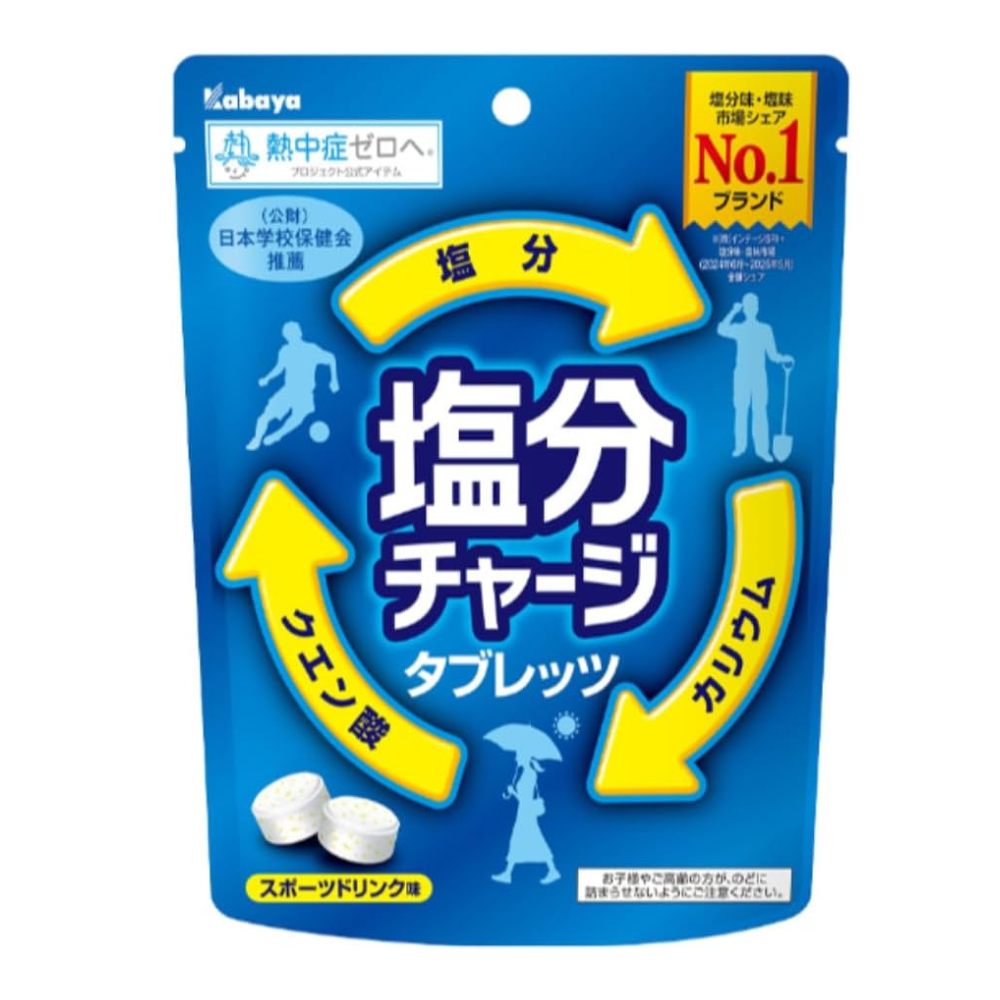
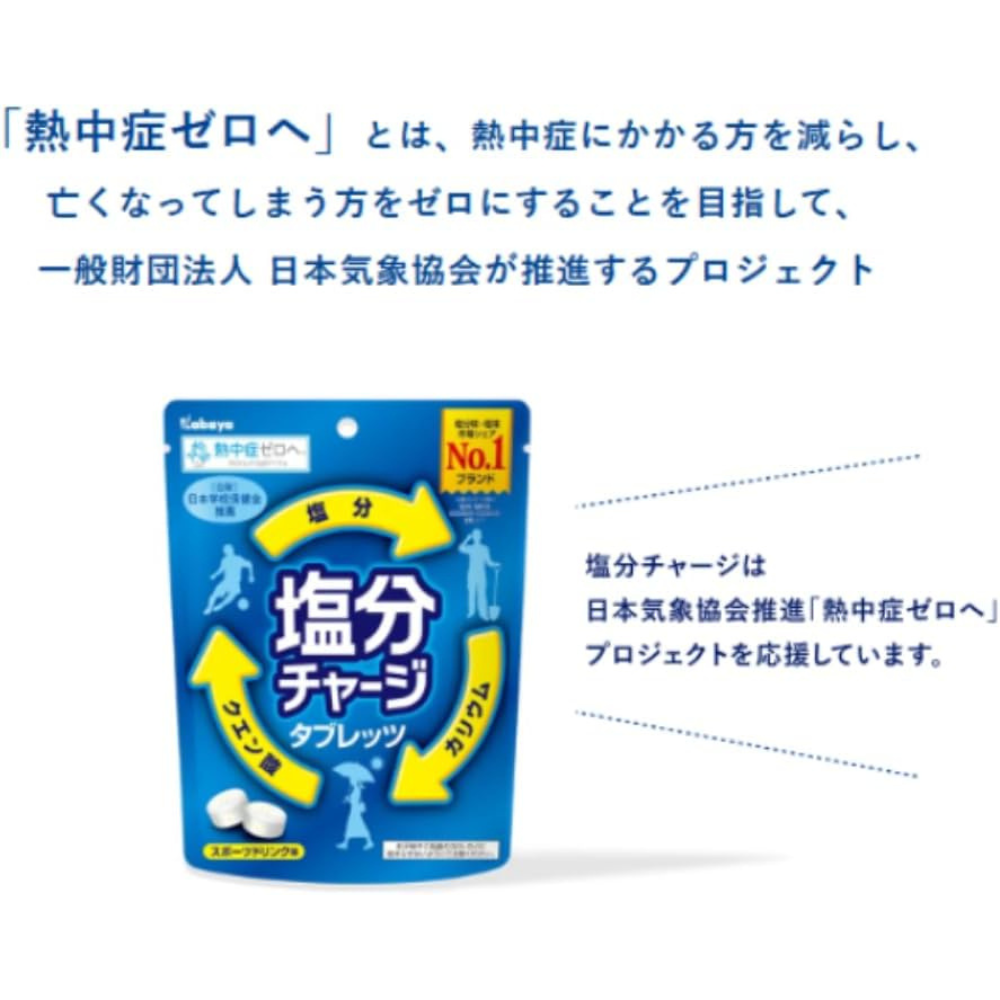
Kabaya Salt Charge Tablets — Sports Drink Flavour, 81 g
Overview
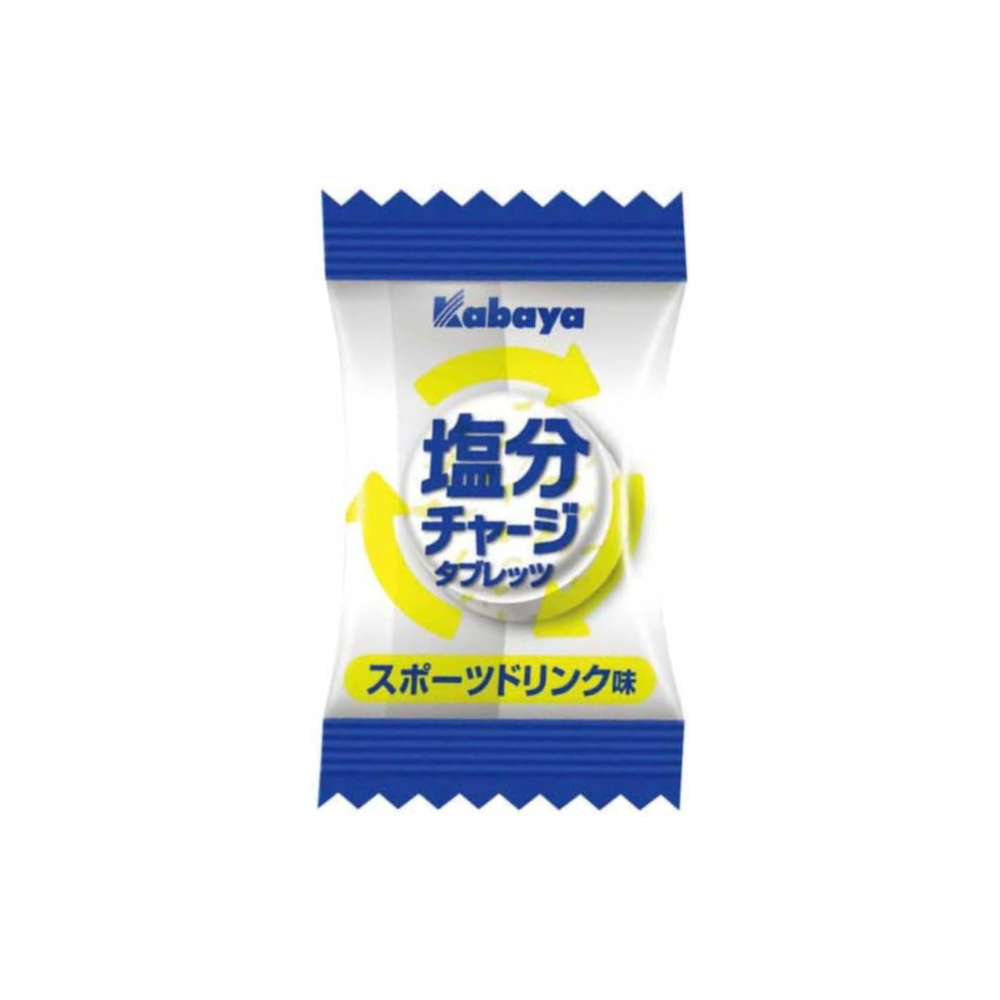
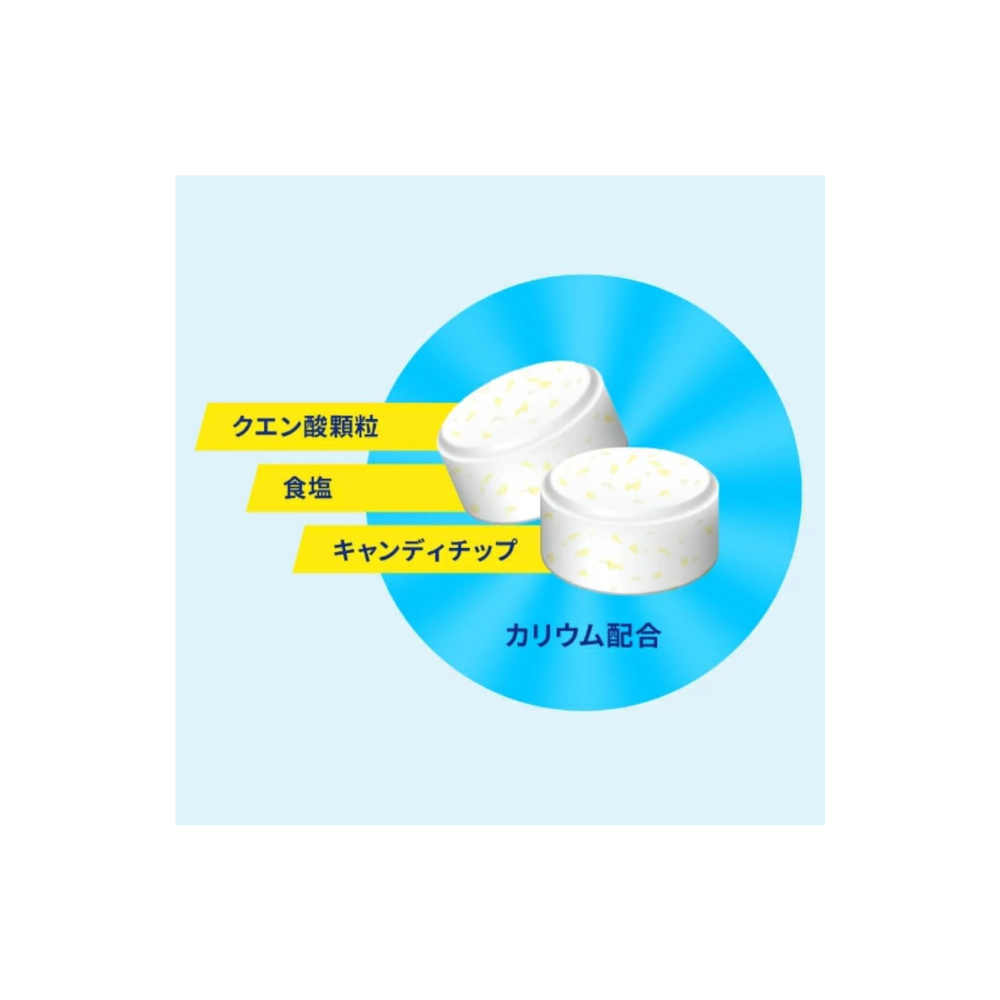
The original Kabaya salt tablet, in the ramune-like sports-drink flavour — sweet, faintly fizzy on the tongue, mildly salty. Each 3 g tablet carries 0.119 g of salt and 15.7 mg of potassium, individually wrapped so one goes in a pocket and stays clean.
The reason to keep a bag in a work bag in Japanese summer is that it does not need water to take, which means you will actually take it — a bottle of sports drink has to be opened, finished, and carried. If you prefer something sharper in the heat, the salt lemon flavour is the citrus version. For fluid rather than salt, see the powdered sports drinks.
Salt is not the whole answer to heat. Sweat costs you water and sodium together, and replacing one without the other does not work — salt without fluid concentrates you further, fluid without salt can dilute you. Whatever you take from this shelf, take it with water. And none of these products treats heat illness: if someone stops sweating, becomes confused, or has a body temperature that keeps climbing, that is an emergency and needs medical help, not a tablet.
Key Benefits
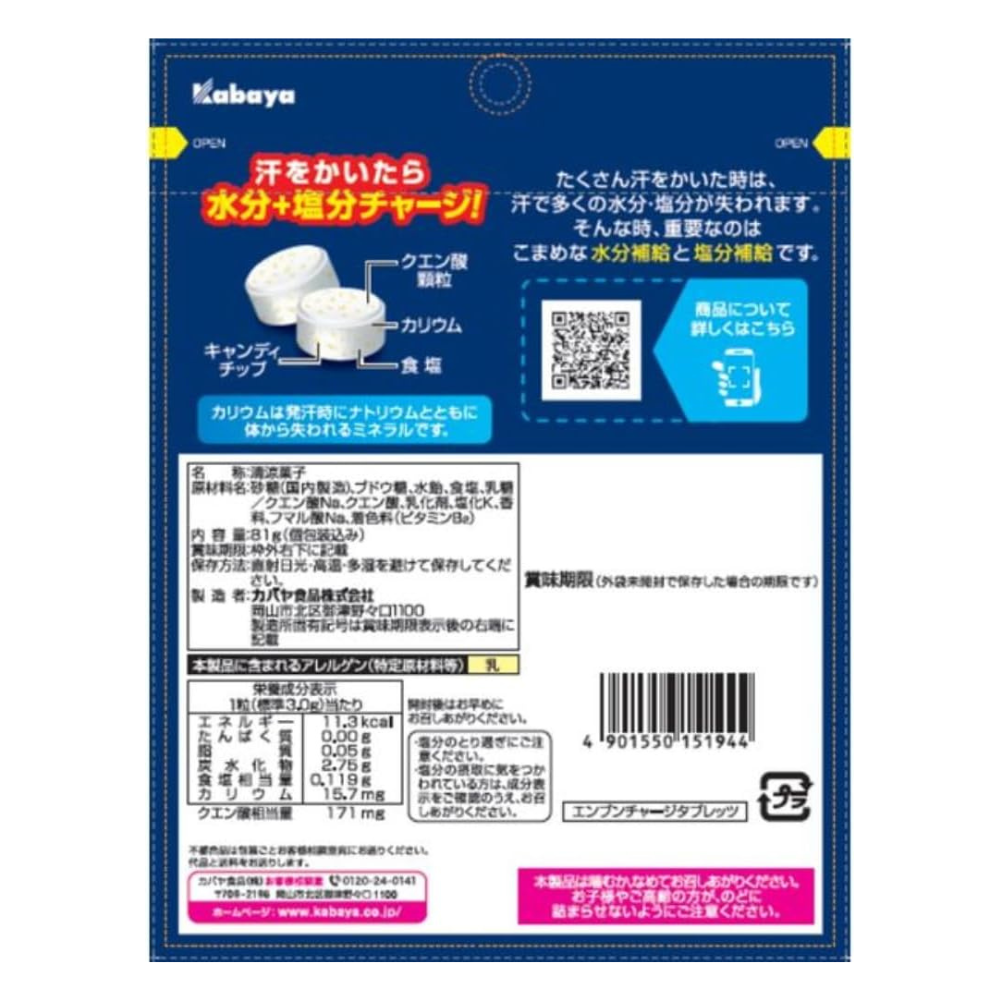
- ✓ A published per-tablet panel: 11.3 kcal, 0.119 g salt, 15.7 mg potassium, 171 mg citric acid
- ✓ Individually wrapped — one goes in a pocket and stays clean
- ✓ Dissolves without water, so it gets taken at the moment it is needed
- ✓ The milder of Kabaya's two flavours: sweet and lightly saline rather than sharp
- ✓ Approx. 26–27 tablets in an 81 g bag
- ✓ Contains milk (lactose) — declared here rather than buried in the ingredient list
Product Details
| Brand | Kabaya (カバヤ食品) |
|---|---|
| Japanese product name | 塩分チャージタブレッツ |
| Flavour | Sports drink — the ramune-like original |
| Product type | Confectionery tablet for salt replenishment |
| Net weight | 81 g including individual wrappers |
| Tablet count | Approx. 26–27 tablets (sold by weight, not by count) |
| Tablet weight | Approx. 3.0 g |
| Individually wrapped | Yes |
| Allergens declared | Milk (lactose) |
| Country of origin | Japan |
| JAN | 4901550151286 — this code does not pass its EAN-13 check digit. It is printed here exactly as it appears on our records, unaltered, and has been flagged for verification against the barcode on the bag. |
| Regulatory status | Food (confectionery). Not a medicine, not a quasi-drug (医薬部外品), not an oral rehydration solution. |
Who Is This For?
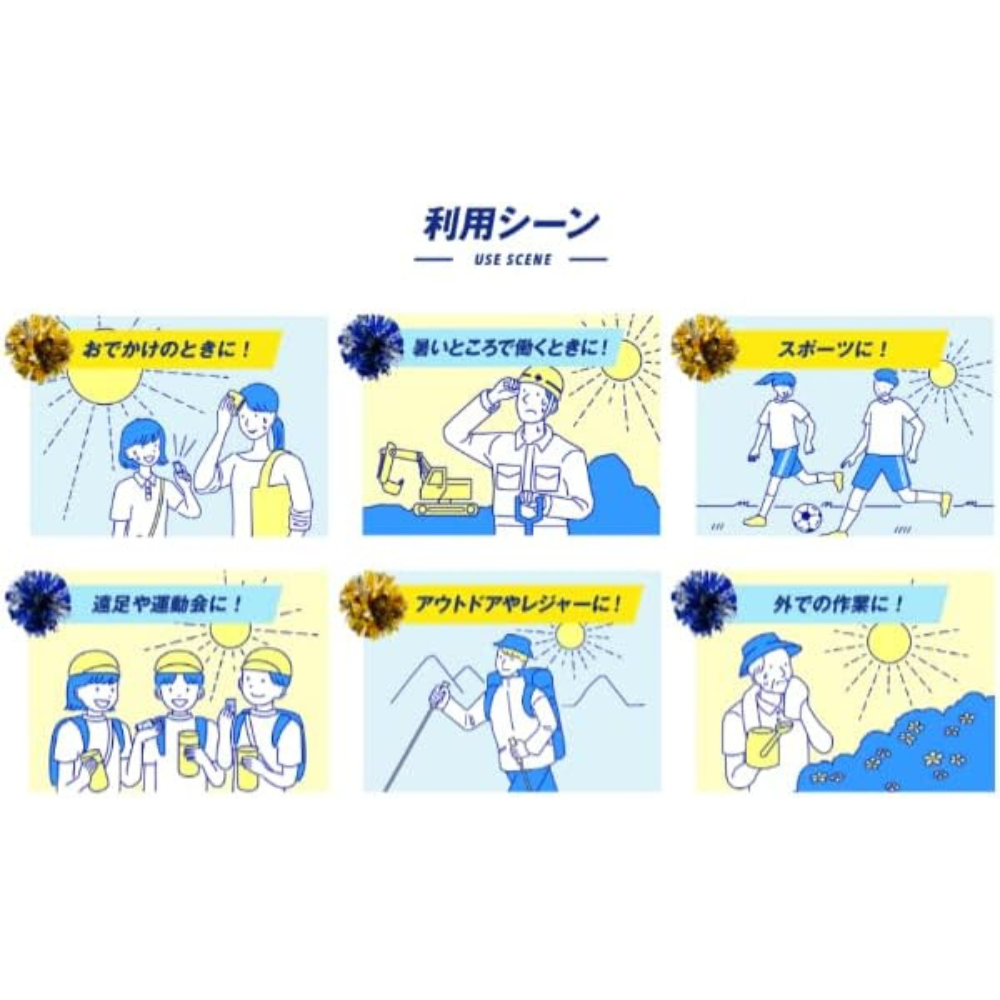
- Anyone working or training outdoors in Japanese summer, where sweat loss is the daily problem rather than an occasional one
- People who will not drink a sports drink — a tablet is easier to carry and does not need to be finished once opened
- Commuters and site workers: individually wrapped means one goes in a pocket and stays clean
- Not for you if you avoid dairy — these contain lactose
- Not for you if you are on a sodium- or potassium-restricted diet without talking to your doctor first
How to Use
- Unwrap one tablet.
- Let it dissolve in the mouth. It does not need water to go down, but it does need water to work — drink alongside it.
- Take another when you are still sweating heavily. Space them rather than taking several at once.
- Keep the bag out of the sun. Left in a hot car or a rucksack in the afternoon these soften and fuse.
- Stop and get out of the heat if you feel dizzy, stop sweating, or get a headache that does not settle.
Frequency: As needed during heat or exertion, always with water
Ingredients & Nutrition
Ingredients: sugar (produced in Japan), glucose, starch syrup, salt, lactose / sodium citrate, citric acid, emulsifier, potassium chloride, flavour, sodium fumarate, colouring (vitamin B2).
Allergen: milk, via the lactose. It is there as a bulking sugar rather than for taste, but the amount is not the point if you are avoiding dairy.
Nutrition, per tablet (approx. 3.0 g): energy 11.3 kcal · protein 0 g · fat 0.05 g · carbohydrate 2.75 g · salt equivalent 0.119 g · potassium 15.7 mg · citric acid 171 mg.
What 0.119 g of salt actually means. Ten tablets over a day come to about 1.2 g of salt. The WHO adult guideline is under 5 g of salt a day in total, and a Japanese diet routinely runs well above that before any tablets are involved. So these are a top-up for the salt you have sweated out, not a reason to relax about salt generally — and if you are watching your intake for blood pressure, this belongs in your count.
Cautions
- Contains lactose (milk). Not suitable if you avoid dairy.
- This is a confectionery for salt replenishment. It is not a medicine and it does not treat heat illness.
- Take with water. Salt without fluid does not rehydrate you.
- Choking hazard. Keep away from children under five, and supervise older children.
- If you are on a sodium- or potassium-restricted diet, or take a potassium-sparing diuretic, an ACE inhibitor or an ARB, speak to your doctor before using a potassium-containing product.
- Store below 28°C, away from direct sunlight and humidity. These soften and stick together in heat.
- Best before date is printed on the bag in the Japanese format YYYY.MM.DD.
Package Contents
- 1 × 81 g bag of Kabaya Salt Charge Tablets, individually wrapped
- Approx. 26–27 tablets; the bag is filled by weight, so the count varies slightly
- Japanese-language packaging with the ingredient and nutrition panel and the best-before date
Shipping & Store Notes
- Ships directly from Japan
- Processing time: 2–6 business days
- Tracking number provided after dispatch
- Import duties and taxes may apply depending on destination country
- Opened food cannot be returned for hygiene and safety reasons; sealed, unopened packs can
- Best-before dates are printed on the Japanese packaging in the format YYYY.MM.DD — ask us before ordering if you need a minimum remaining shelf life
Authenticity Guarantee
Every product at Tsujimoto Market is sourced directly from Japan and verified for authenticity. We never sell fakes or grey-market goods. Each order is carefully packed in Kobe, Japan and dispatched with full tracking.
FAQ
Is there dairy in these?
Yes — lactose, so milk. It is a small amount and it is there as a bulking sugar rather than as an ingredient anyone chose for taste, but if you avoid dairy for allergy or for religious reasons it rules the product out. We put it in the cautions and the details table as well as here, because an allergen in the middle of an ingredient paragraph is easy to miss.
How many can I have in a day?
We are not going to give you a number, and you should be wary of any shop that does. A daily figure for a salt product depends entirely on how much you are sweating, what else you eat, and your blood pressure. What we can give you is the arithmetic: each tablet is 0.119 g of salt on the sports-drink flavour, so ten is about 1.2 g, against a WHO adult guideline of under 5 g a day from everything combined. Take them when you are sweating, count them if you are watching your salt, and ask a doctor if you have a reason to.
How is this different from a sports drink?
It replaces the salt but not the water. That is the trade — you can carry it and take it without stopping, but it does nothing about fluid, so it has to be taken with a drink. If what you actually need is a litre of something you can sip through a training session, Pocari Sweat powder or Aquarius powder is the right shelf. The full set is in Summer Hydration & Electrolytes.
Can children have them?
School-age children in Japan take these routinely in summer, with an adult keeping an eye on how many. Under about five, no — a hard 3 g tablet held in the mouth is a choking risk, and small bodies need proportionally less sodium anyway. Water first, always.
Which of the two flavours should I get?
This one is the milder, sweeter original; the lemon version is sharper and many people find sourness easier to face in real heat. They do the same job. If you are buying for a work bag you will empty over a summer, try the salt lemon flavour as well and keep whichever you actually reach for.