

Tsujimoto Market: Our Guarantees
Description
Nippon Kodo Kōsuikō Hana-no-Hana Floral Incense — 36 Sticks, Three Scents
Overview
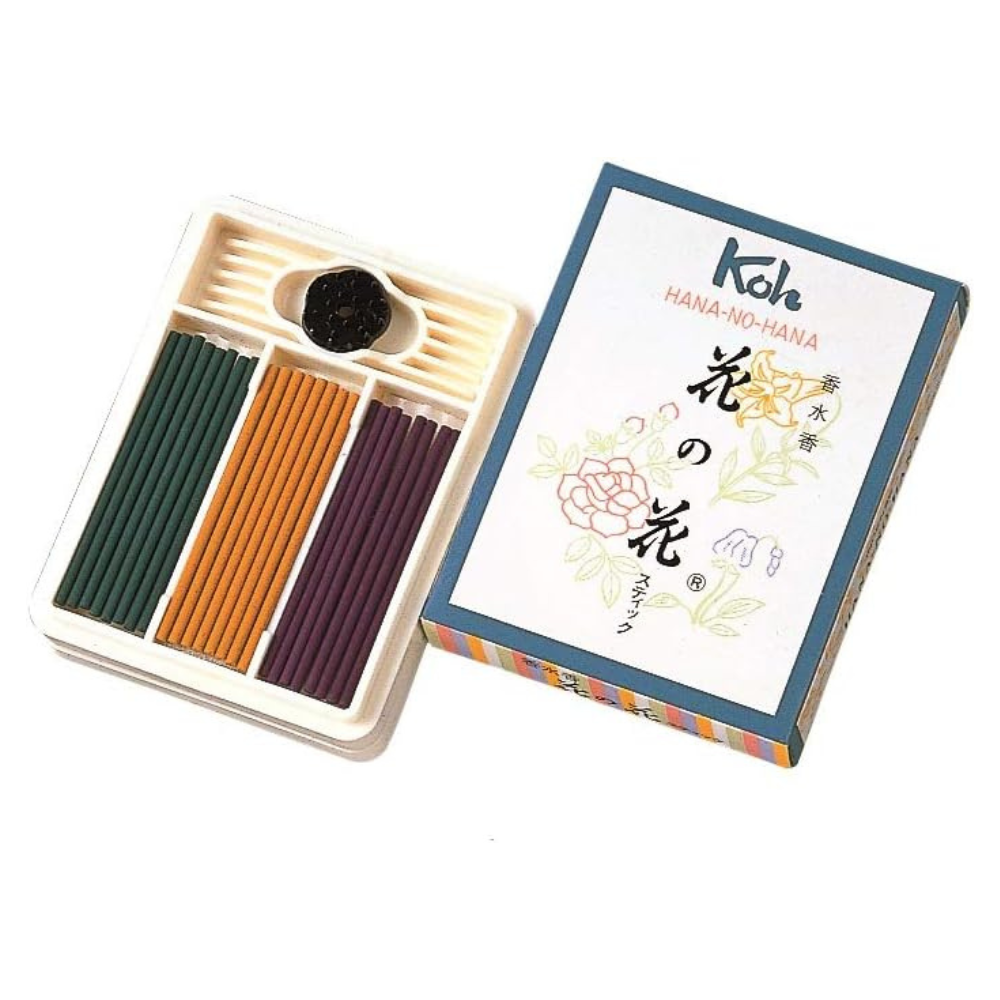
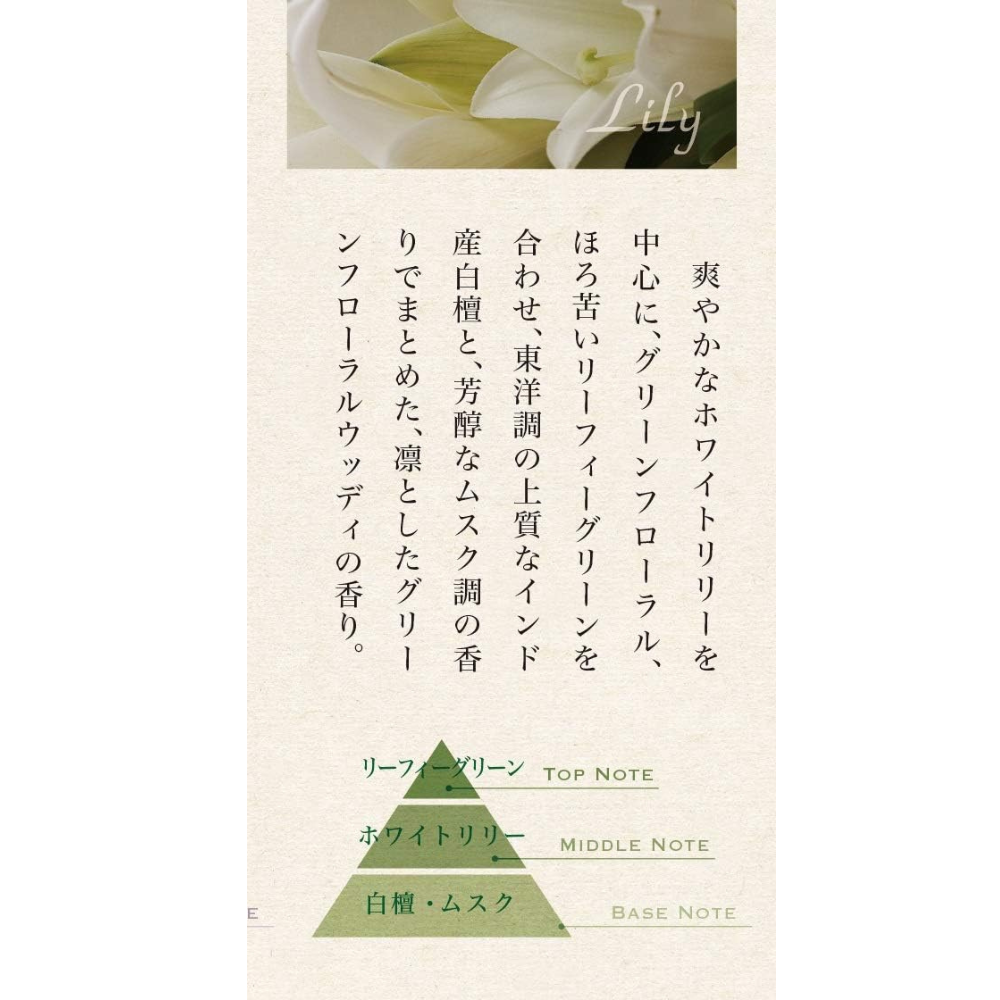
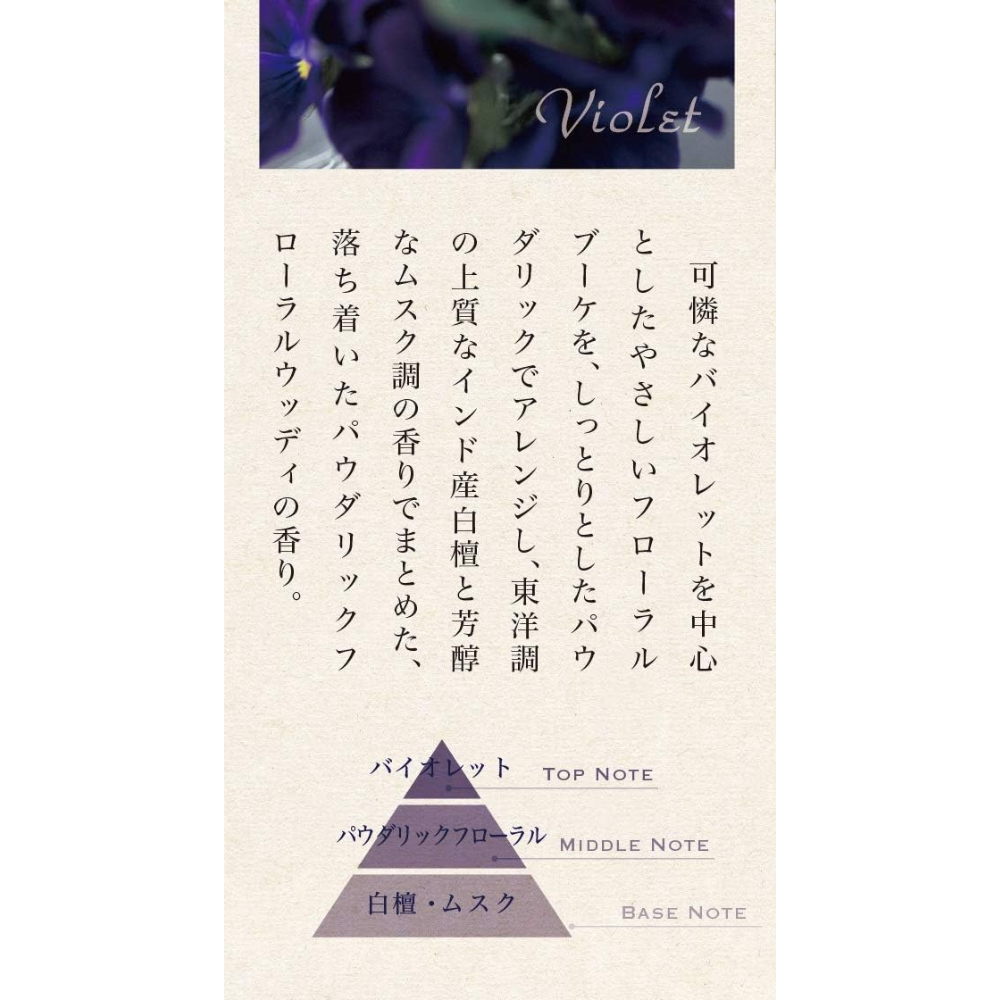
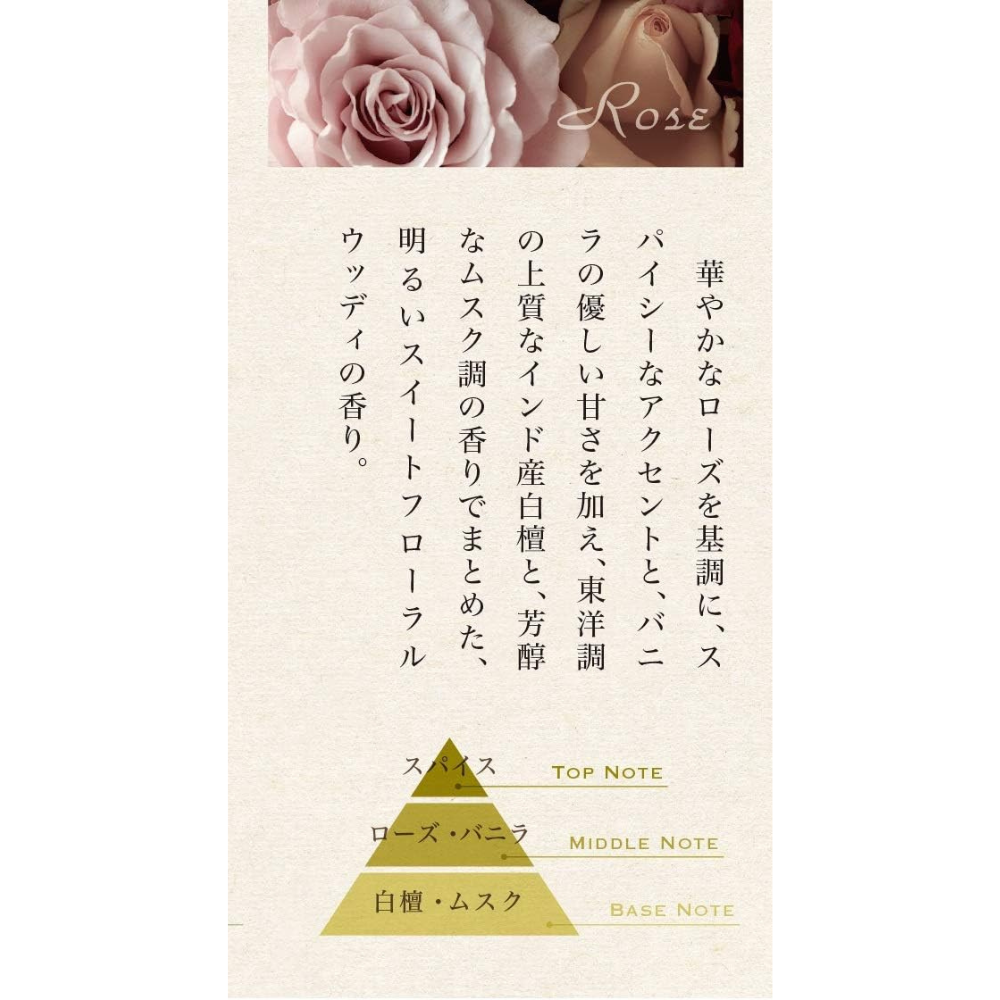
Hana-no-Hana is not one fragrance. The box holds three, twelve sticks each: rose, lily and violet, in separate bundles you can tell apart by colour. That is the point of it — you pick the flower to suit the evening rather than committing to a single scent for the whole box.
It also happens to be a historically significant product. Kōsuikō means "perfume incense", and the line was created in 1911 by Kitō Yūjirō, who brought Western perfumery structure into Japanese incense making for the first time. Everything floral in the Japanese incense aisle descends from this idea. If you want the woody side of the shelf instead, see Kayuragi Sandalwood or Baieido Kobunboku.
Key Benefits
- ✓ Three scents in one box — rose, lily and violet, twelve sticks each, bundled separately
- ✓ The line that started Western-style Japanese incense: created 1911 by Kitō Yūjirō
- ✓ Short sticks, roughly 12 minutes each — the shortest burn on our incense shelf
- ✓ Perfumery-structured florals rather than the woody-resinous register most Japanese incense sits in
- ✓ A sensible way to find out which floral you actually like before buying a full box of one
- ✓ Bought in Japan and shipped from Kobe with tracking
Product Details
| Brand | Nippon Kodo (日本香堂) |
|---|---|
| Japanese product name | 香水香 花の花 スティック 36本入 |
| Product type | Stick incense, three-scent assortment |
| Scents included | Rose (ばら), lily (ゆり), violet (すみれ) — 12 sticks each |
| Contents | 36 sticks total |
| Burn time | Approx. 12 minutes per stick |
| Holder | Not included — this box is sticks only |
| Line introduced | 1911, by Kitō Yūjirō |
| Country of origin | Japan |
| JAN | 4902125301009 |
| Category | Household — air care |
| Regulatory status | General household good. Not a cosmetic, not a quasi-drug (医薬部外品), not a food. |
Who Is This For?
- People who find traditional Japanese incense too woody, too smoky or too solemn
- Anyone who wants to try three florals before deciding which one to buy properly
- Short-session users — twelve minutes suits a bath, a coffee, a chapter, not a whole evening
- Anyone furnishing a small room, where a 40-minute stick is simply too much
- You will need a holder: one is not included in this box
How to Use
- Stand the stick in a non-flammable holder on a stable, heat-resistant surface, with an ash tray or dish underneath to catch the fall.
- Light the tip and let the flame take hold for three to five seconds.
- Blow the flame out. The tip should be left glowing, giving off a thin thread of smoke — a stick that is still flaming has been lit too hard and will burn fast and harshly.
- Leave it to burn down. One stick is enough for an average room; two in the same room reads as too much rather than twice as good.
- Check that the ember is fully out before you leave the room.
Frequency: As desired
Full Ingredients
Nippon Kodo publishes no full ingredient declaration for Kōsuikō Hana-no-Hana, and Japanese incense carries no INCI-style labelling duty, so there is no such list to reproduce. What is stated is the fragrance direction of each of the three: rose, lily and violet, built as perfume accords rather than as single raw materials — which is the whole premise of the kōsuikō ("perfume incense") idea Kitō Yūjirō introduced in 1911.
The stick body is the standard pressed tabu bark base (Machilus thunbergii) used across Japanese stick incense, carrying the fragrance. We will not print a plausible-looking ingredient list we cannot source; if you have a specific fragrance allergy, write to us before ordering and we will ask the distributor.
Cautions
- Never leave burning incense unattended.
- Keep out of reach of children and pets.
- Burn only in a non-flammable, heat-resistant holder placed on a stable surface.
- Keep well away from curtains, paper, bedding and anything else that can catch.
- Ventilate the room. Smoke from any burning material irritates the airways, and people with asthma or another respiratory condition should ventilate generously or choose a low-smoke product.
- Make sure the stick has gone out completely before you leave the room or go to sleep.
- Not for consumption. Store in a cool, dry place away from direct sunlight.
Package Contents
- 12 × rose (ばら) sticks
- 12 × lily (ゆり) sticks
- 12 × violet (すみれ) sticks
- Printed outer box with Japanese usage and safety text
- No holder is included
Shipping & Store Notes
- Ships directly from Japan
- Processing time: 2–6 business days
- Tracking number provided after dispatch
- Import duties and taxes may apply depending on destination country
- Opened incense boxes cannot be returned once the inner wrapping is broken, because the fragrance transfers to the packaging
- Some airlines and postal routes restrict incense as a scented good; we ship by the routes that accept it
Authenticity Guarantee
Every product at Tsujimoto Market is sourced directly from Japan and verified for authenticity. We never sell fakes or grey-market goods. Each order is carefully packed in Kobe, Japan and dispatched with full tracking.
FAQ
Is this one scent or several?
Three. The box is an assortment: twelve rose sticks, twelve lily, twelve violet, bundled separately so you can tell them apart. Hana-no-Hana is often described as a single floral blend; it is not, and the three are distinct enough that most people end up with a favourite.
Does a holder come with it?
No. This box is sticks only — 36 sticks and nothing else. If you need a holder, the Kayuragi Sandalwood set includes a holder that these sticks also fit.
Why is the burn time so short?
These are short sticks — about twelve minutes each, against roughly 25 for Kayuragi and 40 for Kyo-jiman. It is a design choice rather than a shortcoming: perfume-structured florals read best in a short burst and get heavy over a long burn.
What does "Kōsuikō" mean?
"Perfume incense". It is the category name Nippon Kodo uses for incense built on Western perfumery structure, which the house pioneered with this line in 1911 under the perfumer Kitō Yūjirō. Before that, Japanese incense was composed from woods, resins and spices rather than floral accords.
Which of the three should I burn first?
Violet is the one most people are least prepared for and often end up preferring — powdery and slightly green rather than sweet. Rose is the safest. Lily is the most assertive of the three in a small room. The rest of the shelf is in Japanese Air Fresheners & Incense.